
Litecoin at $70 with a 5.2 percent daily gain: it outperforms Bitcoin and Ethereum

0
0

Litecoin costs around $70.52 this Thursday, 5.2 percent above its level of 24 hours ago. That is the strongest daily move among the 25 largest cryptocurrencies, and it comes out markedly stronger than at the two heavyweights: Bitcoin gains 3.4 percent over the same period, Ethereum 2.8 percent. Anyone holding Litecoin or weighing an entry gets a move that can be explained, and a figure that has to be kept in view.
The explanation has two strands, and they point in different directions. One is measurable: the Litecoin network has been running noticeably busy for weeks. The other is an expectation resting on an application to the US securities regulator, and that application has not been approved. This piece separates the two, because the difference matters considerably for a purchase decision.
Litecoin price today: $70, a 5.2 percent daily gain and a weaker weekly picture
Over the past 24 hours the price moved between $66.61 and a little over $70. Trading volume came to around $389 million, market capitalisation to about $5.48 billion. That puts Litecoin 24th among the largest cryptocurrencies by market value, with a circulating supply of around 77.7 million coins.
More interesting than the daily figure is the contradiction with the week. Calculated over seven days, Litecoin is down 1.7 percent. Today's jump therefore does not continue an uninterrupted uptrend; it recovers what the preceding days cost. That distinction often gets lost in headlines, and it decides whether you are looking at a continuation or a counter-move.
Litecoin, Bitcoin and Ethereum: 5.2 against 3.4 against 2.8 percent in one day
A mid-sized coin gaining more on a single day than Bitcoin is a frequent occurrence and says nothing on its own. It only becomes meaningful once the outperformance holds for several weeks and can be pinned to something happening in the network itself. Both apply to Litecoin at present, and that is precisely why the figures behind the price are worth a look.
What a monthly gain says about the situation
To put it in context, the editorial team analysed the daily closing prices of the past 30 days, 31 daily values in all. On September 3, Litecoin stood at $49.66; on October 2, at $70.40. That is a rise of 41.8 percent in one month. The highest daily level in the window was $72.55 on September 27, the lowest on September 3. This analysis was carried out by cryptoticker.io itself on October 2, 2026.
That also makes clear why different reports cite different monthly figures: depending on whether you calculate from September 1, from the monthly low or from the interim high of September 27, the results range from a good 30 percent to over 40 percent. The 41.8 percent refer to exactly the 30-day period up to today.
41.8 percent in 30 days, yet 83 percent below the all-time high
The second figure belongs with the first. Litecoin's all-time high stands at $410.26 and dates from May 9, 2021. At today's price the coin is around 83 percent short of that record. A monthly gain of 41.8 percent is therefore a vigorous recovery inside a market that has not come near its old best mark for Litecoin in four and a half years. Anyone calculating with price targets from 2021 is calculating with a different market.
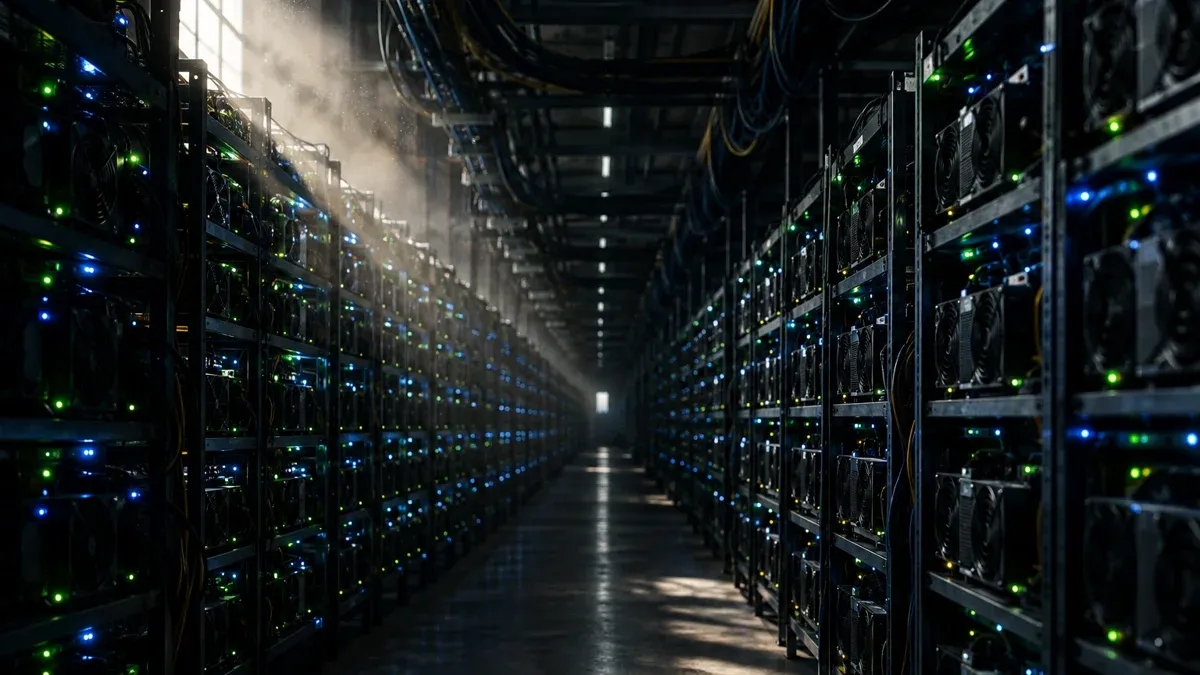
Transactions, blocks and hashrate: network activity in the Litecoin network
The Litecoin Foundation puts the rise down to more economic activity in the network. That reasoning can be counted out, because the blockchain is public. The editorial team collected the network data itself on October 2, 2026, drawing on the public block data of the Litecoin chain and the computing power readings of a public block explorer. This analysis was carried out by cryptoticker.io itself on October 2, 2026.
- 173,162 transactions were confirmed over the past 24 hours.
- 569 blocks the network found in the same period, at a total height of 3,187,987 blocks.
- Around 2.5 petahash per second of computing power currently stands behind the network.
- The average fee on a transaction came to less than half a US cent.
- 251 transactions were waiting in the mempool, the holding area for unconfirmed transfers.
The mempool reading is the most telling of the five. A network in which only 251 transfers are waiting is not congested. Litecoin therefore handles the high throughput without backlogs and without rising fees, and that is the practical part of the argument: a payment network whose fees stay in the range of fractions of a cent remains usable even under heavy use.
What the number of coins moved really shows
In the same survey, around 29.8 million Litecoin were moved on the chain. The figure sounds enormous, and reports like to convert it into dollars. Caution is in order there: on-chain volume also counts change outputs and reshuffles between addresses of the same exchange. As a measure of actual economic demand the value is therefore of limited use. The number of transactions and the level of fees are the more honest indicators.
Difficulty lowered by 3 percent: 569 blocks in 24 hours
Mining difficulty is the value with which the protocol keeps block production constant. If computing power in the network rises, difficulty is raised; if it falls, difficulty is lowered. The value currently stands at 89,270,497, and the last adjustment went down by around 3 percent.
For you as an investor that is a side note, but a useful one: a slightly lowered difficulty means computing power in the network has not grown further of late. The 569 blocks found in 24 hours sit close to the protocol's target value. The network is therefore running calmly and to plan, with no sign of miners leaving and without a computing power rally of the kind that sometimes precedes a price rise.
Grayscale Litecoin Trust: Amendment No. 1 to Form S-3 of September 11
The second strand of the story is called the ETF, and here it becomes important to read closely. Grayscale Investments filed an amended registration statement with the US securities regulator, the SEC, on September 11, 2026, Amendment No. 1 to Form S-3, registration number 333-290130. It sets out what the company intends: the existing "Grayscale Litecoin Trust (LTC)" is to be renamed "Grayscale Litecoin Trust ETF" and traded on NYSE Arca under the ticker LTCN. Coinbase Custody Trust Company is named as custodian of the coins, Coinbase as prime broker.
A trust is not an ETF. The difference is no formality: an exchange-traded fund can create and redeem shares through a continuous mechanism, which is why its price normally stays close to the value of the coins held. A closed-end trust cannot do that and therefore often trades at a discount or a premium. That conversion is precisely the aim of the filing.

NYSE Arca's 19b-4 listing application: without SEC approval since January 2025
Here is the sentence missing from many reports. In the same filing the trust writes that NYSE Arca submitted a listing application under Rule 19b-4 on January 24, 2025 in order to list the shares, and that this application had not been approved by the SEC as of the filing date. It goes on to say in its own words that the trust makes no representation as to when or whether such approval will be granted. The document also makes clear that the trust is not seeking effectiveness of the registration and is not offering any shares while the listing approval is absent.
That changes how the price move reads. An application pending for more than 20 months, on which only the accompanying registration statement changed in September, is no fresh event. What is traded on the exchange is an expectation of a regulatory decision without a date. Anyone weighing a crypto ETF in Germany should know the difference between a filed and an approved product.
Which figures in this context are not documented
Claims circulate about inflows into Litecoin products that already exist, and they do not follow from the filings. Such figures are deliberately absent from this article, because a figure without a verifiable basis is worse for an investment decision than no figure. What is documented is the content of the filing of September 11, and it says nothing about inflows.
Buying Litecoin in Germany: MiCA authorisation, spread and custody
For the practical part, something other than the ETF application counts. Since the European crypto regulation MiCA has applied in full, providers addressing retail clients in the EU need an authorisation as a crypto-asset service provider. For you that means the first thing to check is whether your provider holds that authorisation and which supervisor it answers to. An overview with the terms is in our comparison of crypto exchanges.
The second point is the price of the purchase, and it rarely sits in the stated fee. What is decisive is the spread, the gap between the bid and the ask price a platform quotes. On a coin like Litecoin with just under $400 million in daily volume that gap is small at the large exchanges, while at neobrokers and wallet apps with their own quoted price it is often considerably wider than the stated order fee.
Third, storage. Litecoin cannot be lent out and cannot earn a yield through staking, so one reason for exchange custody falls away. Anyone wanting to hold a position for longer usually stores it themselves; the devices for that are in our hardware wallet comparison. On small amounts that you trade actively, the convenience of the exchange weighs more heavily.
Holding period under Section 23 of the German Income Tax Act: one year and the 1,000-euro threshold
The tax framework in Germany is the same for Litecoin as for other crypto-assets. Under Section 23 of the German Income Tax Act, a sale counts as a private disposal if no more than one year lies between acquisition and sale. Once that year has passed, the gain stays out of the reckoning. Within the year an exemption threshold applies: gains remain tax free if the total gain from all private disposals in the calendar year stays below 1,000 euros.
The word threshold is to be taken literally here and should not be confused with an allowance. If the threshold is exceeded, the entire gain is taxable and not only the part above it. In a month with a 42 percent price gain, realising gains brings you close to that threshold faster than expected. For the proof you need the acquisition data of every single position; which tools record that is set out in our overview of crypto tax tools.
One note on the state of play: legislative projects on the future taxation of crypto-assets are under way in Germany and could change this framework. For sales in the current year, the text of the law in its present version applies.
Bull case and bear case on Litecoin: the arguments on both sides
The network side speaks for a continuation of the rise. Throughput is high, fees are low, the network is not congested, and computing power stays stable. On top of that, approval of the 19b-4 application may actually come; it would then be an event not yet fully contained in prices.
The weekly picture speaks against a straight-line continuation. A loss of 1.7 percent over seven days alongside a 5.2 percent gain in one day describes a market that swings rather than one that climbs. The interim high of September 27 at $72.55 sits above today's price and is therefore the first hurdle against which the move has to be measured. And the ETF expectation can dissolve without the authority refusing: time alone is enough for that.
This article names no price targets. The published forecasts on Litecoin come from individual research houses and forecast portals, are tied to their assumptions, and would be worth something here only if they were quoted by name and with their reasoning.
Market capitalisation of $5.48 billion: Litecoin in 24th place
On the order of magnitude: at around $5.48 billion in market value, Litecoin is today one of the smaller assets in the upper league, in 24th place. The daily volume of about $389 million equals around seven percent of its market value, a ratio that speaks for adequately tradeable quantities. In practice that means for retail investors that larger orders too can be executed at the established exchanges without appreciable effect on the price.
Litecoin rally: how to proceed now
- Match provider and authorisation. Check whether the platform through which you buy or hold Litecoin holds a MiCA authorisation and which supervisor is responsible. The terms of the large providers are set side by side in the comparison of crypto exchanges.
- Record the acquisition date of every position. The one-year period and the 1,000-euro threshold only work with gap-free documentation. Which programmes record that automatically is shown in the overview of tax tools.
- Choose custody to fit the holding period. For a position meant to sit out the one-year period, storing it yourself is the normal case; the devices for that are in the hardware wallet comparison.
And one figure to take away: the $72.55 of September 27 is the highest daily level of the past 30 days. As long as the price stays below it, today's jump is a recovery inside a swing and no new best mark.
(As of October 2, 2026. This article is not investment advice. Prices and fee structures change; check the terms with the provider before you buy.)
0
0


 Manage all your crypto, NFT and DeFi from one place
Securely connect the portfolio you’re using to start.


