7 Best Ethereum APIs for 2026 (Wallet, DeFi & Market Data)

Written by Tigran Mkrtchyan · Reviewed and fact-checked by Narek Gevorgyan · Published June 26, 2026 · Last updated September 4, 2026 · Pricing and limits verified September 2026
I once shipped a full landing page in five hours. No designer. No developer. No animator. Just me and a few AI tools. It was our new CoinStats Ethereum API page, live that night.
Here is what hit me after. The page was the easy part. AI can spin up a clean interface in an afternoon. The data behind it is the hard part.
So I did the homework. I researched every Ethereum API I could find. Then I turned it into this guide. If you build on Ethereum, this should save you time.
Below are my seven Ethereum API picks for 2026. CoinStats API is first, and I will be honest about why. I will also be fair to the rest.
- Ethereum APIs split into two types: raw RPC and clean data.
- This guide ranks data and indexing APIs, not node providers.
- CoinStats API leads for wallet, market, and DeFi data in one call.
- Match the API to your use case, then test the free tier.
- Most providers now ship an MCP server for AI agents.
What makes a good Ethereum API
First, a quick split. “Ethereum API” means two different things. New to this? Start with our primer on what an Ethereum API is.
One is a node or RPC provider. It speaks raw JSON-RPC to an Ethereum node. You get blocks, calls, and gas, but no structure. The other is a data API. It returns clean, indexed answers. Balances, tokens, transfers, DeFi, prices.
This guide focuses on the second kind. Most apps do not need a raw node. They need readable data, fast. The market has moved this way too.
Ethereum is also no longer one chain. Users hold assets across Base, Arbitrum, Optimism, and Polygon. A good Ethereum API treats those EVM chains as one surface. You should not query each chain alone.
So what should you check before you pick one? Five things matter most.
- Coverage. Does it return Ethereum plus the EVM chains you need?
- Data depth. Balances and tokens, but also DeFi, history, and prices.
- Free tier. Can you build and test before you pay?
- AI readiness. Does it ship an MCP server for agents?
- Docs and limits. Clear docs, and rate limits you can model.
One note on AI readiness. MCP support is spreading fast. Most providers here now ship one. So it is becoming table stakes, not a tiebreaker. The real difference is the data underneath.
The 7 best Ethereum APIs at a glance
Pricing and limits verified September 2026. Providers change terms often, so check each provider’s pricing page before you commit.
CoinStats API
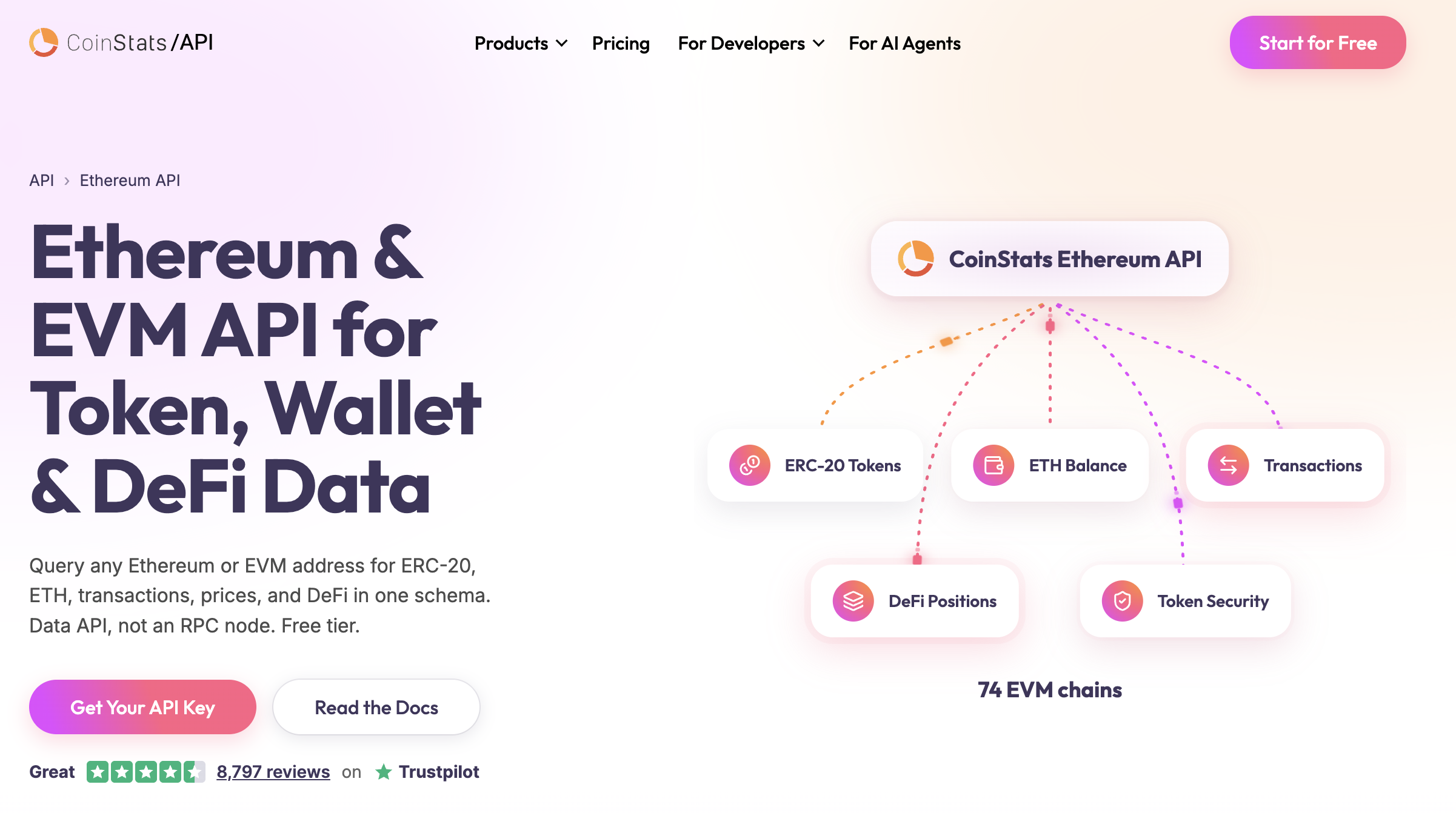
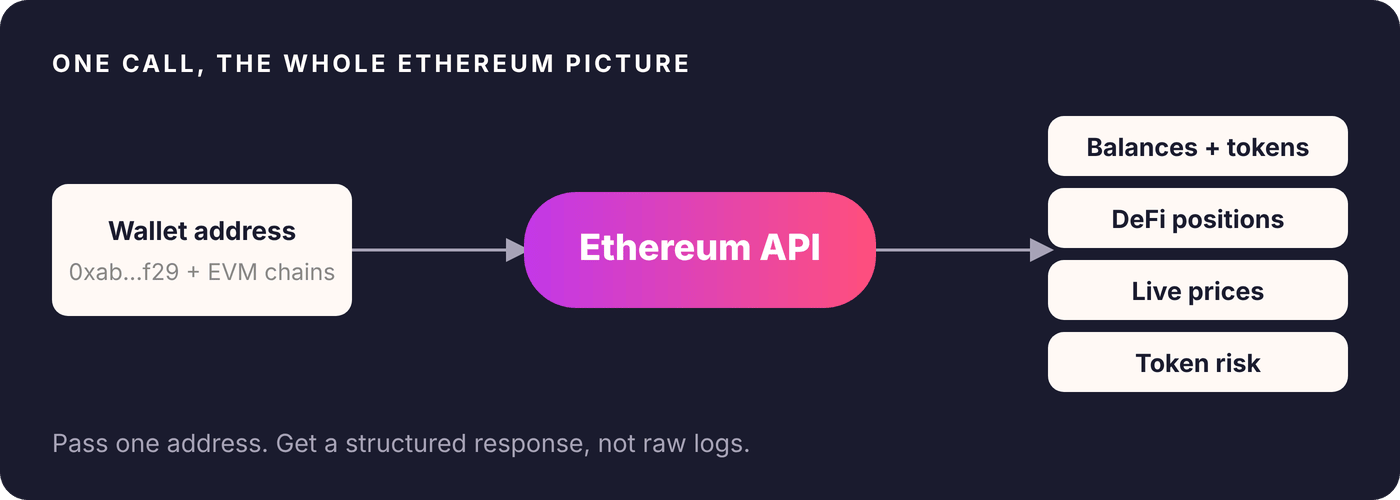
CoinStats Ethereum API returns a wallet’s full picture from one call. You pass an address. You get balances, ERC-20 tokens, DeFi positions, and transaction history back. It covers Ethereum and 74 EVM chains in one schema.
It also adds two things most data APIs skip. Live market data across 200+ exchanges, and a Token Risks endpoint for safety signals. That mix is why portfolio apps and AI agents reach for it.
- Multi-chain wallet balances and token holdings in one response.
- DeFi positions across staking, lending, and LPs.
- Live prices and market data for 100,000+ coins.
- Token Risks endpoint flags honeypots and risky contracts.
- REST plus an MCP Server for AI-agent workflows.
One practical example. A portfolio tracker needs balances, DeFi, and prices for each user. With separate providers, that is three integrations and a lot of glue. With one schema, it is a single call per wallet. It is one part of CoinStats Crypto API, an all-in-one data layer. Need the wider market picture? Our best crypto API guide covers it in depth.
Real open-source projects already running on CoinStats API.
Here is how one builder describes their self-hosted stack.
The Graph
The Graph is a decentralized indexing protocol. You define a subgraph, and it indexes onchain data into a GraphQL API. It also ships a Token API for balances, transfers, and prices. No subgraph required.
- Custom subgraphs query exactly the Ethereum data you model.
- Token API gives REST access to balances, holders, and NFTs.
- Substreams handle high-throughput streaming and backfills.
- Open-source MCP servers connect both products to agents.
Covalent (GoldRush)
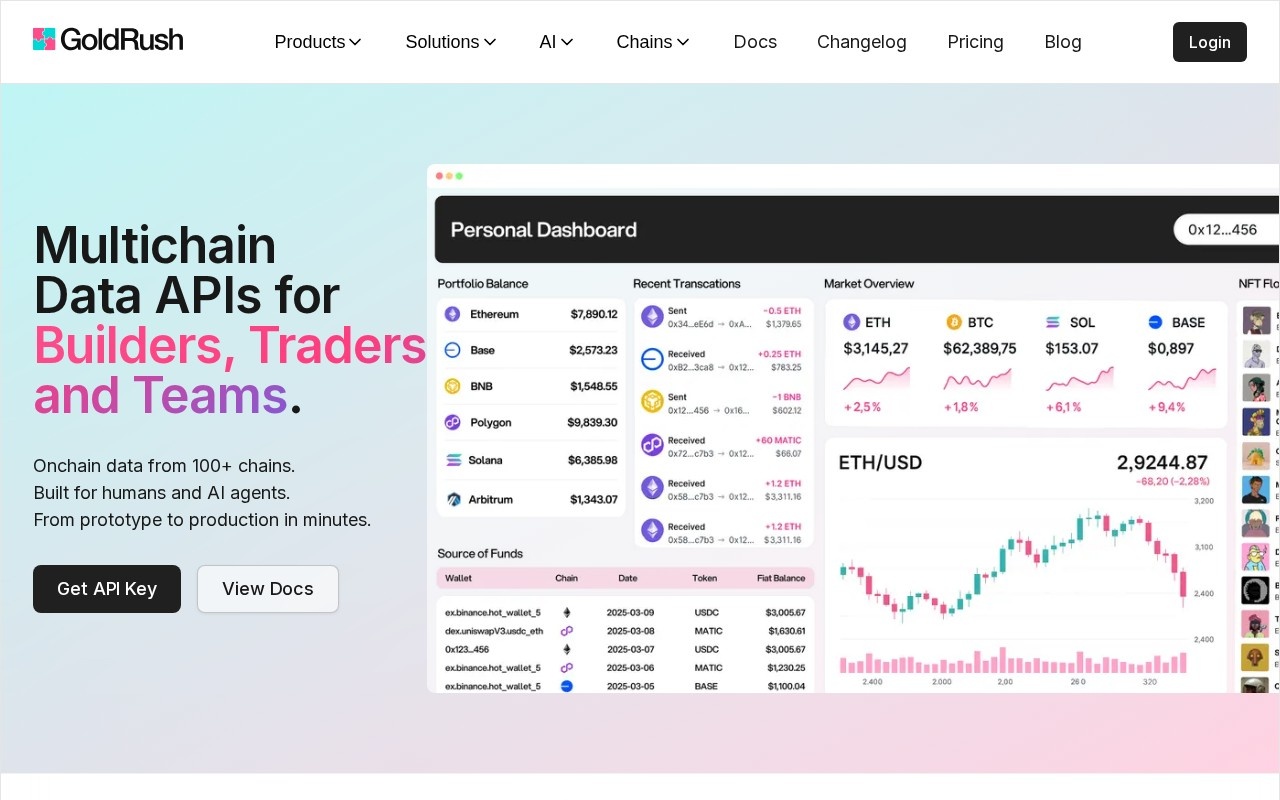
Covalent rebranded its data API to GoldRush in 2024. It returns wallet balances, transactions, and prices across 100+ chains. Its strength is deep, structured history from a single integration.
- Token balances with real-time USD pricing.
- Full transaction history and decoded event logs.
- Historical balance snapshots across many chains.
- GoldRush MCP server and x402 support for agents.
Tatum
Tatum is a multichain development platform. One Data API covers wallets, tokens, transactions, and DeFi across 100+ networks. It pairs data with optional nodes and webhooks.
- Wallet balances, token data, and transaction history.
- Token transfers and DeFi positions by address.
- Gas estimation and real-time webhooks.
- Open-source MCP server across 130+ chains.
Chainbase
Chainbase is a multichain data network for onchain and AI workloads. It exposes indexed data through REST APIs and SQL. It spans 200+ chains, Ethereum included.
- Balances, token, and price APIs across chains.
- Transaction history and decoded onchain data.
- SQL queries over a managed data warehouse.
- First-party MCP server for AI agents.
Goldsky
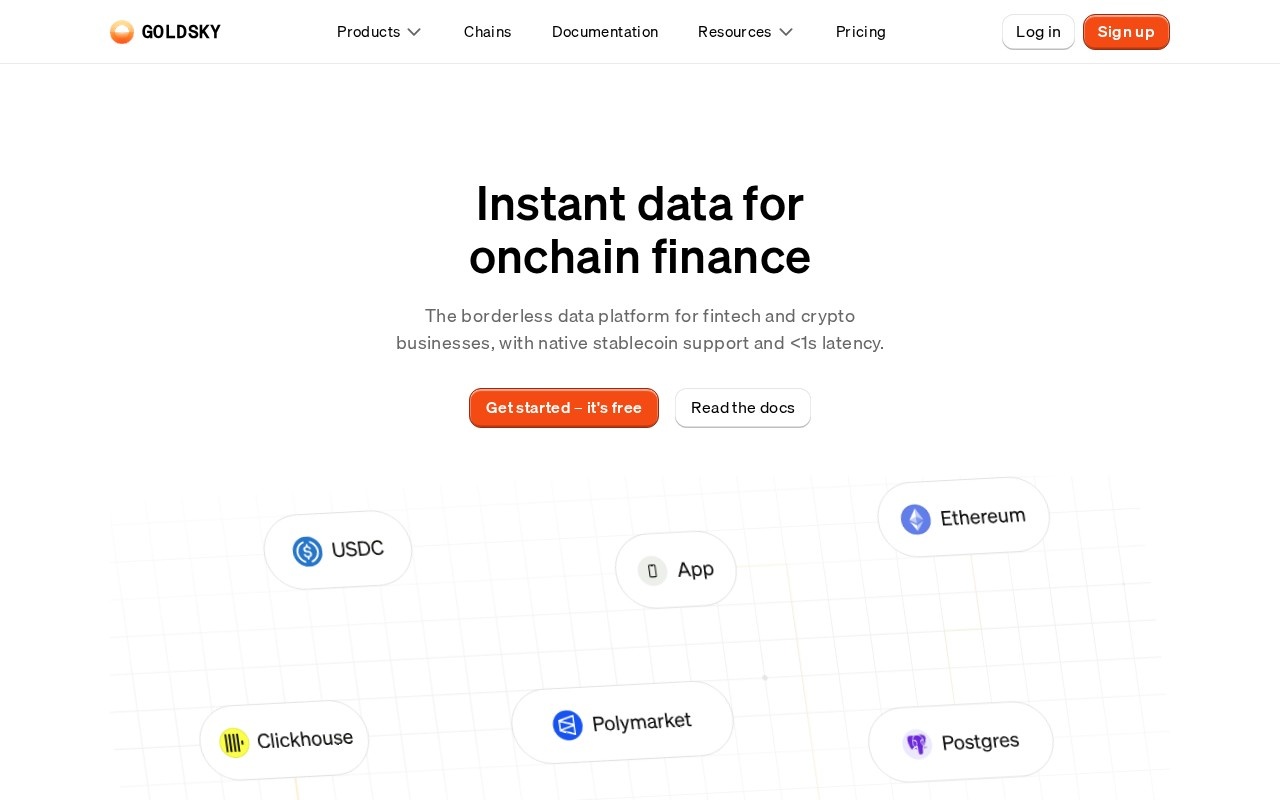
Goldsky is real-time blockchain data infrastructure. Subgraphs give instant GraphQL APIs. Mirror streams onchain data into your own database.
- Graph-compatible subgraphs for decoded data.
- Streaming pipelines into Postgres, ClickHouse, or Kafka.
- Webhooks and direct SQL access.
- Agent plugin with a docs MCP server.
Ethplorer
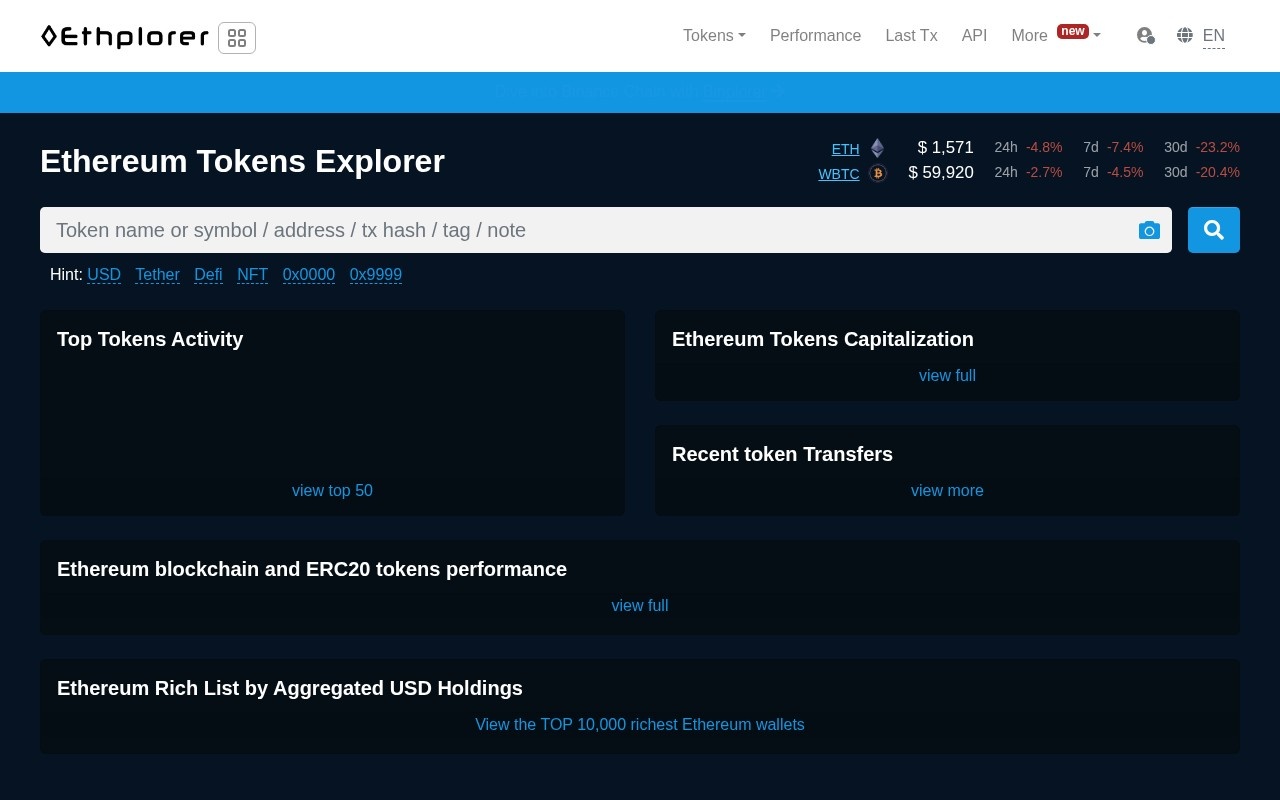
Ethplorer is a focused Ethereum token and wallet explorer. Its REST API returns ERC-20 balances, holders, and transfers. It does one job well.
- ETH and ERC-20 balances by address.
- Token info, holders, and price data.
- Address history and decoded transactions.
- Generous free key for quick lookups.
Top picks by category
Short on time? Here are the standout picks by job.
Wallet, market, DeFi, and token risk from one call.
Model exactly the onchain data you need with GraphQL.
Stream decoded onchain data into your own database.
Query onchain data over REST, SQL, and MCP.
Pull ERC-20 balances and token data with no setup.
Comparison by use case
Pick by what you are building. Each scenario gets a top pick and alternatives.
Portfolio trackers and wallet apps
Top pick: CoinStats API. It returns balances, DeFi, and prices per wallet in one call. For wallet-first picks, see our best crypto wallet APIs guide. Alternatives: Covalent, Tatum.
Real-time data and event streams
Top pick: Goldsky. It streams decoded onchain data into your own database. Alternative: Chainbase.
Custom indexed data and analytics
Top pick: The Graph. You model the exact data with a GraphQL subgraph. Alternatives: Goldsky, Chainbase.
Broad multichain coverage
Top pick: Tatum. One Data API spans 100+ EVM and non-EVM networks. Alternative: Covalent.
AI agents and natural-language queries
Top pick: Chainbase. It exposes onchain data over an MCP server and SQL. Alternatives: CoinStats API, The Graph.
Free Ethereum token lookups
Top pick: Ethplorer. Its free key returns ERC-20 balances and token data fast. Alternative: CoinStats API free tier.
How to choose your Ethereum API
Start from your use case, not the brand. The right pick follows the data you need.
Building a portfolio tracker or wallet app? You want aggregated wallet, DeFi, and price data, so CoinStats API fits well. Modeling custom onchain data? The Graph lets you shape it. Need deep history across many chains? Covalent is built for that.
Want real-time streams into your database? Goldsky handles that. Need AI-ready data over REST and SQL? Chainbase fits. Want broad multichain coverage from one key? Tatum works. Just need free Ethereum token data? Ethplorer is enough.
Then test before you commit. Run the free tier against your real endpoints. Check the response shape, the latency, and the rate limits. A homepage logo does not prove a chain is supported. The actual response does.
Representative of recurring r/ethdev threads on choosing an Ethereum data API.
Building on Solana too? See the best Solana APIs for wallet, DeFi, and market data.
Frequently asked questions about Ethereum APIs
Common questions developers ask when choosing an Ethereum API.
What is an Ethereum API?
What is the difference between an Ethereum API and an Ethereum RPC?
What is an EVM API?
How do I get Ethereum wallet balances from an API?
Can I get Ethereum DeFi data from an API?
Which Ethereum API works with AI agents and MCP?
Do Ethereum APIs support other EVM chains?
Is there a free Ethereum API?
How many requests do free Ethereum APIs allow?
What is the best Ethereum API?
What is the best Ethereum API for developers?
What is the best Ethereum API for wallet and portfolio data?
How do I choose an Ethereum API?
Tigran is the Head of Digital Marketing at CoinStats, working across crypto and consumer apps. His writing covers first-hand crypto experience and marketing case studies from that work. He has taken the stage at industry-leading conferences like MAU Vegas, Business of Apps Berlin, and App Promotion Summit London.
More from Tigran on the CoinStats blog · LinkedIn · X