
Senate confirms Warsh as Fed governor; chair vote seen, crypto outlook.

0
0
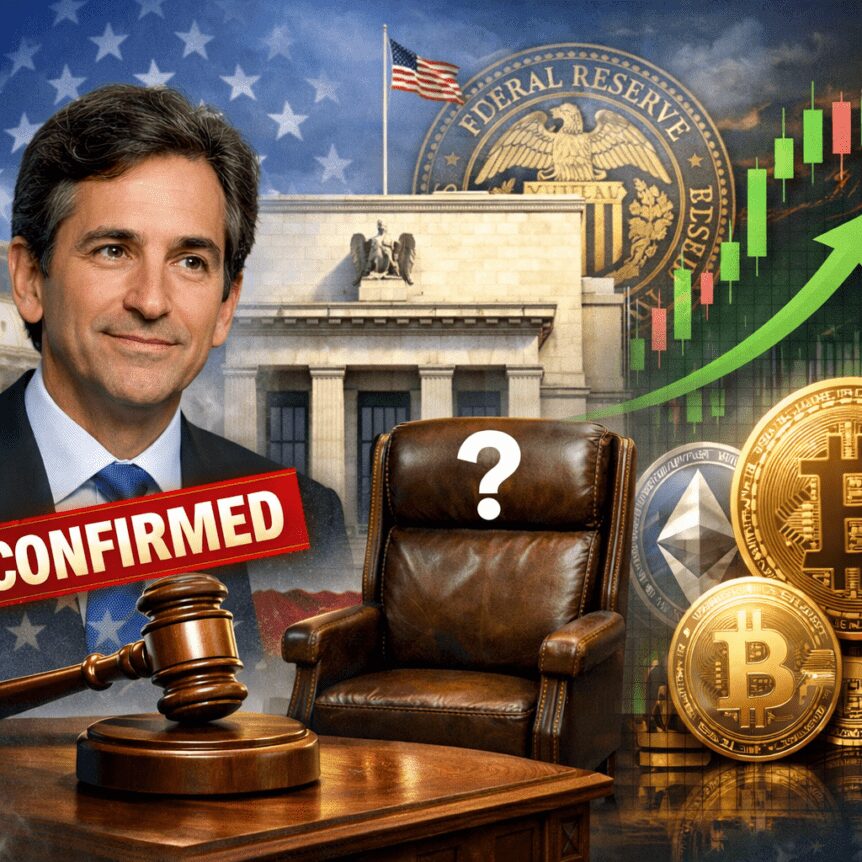
The U.S. Senate has advanced Kevin Warsh as a Federal Reserve governor, setting the stage for a broader leadership reshuffle at the central bank. In a 51-45 vote largely along party lines, with Democratic Senator John Fetterman as the notable exception, lawmakers approved Warsh’s nomination to the Fed’s board. The chamber then moved to invoke cloture on his bid for the chairmanship, signaling that the pivotal confirmation process could reach a vote on the top job in the coming days.
Warsh’s confirmation as a Fed governor secures a 14-year term on the central bank’s board, and it paves the way for a separate vote on his nomination as chair. He previously served as a Fed governor from 2006 to 2011 under Presidents George W. Bush and Barack Obama. If confirmed as chair, he would succeed Jerome Powell, whose term as chair ends this week. Powell’s broader tenure as a Fed governor continues through 2028, but the leadership shake-up at the Federal Reserve has already drawn attention from markets and policymakers alike, given the potential implications for interest-rate trajectories and central-bank independence from White House policy preferences. A Reuters- and Cointelegraph-linked review of the development noted the move could have meaningful market repercussions as traders digest possible shifts in policy stance and communication.
In public remarks and during his confirmation process, Warsh has been described as taking a different approach to regulation and policy than Powell. The transition arrives as the Fed weighs its next steps on interest rates amid ongoing debates about inflation, growth, and financial stability. Warsh’s stance on Bitcoin has previously drawn attention; in a 2025 interview, he described Bitcoin as a “transformative” technology and an important asset that can inform policymakers. That perspective is likely to be weighed against concerns from some lawmakers about preserving the Fed’s independence from political agendas, particularly if the chair’s policy direction aligns closely with the president’s priorities. During his Senate Banking Committee hearing, several Democratic members questioned whether Warsh could maintain a sufficient distance from administration policy while steering the central bank.
Key takeaways
- Kevin Warsh is confirmed as a Federal Reserve governor for a 14-year term, clearing the path for a separate vote on his chairmanship.
- Powell’s chair term is ending, but his governor role extends through 2028, setting up a potential leadership shift at the Fed amid ongoing rate considerations.
- The confirmation vote split largely along party lines, with Senator John Fetterman voting in favor—a notable deviation in an otherwise tight partisan balance.
- Simultaneously, lawmakers on the Senate Banking Committee are moving to markup a digital-asset market-regulation package, CLARITY, signaling heightened focus on crypto oversight and stability mechanisms.
- Warsh’s past remarks about Bitcoin and questions about central-bank independence will shape how investors read the Fed’s next policy stance and its interaction with the evolving crypto regime.
Fed leadership, policy direction and market expectations
The Senate vote to confirm Warsh as a Fed governor—coupled with the ongoing effort to finalize a chair appointment—signals a potential repositioning of the central bank’s leadership. While Powell’s term as chair ends imminently, Warsh’s prior service on the Fed Board gives him a long-standing familiarity with the institution’s inner workings. Market participants will be watching not just for the outcome of the vote but for clues about how Warsh views the Fed’s balance between controlling inflation, supporting employment, and safeguarding financial stability. The broader question for markets is how a new chair might steer rate expectations and communications, particularly if the incoming leadership emphasizes a different framework for policy guidance or a revised approach to independence from political pressure.
Observers have noted that leadership changes at the Fed can influence the market’s read on future rate moves, the pace of asset purchases, and the central bank’s risk appetite during times of financial stress or regime shifts. A shift away from the current policy posture could alter currency and risk-asset dynamics, including those in crypto markets, which often respond to expectations about liquidity conditions and risk tolerance. The situation is being watched in tandem with developments in crypto regulation and market structure in Washington, where further clarity on oversight could shape how institutions and retail participants interact with digital assets.
In parallel with Warsh’s confirmation, attention is turning to the broader regulatory framework for crypto. On the same week, the Senate Banking Committee prepared to markup a digital asset market structure bill, known as the CLARITY Act. The panel released the text of its version, which includes a compromise provision on stablecoin yield that has long been a point of contention between the crypto industry and traditional banking circles. On Thursday, the committee is slated to complete the markup, potentially teeing up a full Senate vote on the package. This intensifies the debate over how to supervise crypto markets while ensuring consumer protections and financial stability.
The evolving regulatory posture is especially relevant for participants in decentralized finance, custody services, and crypto trading platforms who crave clearer rules to facilitate compliance and risk management. The CLARITY framework aims to reconcile some of the long-standing tensions between innovating in digital assets and preserving traditional financial-system safeguards. While the text of the bill is still subject to negotiation, the markup represents a meaningful step toward a more defined regulatory pathway for the crypto sector in the United States.
Warsh’s crypto stance and what it could mean for policy
Warsh’s past remarks about Bitcoin as a transformative technology suggest a recognition of crypto’s potential to inform policy discussions. However, his admission that independence from the president’s agenda could be a constraint for a Fed chair underscores a core tension in the confirmation process: the governor’s ability to remain objective while navigating political expectations. The confirmation hearings did not settle the question, leaving lawmakers to weigh whether Warsh can balance a technocratic, data-driven approach with the political realities of a changing administration.
For crypto stakeholders, the credibility and tone of the Fed under a Warsh-led leadership would matter. A chair who views digital assets as policy-relevant information could contribute to a more nuanced, data-driven approach to financial stability concerns, macroeconomic forecasting, and regulatory clarity. Yet the concern remains that a strong presidential alignment could pressure the Fed’s independence, a dynamic market participants have long monitored during every transition of central-bank leadership.
In addition to the Fed’s leadership questions, the CLARITY markup underscores a broader pivot toward formalizing how the United States supervises digital assets. The compromise around stablecoin yields—an area where the industry has sought clarity—could shape the incentives for stablecoin issuers, liquidity providers, and users. If the bill advances to a full Senate vote, crypto firms may need to adapt to a more explicit, regulated environment that still seeks to foster innovation while tightening risk controls.
For investors and builders, the confluence of a potential Fed leadership change and a concrete regulatory framework for crypto creates a cross-cutting set of considerations. On the one hand, a policy environment that emphasizes prudent risk management and transparent market structure could bolster confidence in legitimate crypto activities. On the other hand, any signs of renewed policy ambiguity or tighter financial conditions could weigh on risk assets, including tokens with sensitive exposure to liquidity and funding dynamics.
As with any major policy transition, much remains uncertain. The final outcome of Warsh’s chair nomination, the exact stance he would take as chair, and the precise contours of the CLARITY Act remain to be seen. Market participants would be wise to monitor how the Fed communicates its inflation outlook and rate path in the weeks ahead, as well as how congressional leaders resolve the bill’s most contentious provisions. The balance of independence, oversight, and innovation will likely define the near-term trajectory for both traditional financial markets and the crypto space.
Further context on the broader coverage around these developments can be found in related reporting on the Fed chair nomination and crypto regulation, including notes on a separate disclosure related to a chair nominee’s holdings and public commentary on policy independence. For readers tracking the regulatory landscape, the evolving CLARITY framework and the Fed’s leadership transition are two threads that could shape market behavior, institutional participation, and user adoption in the months ahead.
Readers should stay tuned to the outcomes of Warsh’s nomination vote, the chair appointment decision, and the final markup and passage (or revision) of CLARITY. Each of these developments carries implications for monetary policy credibility, regulatory clarity, and the broader environment in which crypto markets operate.
This article was originally published as Senate confirms Warsh as Fed governor; chair vote seen, crypto outlook. on Crypto Breaking News – your trusted source for crypto news, Bitcoin news, and blockchain updates.
0
0
 Beheer al jouw cryptovaluta, NFT en DeFi vanaf één plek
Verbind de portfolio die je gebruikt veilig om te beginnen.