
US Treasury Sanctions BitBank After “Hormuz Safe” BTC Payments Linked to IRGC

0
0
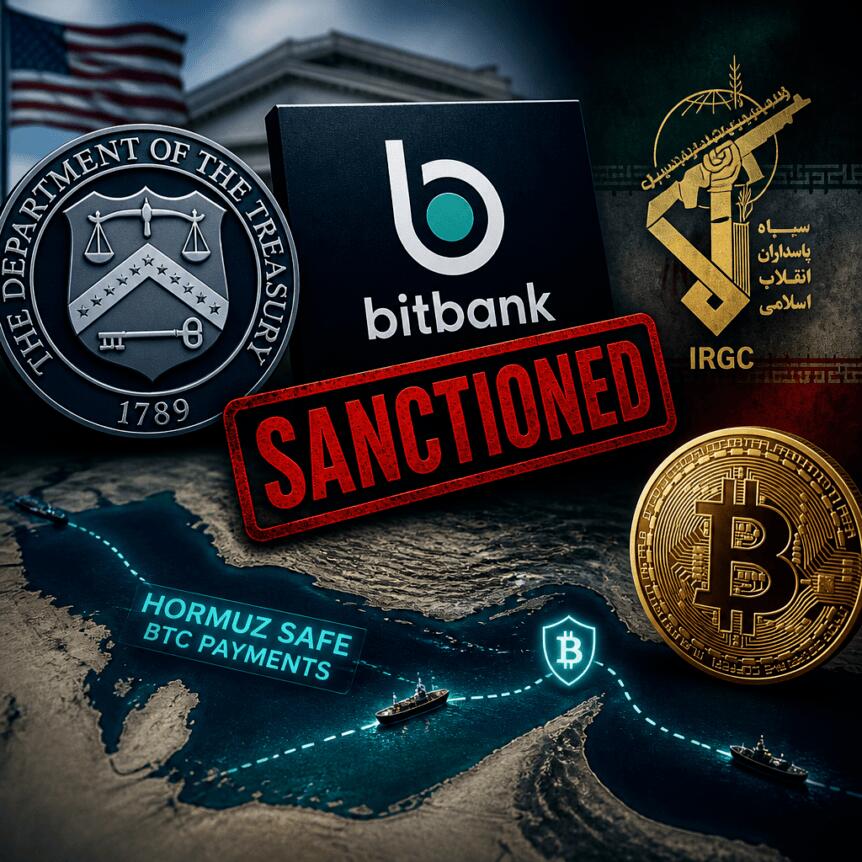
U.S. authorities have announced new sanctions targeting an Iranian cryptocurrency exchange, alleging it was used to process Bitcoin payments tied to maritime traffic through a strategic choke point in the Middle East.
On Thursday, the U.S. Department of the Treasury’s Office of Foreign Assets Control (OFAC) designated BitBank, accusing the platform of helping move cryptocurrency-linked funds connected to vessels transiting the Strait of Hormuz. The action is part of a broader push to restrict Iran’s access to international financial channels, including through digital assets.
Key takeaways
- OFAC sanctioned Iranian digital asset infrastructure tied to BitBank, alleging it facilitated Bitcoin payments connected to Strait of Hormuz shipping.
- Treasury said Hormuz Safe Marine Services Authority transferred funds received to the Islamic Revolutionary Guard Corps (IRGC) using BitBank.
- The U.S. linked the alleged setup to Iranian financier Babak Zanjani, portraying it as part of an IRGC-connected sanctions-evasion architecture.
- OFAC also designated BitBank’s developer, Pishtaz Simorgh Electronic Trade Company, and three associates connected to Zanjani.
- Separately, “Bitbank” is a different entity from a Japan-licensed exchange acquired by SBI Holdings in June, underscoring the importance of distinguishing similarly named platforms.
Why OFAC says BitBank matters
According to OFAC, as of June, the Hormuz Safe Marine Services Authority used BitBank to transfer payments it received to the IRGC. Treasury’s allegation centers on how crypto rails may be used to convert and route funds in ways that can help sanctioned parties avoid traditional banking scrutiny.
OFAC further claimed that the exchange is part of a wider system Treasury described as enabling the movement of hundreds of millions of dollars in Bitcoin associated with Babak Zanjani—an individual previously tied by the U.S. government to Iran-related sanctions evasion.
In its statement accompanying the designations, Treasury Secretary Scott Bessent said the step “make[s] perfectly clear” that attempts to finance the Iranian regime using cryptocurrencies are not beyond OFAC’s reach.
The Hormuz Safe link and the prior insurance scheme allegation
Treasury’s notice also referenced earlier accusations involving Hormuz Safe. In a prior action, OFAC alleged that Hormuz Safe was connected to an IRGC-backed scheme pressuring vessels to purchase maritime insurance for passage. Treasury’s earlier claim included coverage against seizures by Iran itself—an arrangement OFAC said could create a revenue channel that ultimately supports sanctioned entities.
This time, the U.S. moves from describing the insurance or routing mechanism to naming the alleged crypto exchange infrastructure used to transfer funds that stakeholders may receive in the course of that shipping activity.
For investors and industry participants, the practical takeaway is that U.S. sanctions enforcement is increasingly focused on the “plumbing” that can connect off-chain activity—like shipping payments and insurance flows—to on-chain settlement or exchange transfers.
Scope of the sanctions package
OFAC’s designations include BitBank and its developer, Pishtaz Simorgh Electronic Trade Company, along with three associates of Babak Zanjani. Treasury described the group as “key components of the Iranian regime’s digital assets-based sanctions evasion infrastructure.”
The designations add another layer to a series of OFAC moves aimed at isolating Iran from the international financial system, including through sanctions on digital asset businesses.
Cointelegraph reported that it reached out to BitBank for comment, but no response is included in the source material.
Beware name confusion: Iranian BitBank vs. a licensed Japan exchange
Readers should note that the sanctioned “BitBank” referenced by U.S. Treasury is not the same as a separate “bitbank, inc,” a fully licensed crypto exchange founded in Japan in 2014. That Japan-based entity was acquired by SBI Holdings in June, according to earlier coverage (SBI Holdings acquired bitbank).
Treasury’s designation lists “BitBank” as having been established in 2024. The distinction matters because similarly named platforms can create confusion for users, compliance teams, and market participants trying to assess regulatory risk.
Broader U.S. actions targeting Iran and crypto
This sanction comes amid continued U.S. efforts to tighten restrictions around Iran’s crypto activity. Earlier in the year, OFAC sanctioned multiple Iranian digital asset exchanges—actions Treasury framed as attempts to support sanctions evasion.
In August, the U.S. sanctioned two digital asset exchanges—Shelbit and Aban Tether—according to earlier reporting from Cointelegraph. In June, Treasury also sanctioned four crypto exchanges, including Nobitex, as previously covered.
Treasury has also targeted stablecoin holdings connected to Iranian-linked wallets. In July, the U.S. ordered the freezing of more than $130 million in USDt held in wallets linked to Iran, per coverage included in the source material.
Meanwhile, wider financial constraints appear to be driving Iran to adjust tactics. Earlier this month, the Financial Times reported that Iran’s central bank eased foreign currency controls to encourage businesses to bring overseas earnings home, including by using cryptocurrency, amid tightening U.S. sanctions—an approach discussed in prior coverage from Cointelegraph.
With Thursday’s designations, OFAC is again signaling that crypto-related infrastructure used in sanctioned economic activity—especially when linked to strategic regional commerce like Strait of Hormuz shipping—can be treated as enforceable sanctions targets. The next question for market participants is how exchanges, payment providers, and compliance tooling will respond to these designations, and whether further details about the alleged payment pathways emerge as the U.S. continues expanding its Iran-focused enforcement.
This article was originally published as US Treasury Sanctions BitBank After “Hormuz Safe” BTC Payments Linked to IRGC on Crypto Breaking News – your trusted source for crypto news, Bitcoin news, and blockchain updates.
0
0

 Manage all your crypto, NFT and DeFi from one place
Securely connect the portfolio you’re using to start.
 Where will Bitcoin trade next?
Live Polymarket and Kalshi odds on Bitcoin price targets, compared side by side.
See Bitcoin price odds


