
Tether USDT Price Outlook 2026-2030

0
0
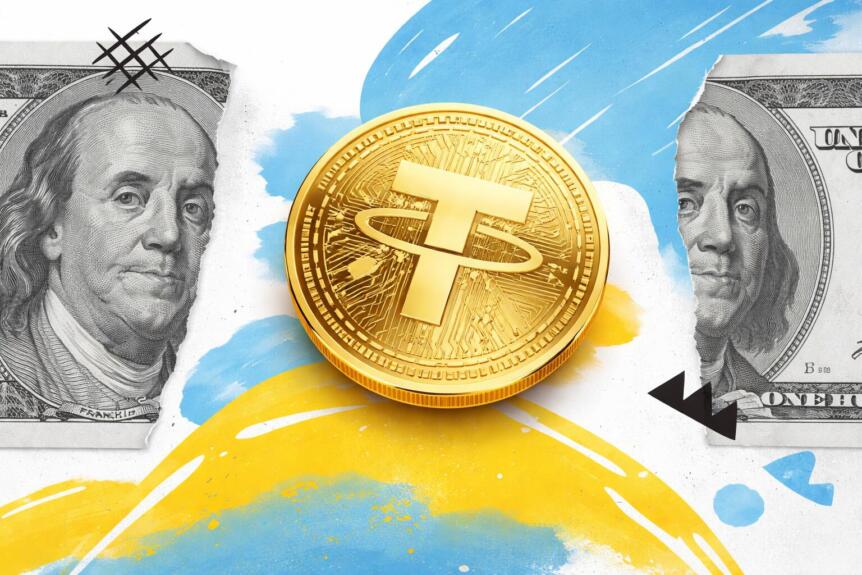
Tether (USDT) Price Prediction
Tether’s USDT peg persists amid competition from yield-bearing stablecoins and evolving regulations. Reserve accumulation and cross-chain volume growth reinforce its market position. Analysts monitor depeg potential through quarterly attestations, futures open interest, and macroeconomic developments. Price scenarios for 2026 to 2030 appear next, covering base, stress, and premium cases informed by reserve structures, transaction flows, and external variables.
2026-2030 Price Scenarios
Base case projects a $0.99-$1.01 range through 2030. Annual supply growth of 8–10% tracks reserve expansion, keeping coverage modestly above 100% to maintain peg stability. Tokenization demand and emerging market absorption prevent sustained premium formation.
Stress scenarios anticipate temporary declines to $0.96-$0.98 during 2026-2027. Coverage falling below 1.01x prompts $5-10 billion in redemptions, mirroring 2022 patterns. Burns and arbitrage restore equilibrium within 30-60 days.
Premium scenarios target $1.02-$1.05 by 2030 during scarcity phases. Yield-bearing alternatives claim less than 10% market share as real-world asset tokenization accelerates. Regulatory simplification drives institutional inflows.
| Year | Base Range | Stress Range | Premium Range | Base Probability |
|---|---|---|---|---|
| 2026 | $0.99-1.00 | $0.96-0.98 | $1.01-1.02 | 85% |
| 2027 | $0.99-1.00 | $0.95-0.97 | $1.01-1.03 | 82% |
| 2028 | $1.00-1.01 | $0.96-0.98 | $1.02-1.04 | 84% |
| 2029 | $1.00-1.01 | $0.97-0.99 | $1.02-1.04 | 87% |
| 2030 | $0.99-1.01 | $0.97-0.99 | $1.02-1.05 | 88% |
Reserves and Peg Stability
Latest attestations show reserves modestly exceeding liabilities, with coverage approaching parity historically triggering several billion dollars in redemptions. U.S. Treasuries and cash equivalents represent the dominant allocation, typically accounting for roughly 70–80% of total reserves, while the remainder includes secured loans, precious metals, and a limited Bitcoin position. Excess reserves fluctuate quarterly and function as a liquidity buffer rather than a fixed structural surplus.
Composition favors short-duration Treasuries, which yield compression from Fed policy affects minimally. Quarterly burns offset mints, limiting supply growth to 8% annualized. USDC trails at $75 billion circulation with similar transparency standards.
| Component | Allocation ($B) | Share |
|---|---|---|
| U.S. Treasuries | 112.4 | 80% |
| Reverse Repos | 21.0 | 15% |
| Cash Equivalents | 6.4 | 5% |
| Excess Coverage | 6.8 | 4% |
Redemption queues process within 48 hours under normal conditions. During May 2022 volatility, USDT briefly traded well below $1 on secondary markets, with intraday prints near $0.95 on some venues before arbitrage restored parity. Emerging market holdings concentrate 40% of issuance, amplifying velocity over domestic flows.
Chain Trends Driving Volume
Tron and Ethereum dominate USDT transfers. Tron leads in low-cost, high-velocity transfers, while Ethereum anchors DeFi liquidity. Solana handles a smaller share (~8%) through high throughput. Emerging markets account for ~40% of TRC20 activity, prioritizing transaction speed over smart contract depth.
Market participants use USDT TRC20 swap tools to capture fee arbitrage during Ethereum congestion, preserving liquidity across protocols without premium costs.
| Chain | Volume Share | Average Fee | Primary Application |
|---|---|---|---|
| TRC20 | 45% | $0.001 | High-velocity transfers |
| ERC20 | 50% | $0.50 | DeFi liquidity pools |
| Solana | 8% | $0.0005 | Rapid settlement trades |
Tron issuance exceeds 80 billion tokens, reflecting sustained adoption in dollar-scarce regions. ERC20 maintains pricing anchor despite fee disadvantage. Volume distribution signals preference for cost efficiency over ecosystem lock-in.
Platform Execution for Traders
USDT pairs account for 60% of exchange volume, with futures open interest steady at $26 billion across major platforms. Binance remains the primary venue for USDT liquidity, while Coinbase lists USDT but structurally prioritizes USDC in U.S. markets. Execution differences emerge in liquidity depth and order book resilience during volatility spikes.
Traders compare Coinbase vs Binance metrics when selecting USDT pair venues, weighing spread tightness against regulatory exposure for range-bound positioning.
| Platform | USDT Volume Share | Open Interest ($B) | Spread (bps) |
|---|---|---|---|
| Binance | 45% | 15 | 1.2 |
| Coinbase | 22% | 6 | 2.1 |
| Others | 33% | 5 | 1.8 |
Funding rates average 0.01% daily, signalling low leverage risk. Platform choice influences slippage on $1-2 billion daily rotations, particularly during attestation windows. Concentration on two venues exposes systemic liquidity risks if outflows coincide.
Technical Indicators Now
USDT trades in a narrow $0.998-$1.002 range under recent market conditions, indicating low volatility. Technical indicators, such as Bollinger Bands and RSI, suggest range-bound positioning, consistent with peg stability.
Futures open interest remains at $26 billion with funding rates near 0.01%. MACD lines converge without histogram divergence, pointing to consolidation ahead of quarterly reports. Volume profiles flatten week-over-week, consistent with range-bound positioning.
- Support levels sit near $0.997 (50-day EMA) and around $0.99 for historical stress periods.
- Resistance caps at $1.002 (upper band) and $1.005 (recent high).
Breakouts below $0.997 signal deeper tests of psychological support. Upper breaches require sustained mints exceeding $2 billion daily. Current setup favors mean reversion over directional bets.
Catalysts and Headwinds
Real-world asset tokenization eyes $400 billion by 2028, channeling demand to USDT pairs. Emerging markets generate 35-40% circulation growth via TRC20 in Latin America and Southeast Asia. U.S. regulatory easing curbs NYAG scrutiny, supporting $20 billion annual institutional inflows.
Yield-bearing stablecoins take 6-8 DeFi TVL points:
- USDe yields 4.8-5.5% APY on $12 billion.
- PYUSD hits $1.8 billion through merchants.
Fed rate paths squeeze Treasury yields on 80% reserves. Coverage margins tighten. The EU’s Markets in Crypto-Assets framework imposes stricter reserve transparency and liquidity standards for compliant issuers, increasing scrutiny on stablecoin structures operating within the bloc.
A visible decline in reserve coverage toward parity would likely accelerate institutional redemptions, with magnitude driven by liquidity conditions rather than a fixed numerical trigger. RWA gains offset this, locking in 62-65% dominance through 2027.
Trader Tactics and Storage
Position USDT within 20-30% portfolio limits to manage concentration risk. Review reserve attestations each quarter for coverage trajectory. Store amounts over $100,000 in multi-signature or hardware wallets, keeping recovery phrases offline.
Chain preferences vary by use case:
- TRC20 suits transfers below $50,000 where fees stay under $0.001.
- ERC20 fits DeFi positions despite $0.50 average costs.
- Solana handles sub-second needs for high-frequency execution.
Primary redemptions typically settle within 1–2 business days under normal conditions. Cross-chain swaps capture fee savings during Ethereum spikes. Avoid leverage entirely. Shift 10-15% to yield options only in stable conditions. Track funding rates exceeding 0.02% daily as outflow warnings. Coverage drops below 1.02x demand immediate position cuts.
USDT Peg Outlook
Reserve buffers slightly above parity support the $0.99–$1.01 range under normal market conditions, bolstered by TRC20 efficiencies and RWA flows. Technical ranges and volume shifts confirm resilience. Yield rivals plus MiCA test margins, but redemptions cap stress at $0.96-$0.98 with rapid recovery.
Platform tactics and storage limit slippage risks. USDT continues to hold a majority share of the global stablecoin market, with dominance dependent on liquidity depth, regulatory positioning, and cross-chain accessibility. Prioritize quarterly attestations, 20-30% caps, and chain rotations before Fed yield squeezes. Premiums over $1.02 require rival erosion below 10%, unlikely by 2030.
FAQ
Will USDT maintain its $1 peg through 2030?
Base scenarios project 85-88% probability within $0.99-$1.01. Stress cases limit breaches to $0.96-$0.98 with burn-driven recovery.
What drives TRC20’s volume dominance?
TRC20 leads in low-cost, high-velocity transfers (~45% of USDT activity), while ERC20 supports DeFi liquidity despite higher fees (~50%). Emerging markets prioritize transaction speed in dollar-scarce regions, contributing to TRC20’s practical advantage.
How do yield rivals impact USDT?
USDe and PYUSD erode 6-8 DeFi TVL points at 4.8-5.5% APY. Liquidity depth restricts share loss below 10%.
What triggers a 2026 stress depeg?
Coverage approaching parity can trigger several billion dollars in redemptions, historically absorbed by arbitrage and reserve buffers. Fed yield compression or MiCA collateral caps may accelerate outflows.
Should portfolios hold USDT long-term?
Cap exposure at 20-30% for peg reliability. Allocate 10-15% to yields during stable periods.
Can USDT trade above $1.02 sustainably?
Premium scenarios need rival erosion below 10% share. RWA scarcity supports this at 5-10% odds by 2030.
How reliable are these projections?
Ranges derive from attestation trends and historical patterns, with coverage consistently above parity. Black swans alter probabilities.
Why prefer TRC20 over ERC20?
TRC20 suits transfers under $50,000. ERC20 anchors DeFi despite fee disadvantage.
What storage secures larger USDT positions?
Multi-signature or hardware wallets for over $100,000. Keep phrases offline; enable direct Treasury redemption.
When do Fed rates affect reserves?
Treasury yield drops on 80% allocation narrow coverage. Monitor before rate cuts for rotation signals.
Disclaimer
This article offers informational analysis only. It does not constitute investment, financial, or trading advice. Cryptocurrency markets exhibit high volatility, and historical patterns do not predict future outcomes. Readers must conduct independent research and consult qualified professionals before making decisions. The publisher assumes no liability for any losses incurred.
This article was originally published as Tether USDT Price Outlook 2026-2030 on Crypto Breaking News – your trusted source for crypto news, Bitcoin news, and blockchain updates.
0
0

 Manage all your crypto, NFT and DeFi from one place
Securely connect the portfolio you’re using to start.


