
Worldcoin Falls 13% as Iris Scanning Tech Reaches Zoom and DocuSign

0
0
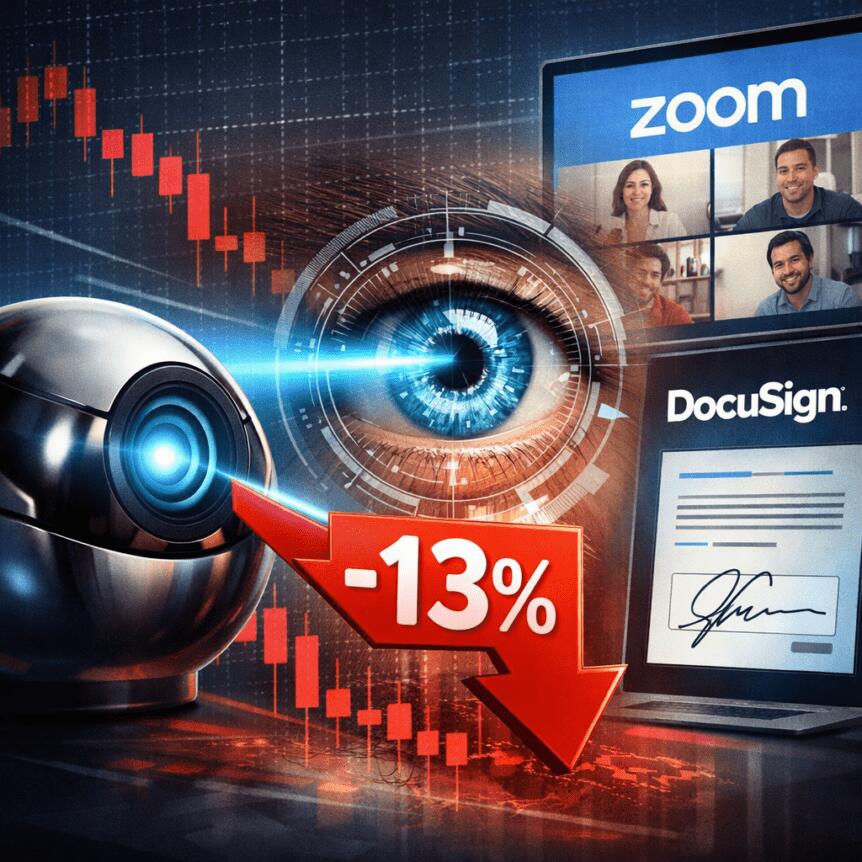
Worldcoin’s native token, WLD, slipped about 13.4% on Friday, trading near $0.28, as the iris-based identity project announced a fresh wave of integrations for its “proof of humanity” stack. World Network, led by OpenAI CEO Sam Altman, is expanding the reach of its biometric verification infrastructure, which centers on the Orb device that scans a user’s iris to create a unique digital identity without exposing personal data.
The rollout coincides with a broader push to embed World ID into everyday tools. Zoom unveiled a Deep Face authentication integration to help prevent deepfakes during video calls, while electronic signatures platform Docusign is adding World ID verification to digital agreements. Tinder is expanding World ID verification to United States users, underscoring an interest in identity verification as AI-enabled interactions proliferate. World explained that as AI agents increasingly act on behalf of real people, the ability to prove a human stands behind each agent becomes critical.
No more deepfakes on video calls. @worldnetwork identify verification on @Zoom.
— World (@worldnetwork) April 17, 2026
CoinGecko data shows WLD at around $0.28 after Friday’s move, even as the broader crypto market rose about 2.2% on news that tensions between the United States and Iran were easing and regional trade channels such as the Strait of Hormuz were opening. World’s token acts as the economy’s incentive layer, used to reward users who verify their unique identity and to enable transactions within World Network’s ecosystem.
World has positioned World ID as a portable, account-based system with features like key recovery and multi-device support, aiming to make verification resilient as AI agents gain prominence in digital workflows. The platform emphasizes that proof of humanity is not only a crypto-native concept but a cross-application requirement as AI agents begin to operate across consumer and enterprise spaces.
Key takeaways
- WLD fell 13.4% to about $0.28 on Friday as World Network rolled out new integrations of its proof-of-human stack.
- Major partnerships tie World ID to Zoom for anti-deepfake verification, Docusign for identity-backed digital signatures, and Tinder for US users, signaling a push toward enterprise- and consumer-facing identity verification.
- The Orb-based system generates a human-verified identity without distributing biometric data, while offering account-based features like key recovery and multi-device support.
- World’s ecosystem has grown beyond crypto-native use cases, with Coinbase and others leveraging World’s AgentKit—part of a broader toolkit for proving AI agents are linked to a verified identity; additional partners include AWS, Shopify, BrowserBase, Exa, and VanEck.
- Market context suggests mixed signals: token volatility amid a rising broader market, influenced by geopolitical shifts and easing tensions rather than purely token-driven catalysts.
World ID moves into mainstream apps and business workflows
The latest wave of integrations highlights World Network’s ambition to embed a “proof of humanity” layer across everyday software—ranging from collaboration tools to legal workflows. Zoom’s Deep Face authentication aims to curb impersonation on video calls by tying real-user identity to AI-driven communication, addressing a growing concern about deepfakes in real-time conversations. Docusign’s addition of World ID verification could standardize how signers are validated in digital agreements, potentially reducing fraud in document workflows. Tinder’s US expansion signals a consumer-facing rollout that could influence how mainstream apps validate identities in online interactions.
World contends that as AI agents increasingly represent real people, a robust, privacy-preserving identity backbone becomes essential. The Orb device, which scans irises to generate a unique digital identity, is designed to minimize the amount of biometric data exposed while establishing that a real person stands behind each action or interaction. World emphasizes that its approach is account-based, with features intended to be portable across devices and recoverable should users lose access to credentials.
Privacy considerations and governance questions
As with any biometric-based verification framework, World’s approach invites scrutiny around data governance and privacy. Critics argue that centralizing identity verification—especially at scale—could raise surveillance concerns if control over the data ecosystem concentrates in a single company or platform family. Proponents, however, point to reduced risk of impersonation and fraud in AI-enabled contexts, arguing that verified human identity can unlock safer interactions and more trustworthy automated services.
Industry observers are watching how World balances privacy protections with the demand for verifiable identity across platforms. The emphasis on a non-identifying iris scan—where only a unique digital fingerprint is used for verification, not raw biometric data—remains a core feature cited by World, but real-world adoption will test whether users and partners trust the model enough to integrate at scale across consumer and enterprise channels.
Developer tools and ecosystem expansion
Beyond consumer and enterprise integrations, World has been building a broader ecosystem around its identity layer. In March, Coinbase announced a collaboration to verify AI agents using World’s AgentKit, a developer toolkit designed to help agents prove a link to a verified identity as part of its x402 AI agents micropayments protocol. The move aligns with World’s broader aim to extend its proof-of-human infrastructure into AI-assisted workflows, enterprise applications, and developer platforms.
World has already linked its technology with a range of partners, including Amazon Web Services, Shopify, Browserbase, Exa, VanEck, and Coinbase. The expansion into mainstream software ecosystems signals a shift from a niche crypto project toward a cross-industry identity substrate that could underpin trusted AI-mediated interactions, digital signatures, and automated processes in a privacy-conscious manner.
As World Network continues to push World ID into both consumer apps and business tools, investors and users should watch for how privacy safeguards evolve, how regulators respond to biometric verification standards, and whether broader adoption translates into tangible utility and network effects for World’s token economy. The next milestones to watch include further platform rollouts, refinements to key recovery and multi-device support, and the integration of World ID into additional enterprise and consumer services.
Readers should monitor upcoming updates from World Network and partner platforms to gauge how quickly verification can scale without compromising user privacy or control over data. With the AI era accelerating the need for reliable ways to prove human presence, the trajectory of World ID’s integrations could influence both the pace of adoption and regulatory discourse in identity verification across digital ecosystems.
This article was originally published as Worldcoin Falls 13% as Iris Scanning Tech Reaches Zoom and DocuSign on Crypto Breaking News – your trusted source for crypto news, Bitcoin news, and blockchain updates.
0
0

 Manage all your crypto, NFT and DeFi from one place
Securely connect the portfolio you’re using to start.


