
US Sanctions Canadian Money-Exchange Firms Linked to Iran

0
0
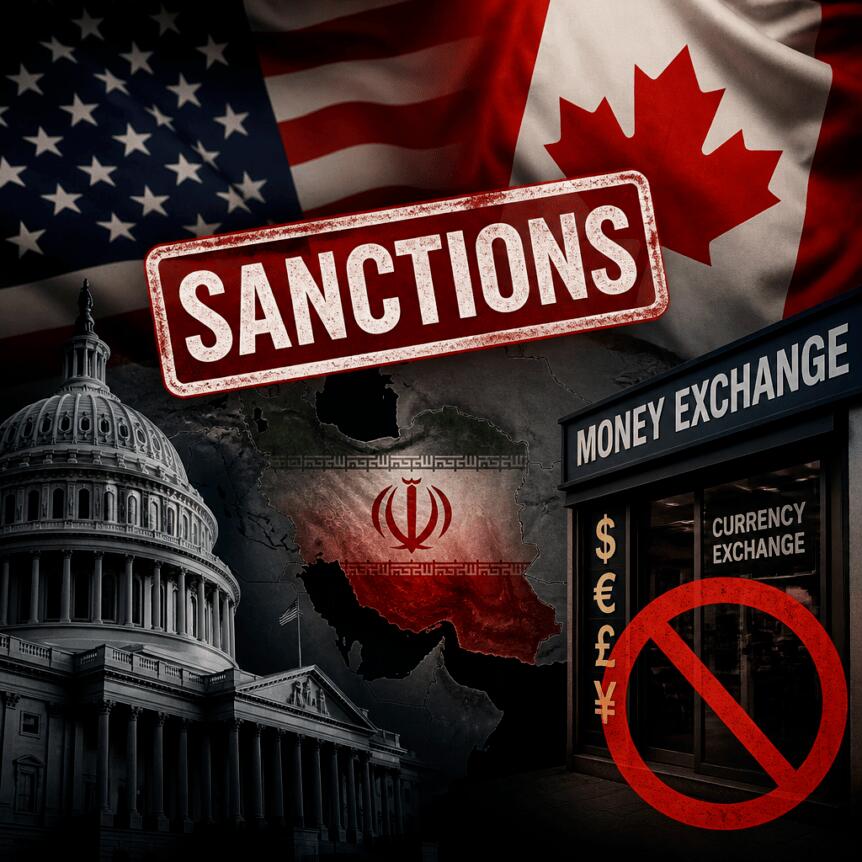
The U.S. Department of the Treasury has imposed sanctions on eight Canadian money-service businesses, accusing them of facilitating exchanges between Iranian rials and other currencies for digital assets. In a statement released on Friday, Treasury said the companies supported international transactions tied to sanctioned Iranian entities and related crypto activity.
The designations are part of a broader U.S. effort to limit Iran’s access to financial channels outside traditional banking routes, including through digital asset flows. Treasury also said several of the affected firms altered their names and addresses in an attempt to avoid detection.
Key takeaways
- Treasury sanctioned eight Canadian money-service companies tied to exchanges involving Iranian rials and other currencies for digital assets.
- The U.S. says the businesses helped enable transactions with sanctioned Iranian digital asset exchanges and crypto addresses linked to the IRGC.
- U.S. Treasury framed the move as isolating the targeted firms from the dollar-based financial system.
- The actions were coordinated with FINTRAC, Canada’s financial intelligence unit.
- Treasury Secretary Scott Bessent argued Canada cannot serve as a “safe haven” for services that facilitate sanctions evasion connected to Iran.
Treasury sanctions eight Canadian firms tied to Iranian crypto flows
According to the Treasury Department statement, the sanctioned companies are alleged to have conducted services that connected Iranian fiat currency exchange activity to digital assets—effectively bridging value transfers into crypto in a way Treasury describes as enabling cross-border transactions.
Treasury linked the conduct to dealings with sanctioned Iranian digital asset exchanges, along with digital asset addresses associated with Iran’s Islamic Revolutionary Guard Corps (IRGC). The thrust of the U.S. action is to disrupt the pathways that could allow sanctioned actors to convert between currencies and crypto while continuing to transact internationally.
As part of the sanctions rationale, Treasury emphasized that these measures are intended to isolate the designated entities from the dollar-based financial system. The U.S. has increasingly focused on non-U.S. firms that it believes facilitate sanction evasion, arguing that pressure must extend beyond U.S. borders to be effective.
Why the “sanctions evasion” framing matters
Scott Bessent, U.S. Secretary of the Treasury, said the designations send a clear message to cross-border service providers. In remarks tied to the Friday action, he said: “Canada cannot be a safe haven for illicit financial facilitators that provide sanctions evasion services to the Iranian regime and its proxies.” He added that Treasury intends to pursue and disrupt the Iranian regime’s financial channels “anywhere in the world.”
This is not the first time Treasury has targeted crypto-adjacent channels in the Iran sanctions framework. Earlier coverage from Cointelegraph noted that, in August, Treasury’s Office of Foreign Assets Control (OFAC) was targeting crypto exchanges and related activity it said supported the transfer of funds to the IRGC.
In that earlier context, Bessent said the U.S. aimed to “increase the economic pressure” on Iran, with emphasis on financial networks that could move funds through dollars, rials, or crypto. Friday’s sanctions appear to fit into that same strategy—narrowing in on the intermediary services that Treasury says convert Iranian fiat currency activity into digital asset transactions.
Treasury also said some of the entities it designated had reportedly changed their names and addresses. That detail signals the U.S. view that these networks attempt to evade enforcement, and it also highlights why regulators and compliance teams often scrutinize corporate identity changes when assessing sanctions risk.
Coordination with Canada’s financial intelligence unit
Treasury stated that the actions were coordinated with FINTRAC, Canada’s financial intelligence unit. That cooperation matters for market participants and compliance professionals because it underscores that cross-border enforcement may involve domestic intelligence and compliance frameworks, not solely action by U.S. regulators.
For the broader financial sector, the implication is that service providers dealing in currency exchange, money services, or other gateway functions may face heightened scrutiny if regulators believe they are enabling sanctioned end users or routes into digital asset markets.
While the U.S. sanctions themselves primarily target access to the dollar financial system and impose legal and compliance restrictions, coordination with Canadian authorities signals that the investigative and enforcement picture may also play out under national anti-money-laundering and counter-terrorism financing priorities.
Separate U.S. nuclear information reward announced
In a separate action on Friday, the U.S. also referenced the Rewards for Justice program, offering as much as $20 million—and potential relocation—for information about Iran’s nuclear program. The reward is described as covering details such as facilities, equipment, and personnel.
The statement linked the announcement to what it described as Iran’s lack of compliance with the International Atomic Energy Agency (IAEA) on safeguards. It said this noncompliance has resulted in the IAEA losing “continuity of knowledge” regarding Iran’s production of enriched uranium and components such as centrifuges.
Although this reward program is not directly about digital assets, it reflects the same general pressure approach—targeting a range of channels related to Iran’s strategic capabilities and alleged illicit activity.
What to watch next for crypto compliance and enforcement
For crypto market participants—especially firms interacting with fiat on-ramps—Friday’s designations underline that Treasury’s enforcement focus can extend to the intermediaries that route currency value into digital assets. The immediate question for investors and builders is how quickly similar enforcement actions may broaden beyond the eight named Canadian entities, particularly where Treasury believes sanctions evasion tactics include changing corporate identities.
This article was originally published as US Sanctions Canadian Money-Exchange Firms Linked to Iran on Crypto Breaking News – your trusted source for crypto news, Bitcoin news, and blockchain updates.
0
0
 Manage all your crypto, NFT and DeFi from one place
Securely connect the portfolio you’re using to start.