
Alert: XRP Binance Leverage Ratio Plunges 26.2% as Traders Cut Risk Exposure

0
0

What to Know
- XRP’s Estimated Leverage Ratio on Binance plunged 26.2%, falling from 0.229 to 0.169 as traders reduced their leveraged exposure.
- CryptoQuant data shows XRP leverage previously reached 0.260 in January before declining, while XRP prices weakened alongside reduced derivatives positioning.
- CryptoQuant analyst Arab Chain identified reduced liquidation exposure as a potential outcome, without confirming any bullish or bearish market direction.
XRP’s derivatives market on Binance has recorded a major reduction in leveraged exposure, with its Estimated Leverage Ratio falling 26.2%. According to CryptoQuant analyst Arab Chain, the ratio declined from 0.229 in September to approximately 0.169 in October.
The decline marks a substantial reversal from September’s elevated readings, reflecting reduced leveraged positioning among XRP traders amid weaker price performance. Arab Chain linked the changing market structure to potential position closures and reduced leverage, identifying a notable shift in derivatives activity. The latest reading places Binance’s XRP leverage considerably below its earlier 2026 highs, following several months of fluctuations in derivatives positioning.
Also Read: Railway Halts Deployments Following Security Breach Involving Customer API Keys
XRP Leverage Retreats From September Peak as Binance Derivatives Positions Decline
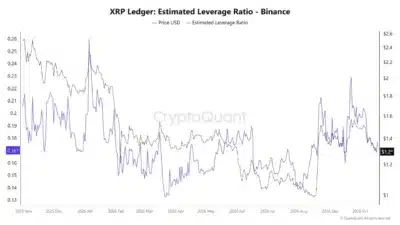
CryptoQuant’s historical chart shows considerable fluctuations in XRP’s Estimated Leverage Ratio between November 2025 and October 2026. The indicator climbed toward 0.260 in January before recording a sustained decline during the following months.
By late March, the ratio had approached 0.133, representing one of its lowest readings during the observed period. Leverage subsequently recovered, with readings fluctuating between approximately 0.140 and 0.190 across several months.
September brought another increase, pushing the ratio toward 0.229 before the market recorded a substantial reversal. The October decline to 0.169 erased much of that increase, returning leverage closer to earlier levels.
Source: CryptoQuant
Meanwhile, XRP’s price weakened alongside the reduction in leveraged exposure across Binance’s derivatives market. The CryptoQuant chart shows XRP trading near $1.30 at its endpoint, below the higher levels recorded during September.
Arab Chain Highlights Reduced Liquidation Exposure in XRP Market
Arab Chain identified reduced liquidation exposure as a potential consequence of the 26.2% decline in Binance’s leverage ratio. The analyst noted that lower leveraged positioning could reduce the market’s sensitivity to liquidation-driven volatility.
The report also emphasized that declining leverage does not necessarily indicate increased selling activity among XRP traders. Both bullish and bearish positions may contribute to the reduction, depending on how market participants adjust their exposure. Furthermore, Arab Chain noted that broader market conditions and remaining position sizes influence the extent of liquidation-related risks.
Binance’s XRP Estimated Leverage Ratio now stands near 0.169, substantially below September’s 0.229 reading. The decline represents a significant reduction in relative derivatives exposure within less than a month.
Also Read: XRP Whale Inflows to Binance Reach Seven-Month High as 1.669 Billion Tokens Move to Exchange
The post Alert: XRP Binance Leverage Ratio Plunges 26.2% as Traders Cut Risk Exposure appeared first on 36Crypto.
0
0

 Manage all your crypto, NFT and DeFi from one place
Securely connect the portfolio you’re using to start.


