
DeepSeek and MiniMax registered under China's proposed AI export controls

0
0
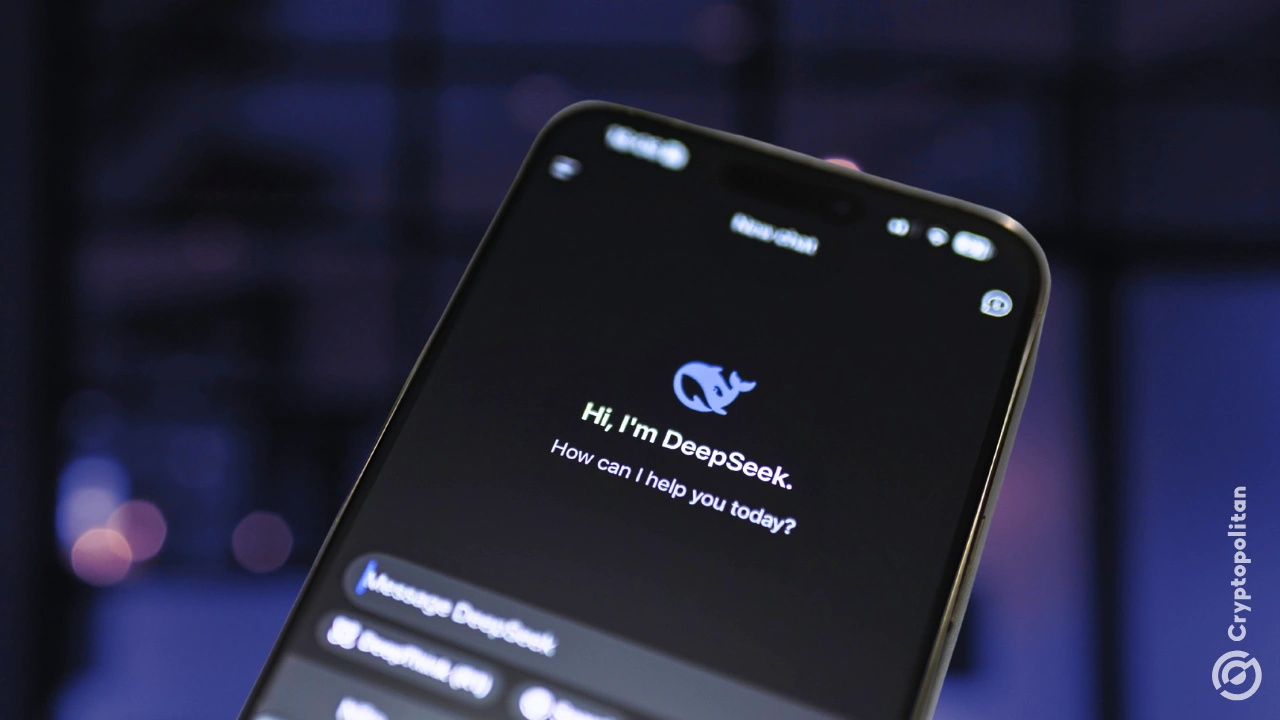
DeepSeek and MiniMax have signed up under Beijing’s draft AI export rules, said a CCTV-affiliated account, Yuyuan Tantian, on Thursday. The two developers also completed open-sourcing and overseas licensed use of their models, the account said.
In a separate post Friday, Yuyuan Tantian said overseas Internet users encouraged other Chinese open-source models to follow suit.
On October 16, China’s Ministry of Commerce and Ministry of Science and Technology announced the opening of public comment on a revised Catalogue of Technologies Prohibited and Restricted from Export. The draft lists 23 AI techs such as large models, agents, compute clusters and information processing.
The list triggered questions in markets and foreign policy circles about whether China was closing the door on AI exports. The Commerce Ministry’s Q&A spent more words on what the rules don’t cover than what they do, the account said.
Liu Hongmei says restricted items can still win licenses
Lawyers Liu Jing and Liu Hongmei from Beijing Dacheng Law Firm participated in the consultations on the draft, which began in the first half of the year. Some AI entries had control points that kept shifting with the industry, they told Yuyuan Tantian, as drafts moved on.
Many of the concerns companies aired at those meetings found their way into the draft. Their bigger question now, the account said, is whether there will be clearer operating guidance.
This is not an export of the model: furnishing API access, interacting via an app or web, SaaS services, or lightweight on-device deployment with a restricted model.
Yuyuan Tantian said most artificial intelligence (AI) technology will continue to be freely exported once the measures are in effect. Open-sourcing AI, running self-built compute centers abroad, taping out chips overseas, joint R&D with foreign resources, and work on international standards qualify for automatic licensing, close to file-and-go.
Members of the World Artificial Intelligence Cooperation Organization will get stronger support for building capabilities and making rules together.
The draft delineates three areas. A model trained on core national data that is provided as a service would be barred from export, and one trained on important data restricted, irrespective of size or number of parameters.
Agent technology above a certain level of performance would be restricted. If it is mainly intended for critical information infrastructure, defense or core government systems, it moves up to prohibited.
The third category is compute, which encompasses the design of AI chips and high-speed interconnects connecting nodes inside large AI compute clusters. Numeric thresholds include, for example, training compute > 10^26 floating-point operations, > 2 trillion parameters, or capability in the global top ten.
As Cryptopolitan reported in May, DeepSeek’s flagship V4-Pro has 1.6 trillion parameters.
Once the rules come into effect, banned-category technology cannot be exported, Liu Hongmei said. She said companies could seek licenses for restricted items without having to scrap existing plans overseas.
Yuyuan Tantian calls the revision routine, citing changes since 2001
Federal civilian agencies have been instructed by the Department of Homeland Security to discontinue use of DeepSeek products and any third-party tools developed on its models, Cryptopolitan reported. The order was signed by Secretary Markwayne Mullin on July 24, 2026.
Yuyuan Tantian said Washington categorizes AI export restrictions by country and alliance, referencing the January 2025 AI Diffusion Framework. The account said China has revised the catalogue several times since 2001 and the current revision is routine work under existing law.
Yuyuan Tantian said oversight is then on the act of exporting technology, not the technology itself.
If you're reading this, you’re already ahead. Stay there with our newsletter.
0
0
 Manage all your crypto, NFT and DeFi from one place
Securely connect the portfolio you’re using to start.