
OCC tells examiners AI isn’t a separate risk

0
0
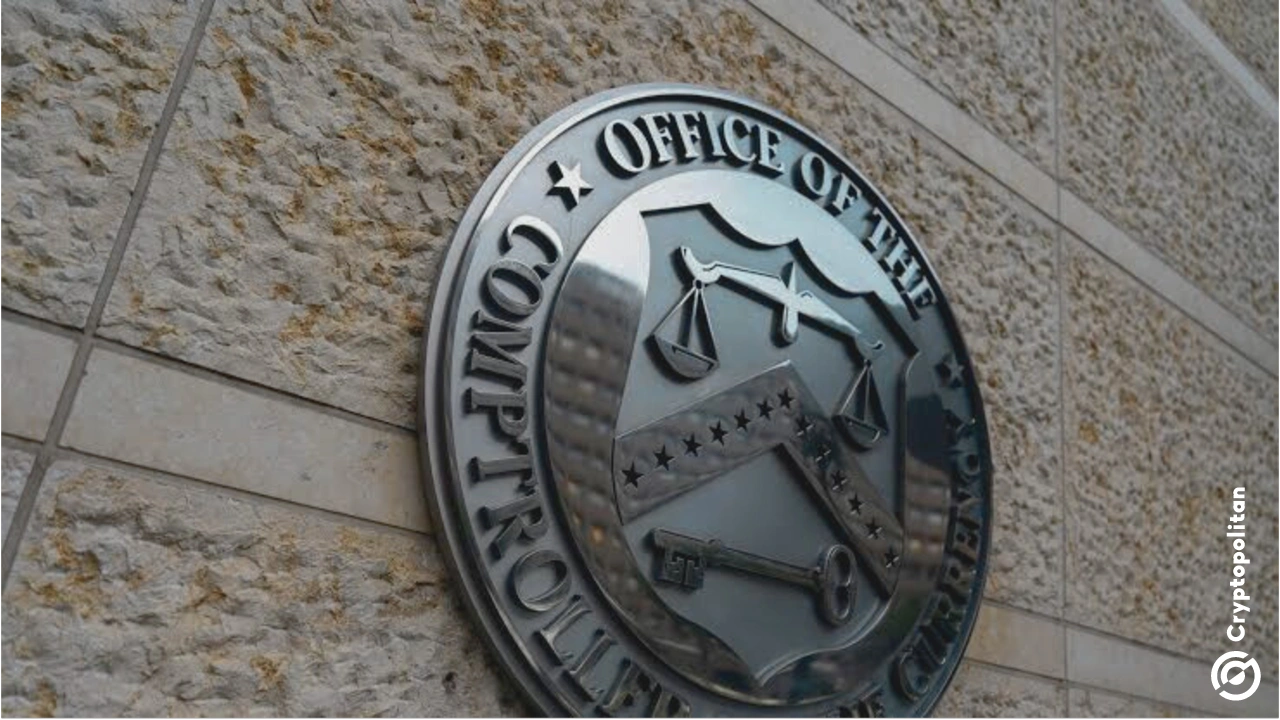
The Office of the Comptroller of the Currency (OCC) told its bank examiners on Wednesday not to treat artificial intelligence as a distinct risk.
The OCC has also issued what it called its first framework for supervising how large national banks use the technology.
What did the OCC tell examiners to do?
On Wednesday, the Office of the Comptroller of the Currency (OCC) told examiners to treat AI as part of the risks a bank already faces instead of setting up a new category just for the technology. Banks also do not have to set a separate risk limit for it.
The OCC said that examiners are to conduct their reviews depending on how a bank uses AI, how big it is, and how complex it is.
The OCC said its approach is “technology-neutral” and does not favor any one type of technology. It also said that the framework will develop alongside AI tools.
The OCC stated that examiners should care less about how advanced an AI tool is and focus more on the damage it could do if it fails. A complex tool used only inside a bank may be less of a worry than a simple AI agent that can start payments on its own.
When the risk is higher, the OCC said banks may need to cap how much the AI can do without a human. Or they may need to keep a person closely involved.
Back in April, the OCC, the Federal Reserve and the FDIC refreshed their rules on managing model risk. But they did not cover generative or agentic AI, describing it as new and quickly changing.
The new framework closes that regulatory gap. The agencies had said that they planned to ask the public for input on how banks use AI.
Why are regulators worried about AI in banking?
Even before the OCC’s suggestions, several big U.S. banks like Citigroup (NYSE: C), Bank of America (NYSE: BAC), JPMorgan Chase (NYSE: JPM) and Charles Schwab (NYSE: SCHW) already blocked or limited outside AI agents from reaching customer accounts because the banks fear these agents could move unused cash to accounts that pay more interest.
On the bank’s third-quarter earnings call, JPMorgan CEO Jamie Dimon said the bank will limit agent access to client accounts. He said “rogue agents” are a danger, and there could be thousands of them.
The Bank of America’s CEO Brian Moynihan has said that he wants a human to be involved in the process before money leaves an account.
Regulators are also still debating who should be held responsible when an automated payment fails.
The Bank of England Deputy Governor Sarah Breeden, who wants tougher safeguards against AI, spoke at the European Central Bank’s forum in Sintra, Portugal, and suggested that every autonomous AI trading tool should have a kill switch, so people can stop it right away if it causes prices to drop suddenly.
The smartest crypto minds already read our newsletter. Want in? Join them.
0
0
 Manage all your crypto, NFT and DeFi from one place
Securely connect the portfolio you’re using to start.