
Binance Hack Could Accelerate Shift to DEXs, Standard Chartered Says

0
0

The $6.3 billion Binance hack could push more crypto trading away from centralized platforms and onto decentralized exchanges, according to Standard Chartered’s Geoffrey Kendrick. The bank’s global head of digital assets research made the case on October 30, 2026. That was hours after Binance, which he called the largest centralized exchange, suspended deposits and withdrawals. He also kept his $100 target for Uniswap’s UNI token by 2030.
- Binance estimates the breach at $6.3 billion, which would make it the largest crypto theft on record.
- Binance says it has worked with partners to freeze about $3 billion in affected assets. It also says user funds are safe.
- TRM Labs says the attack appears to be linked to a North Korean state-sponsored hacking group.
- Kendrick called the hack “another reason” his UNI forecast may prove too low. He also warned the negative price action “still has some way to go.”
Timeline of the Binance hack and market fallout
- 2025: Bybit loses $1.5 billion in a North Korea-linked hack, the previous record for a single crypto theft, as CoinDesk notes.
- Q2 2026: CoinGecko research puts the top 10 spot DEX-to-CEX ratio at 23.5%, up 2.1 percentage points from the first quarter.
- October 30, around 00:30 GMT: Binance says all deposits and withdrawals are “temporarily suspended” while it runs security checks, freezes funds and works with law enforcement.
- October 30, 03:47 UTC: Cointelegraph publishes Kendrick’s view that the breach could speed up the shift to DEXs.
How the attack unfolded
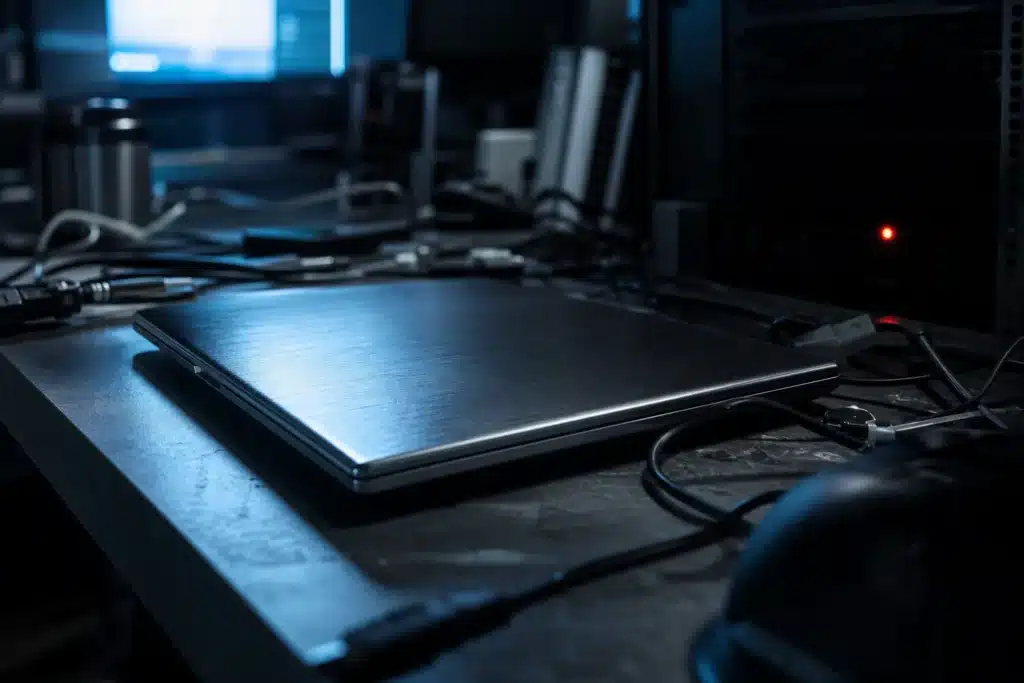
Binance’s own explanation is short. Its statement on X was reported by Yahoo Finance. According to that statement, an initial investigation found that a laptop belonging to a “DevOps engineer” was compromised. That gave the attacker access to a “service container” and the ability to execute unauthorized withdrawals.
It happened fast. TRM Labs estimated that about $6.36 billion moved out of Binance wallets across 10 blockchains, most of it within roughly 20 minutes, CNBC reported. Glassnode data cited by Yahoo Finance showed that $1.66 billion in USDT, 17,985 BTC (about $1.45 billion) and $767 million in USDC were drained.
That stablecoin share matters, because issuers can freeze USDT and USDC, and they did. CNBC added that Binance’s SAFU emergency fund, worth about $1.2 billion, could cover roughly a third of the remaining losses if the frozen stablecoins are returned. For a fuller breakdown, see our report on the $6.3 billion Binance hack.
Standard Chartered’s DEX argument
Kendrick’s pitch is blunt. “I would encourage investors to re-engage with Uniswap,” he said, in comments carried by Cryptonews. That is his view, not a recommendation from this publication. He claimed the DEX “has never had any exploits” and said the hack of the largest CEX “should see the ratio of DEX to CEX trading continue to increase.”
His $100 UNI forecast builds on the bank’s earlier thesis that assets locked in DeFi could reach $2.7 trillion by 2030, Cointelegraph reported. It is a long-range projection that depends on that DeFi growth assumption, not a certainty. The gap is also large: CoinGecko data cited by Cointelegraph had UNI at $6.48 after the sell-off.
Decentralized exchanges avoid one specific risk: a single company holding user funds. They carry their own exposures, though, from smart contract bugs to user error and phishing aimed at self-custody wallets. For background on the protocol, see our earlier Uniswap coverage.
Market reaction to the Binance hack
Prices slid as the news spread. CoinDesk said the drop liquidated more than $1 billion in leveraged futures bets, and our liquidations report has more detail. Reported figures differed. Cointelegraph had BNB down more than 8% and UNI down 10.4%. Investing.com, via Yahoo Finance, said BNB later pared its loss to 4.8%, and CoinDesk put UNI’s 24-hour drop at just over 3%.
| Asset | Price (06:13 UTC, Oct 30) | 24h change | 24h low |
|---|---|---|---|
| Bitcoin (BTC) | $78,494 | -1.97% | $76,443 |
| Ethereum (ETH) | $2,241.67 | -3.17% | $2,178.62 |
| BNB | $715.98 | -4.85% | $682.36 |
| XRP | $1.26 | -2.99% | $1.20 |
| Solana (SOL) | $97.86 | -2.21% | $92.64 |
Source: CoinGecko. Sentiment is shaky too: the Crypto Fear & Greed Index read 30, or “Fear,” on October 30.

Reactions from the industry
Tether chief Paolo Ardoino said his firm froze about $1.6 billion “related to a potential Binance exchange hack.” Circle’s Jeremy Allaire said his company had frozen more than $800 million in USDC. Binance wasn’t the only platform hit, either. CoinDesk reported that Polymarket suspended international trading after hackers drained more than $2.6 million from user accounts, which we covered in our Polymarket report.
Kendrick isn’t calling a bottom. “I suspect the negative price action still has some way to go,” he said, according to Cryptonews. “Only after assets are unfrozen and more detail of the hack emerges will we find a new base.”
What to watch next
The first test is when Binance reopens withdrawals and how smoothly that goes. The second is whether frozen stablecoins are returned, since that determines how much SAFU has to absorb. Later DEX-to-CEX volume data will then show whether the ratio keeps climbing past 23.5%, as Kendrick expects.
If Kendrick is right that the sell-off has further to run, prices could stay volatile until more details emerge. Leveraged positions can be wiped out quickly in this kind of market, and assets held on any exchange carry counterparty risk. Nothing in this article is investment advice.
FAQ
How much was stolen in the Binance hack?
Binance estimated the total impact at $6.3 billion, and TRM Labs put the amount moved at about $6.36 billion. Binance said it had worked with partners to freeze about $3 billion.
Why does Standard Chartered link the Binance hack to DEXs?
Kendrick argues that a breach at the largest centralized exchange should push more trading to decentralized venues like Uniswap. That is his opinion, not an established outcome, and DEXs carry their own smart contract and self-custody risks.
Who is behind the attack?
TRM Labs says the attack appears to be linked to a North Korean state-sponsored hacking group. Binance said it is working with law enforcement.
Related Articles
Sources
- Binance hack could accelerate shift to DEXs: Standard Chartered (Cointelegraph)
- Binance Hack Could Boost Uniswap: Standard Chartered (cointelegraph.com)
- Binance hack could accelerate shift to DEXs: Standard Chartered (cryptonews.net)
- $6 billion Binance hack sends bitcoin, ether tumbling; Standard Chartered expects more pain (cryptonews.net)
- Crypto platform Binance confirms $6.3 bn hack (finance.yahoo.com)
- Binance halts withdrawals after record $6.3 bln hack (finance.yahoo.com)
- Binance’s $6.3 billion hack: What we know and what comes next (www.cnbc.com)
- Binance hack sends BTC, ETH tumbling, liquidates $1 billion in futures bets (www.coindesk.com)
This article is for informational purposes only and does not constitute financial or investment advice. Cryptocurrencies are highly volatile; always do your own research before investing.
0
0

 Manage all your crypto, NFT and DeFi from one place
Securely connect the portfolio you’re using to start.


