
Hal Finney: ten bitcoin from Satoshi and the first transaction in history

0
0
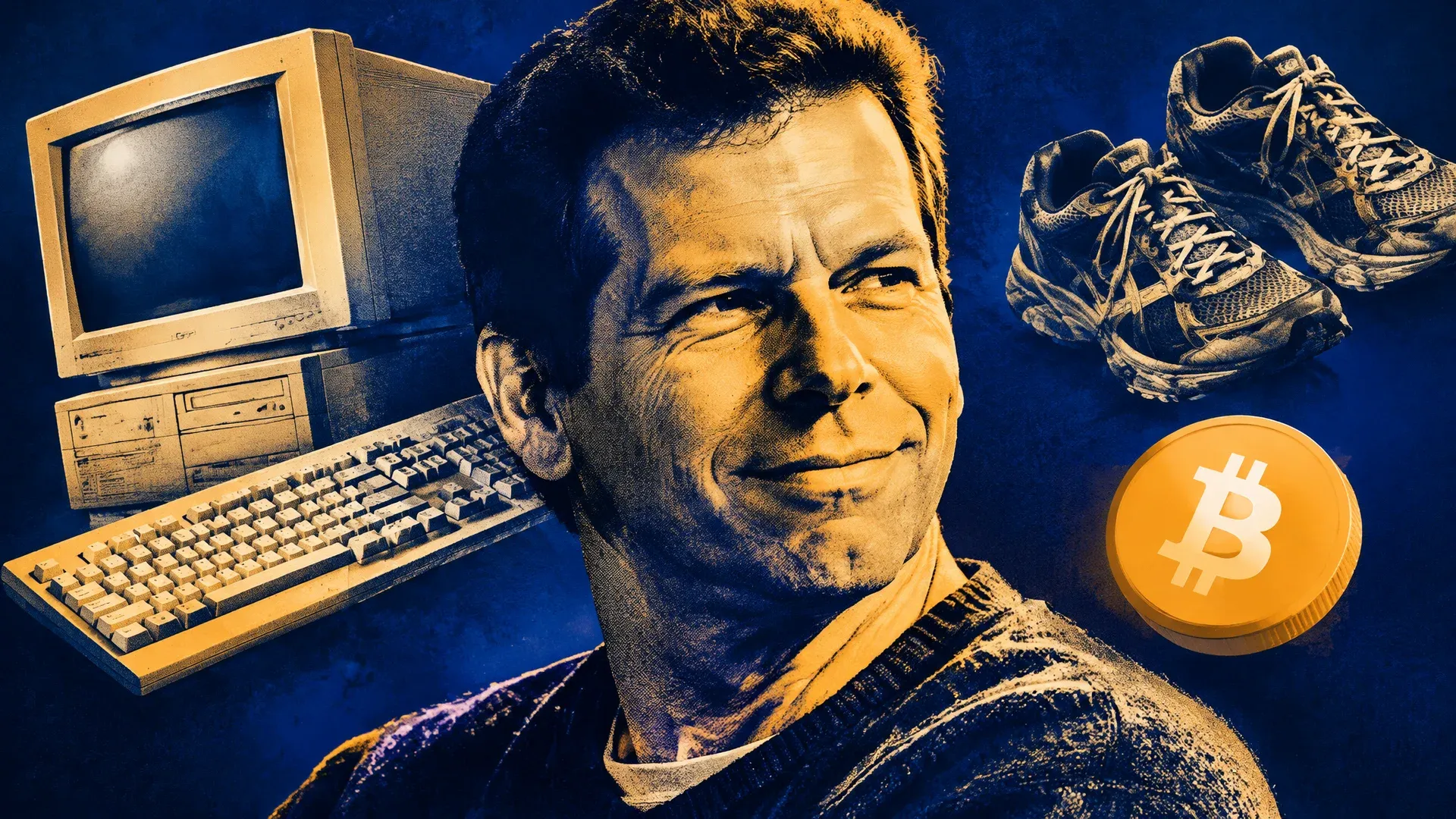
Hal Finney was the first person to receive a bitcoin transfer. On January 12, 2009, Satoshi Nakamoto sent him ten bitcoin as a test, recorded in block 170 of the blockchain. The US cryptographer from California had spent decades working on encryption and digital cash, and he was one of the few experts who took the Bitcoin concept seriously from the start.
His story is more than an anecdote from the early days. In 2004 Finney built RPOW, a direct forerunner of Bitcoin's mechanism; he helped test the first version of the software; and, by his own account, he kept his coins offline in a bank safe deposit box so that his heirs would get them. Anyone who buys bitcoin today and holds it themselves faces the same questions Finney worked through in public back in 2013: where are the keys, who can get to them in an emergency, and how long do I want to hold?
This profile assesses Finney's role on the basis of primary sources: his posts on the cryptography mailing list, his own retrospective on the Bitcoin forum and the debate over whether he himself was behind the pseudonym Satoshi Nakamoto. The documented answer to that question is more sober than many videos online claim.
Hal Finney at a glance: cryptographer, runner and first bitcoin recipient
Harold Thomas Finney II was born on May 4, 1956, in Coalinga, California. In 1979 he graduated in electrical engineering from the California Institute of Technology (Caltech). He spent his first working years in the games industry, where he helped program console titles such as "Adventures of Tron" and "Astrosmash". He later moved to PGP, the maker of the best-known software for encrypted email, and stayed there until he retired in early 2011.
In private life Finney was a keen long-distance runner. With his wife Fran he raised money at the Santa Barbara International Marathon for research into the nerve disease ALS, with which he was diagnosed in August 2009. He died in Arizona on August 28, 2014, aged 58.
Key dates at a glance
- 1979: degree in electrical engineering from Caltech
- early 1990s: active on the cypherpunk mailing list, operator of two anonymous remailers
- 2004: launch of RPOW (Reusable Proofs of Work)
- November 7, 2008: first public reply to the Bitcoin white paper
- January 12, 2009: recipient of the first bitcoin transaction in block 170
- August 2009: diagnosed with ALS
- March 2013: retrospective "Bitcoin and me" on the Bitcoin forum
- August 28, 2014: death in Arizona, cryopreservation by the Alcor Life Extension Foundation
Cypherpunks and PGP: Finney's path to encryption
The cypherpunks were a loose group of programmers and cryptographers who debated on a shared mailing list from the early 1990s. Their core idea was that encryption protects privacy better than any law, so it must be available to everyone. Finney was one of the most active voices on the list.
He ran two anonymous remailers. A remailer is a server that receives emails, strips out the sender details and forwards the message so that the recipient cannot tell who wrote it. He also organised a contest in which the weak export-grade encryption of the Netscape browser of the time was cracked. The result showed publicly how little the short keys imposed by US export rules were worth.
At PGP, Finney worked on the software that millions of people use to encrypt and digitally sign email. Digital signatures and public-key cryptography are exactly the building blocks on which every bitcoin address rests: whoever owns bitcoin in fact owns a private key with which they sign transfers. Finney therefore knew this technology from years of practice before Bitcoin existed.
RPOW 2004: Reusable Proofs of Work as a forerunner of Bitcoin
In 2004 Finney presented RPOW, short for Reusable Proofs of Work. A proof of work is a computational proof: the user has to solve a task that costs computing time but whose solution anyone else can check quickly. The idea came from Adam Back's Hashcash of 1997, which aimed to use such proofs against spam. Finney's innovation was to make the proofs reusable, so that they could be passed from hand to hand like tokens.
According to the account of the Satoshi Nakamoto Institute, it worked like this: a user submitted a proof of work and signed it with their private key. The server then registered a token to that key. If the owner wanted to pass it on, they signed a transfer order to another public key. A central server that kept track of ownership prevented double spending.
Why RPOW failed and Bitcoin did not
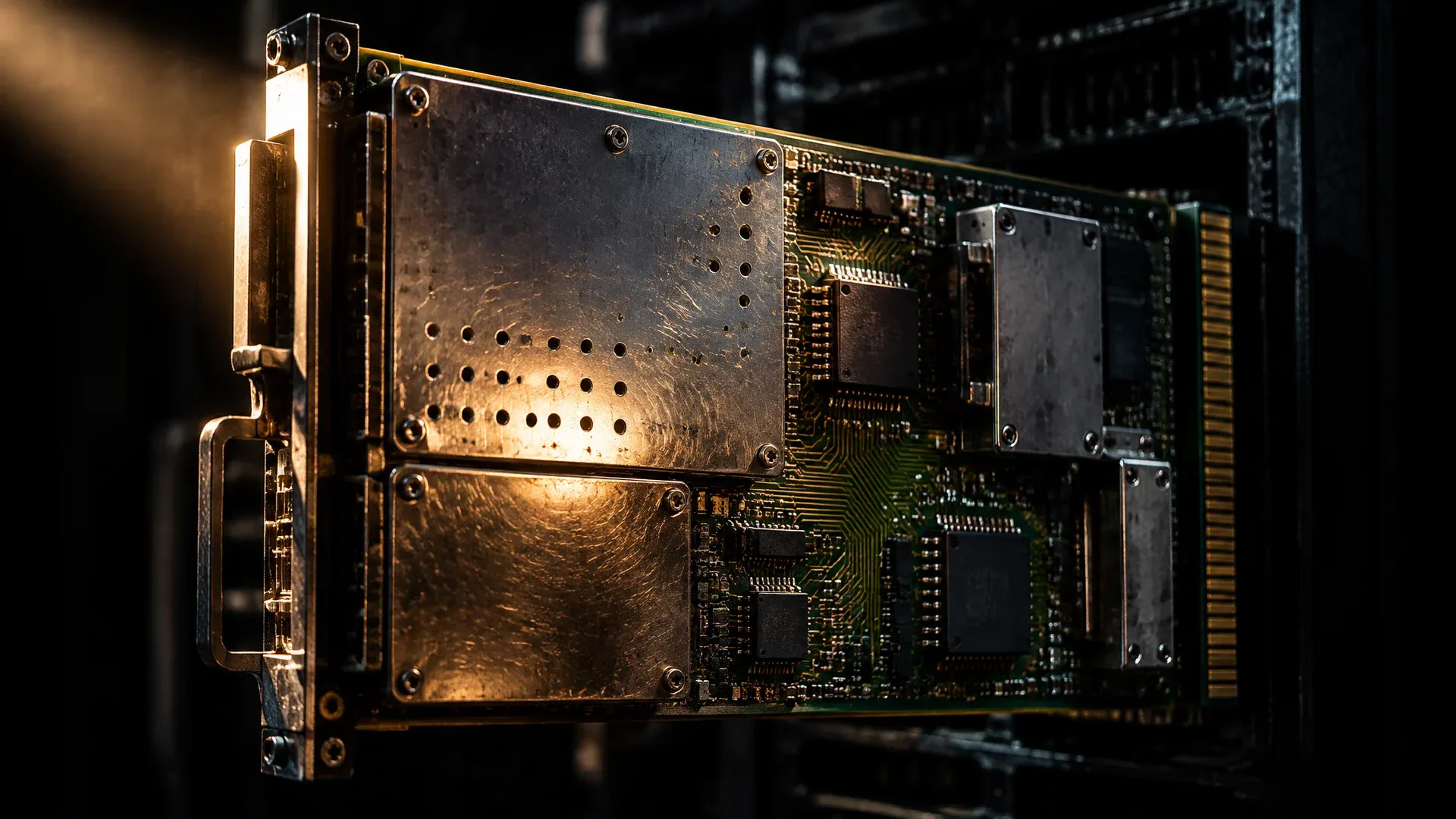
The weak point was the server. Finney wanted to solve the trust problem by running RPOW on a secure IBM 4758 cryptographic coprocessor. This card could prove to the outside world which software was running on it, so anyone could check that the operator was not cheating. Even so, it remained a single server with a single operator.
Bitcoin removed exactly this bottleneck. Instead of a trusted server, an open network of many computers keeps the ledger, and proof of work decides who may add the next block. Finney recognised this difference immediately, which explains why he was among the first supporters in November 2008.
Reply to the white paper in November 2008: "Bitcoin seems to be a very promising idea"
On October 31, 2008, Satoshi Nakamoto published the Bitcoin white paper on the Cryptography Mailing List. Experts reacted mostly with scepticism: too many attempts at digital cash had failed before. On November 7, 2008, Finney wrote a reply that opens with the sentence: "Bitcoin seems to be a very promising idea."
In his later retrospective, Finney describes how the scepticism of the other cryptographers did not put him off. He had long worked on cryptographic payment systems and knew the weaknesses of the predecessors from his own experience with RPOW. Bitcoin solved the double-spending problem without a central authority, and for him that was the decisive step.
"Running bitcoin" and block 170: the first bitcoin transfer in January 2009
On January 8, 2009, Satoshi Nakamoto announced the first version of the Bitcoin software on the same mailing list, an open-source alpha release for Windows. Finney downloaded it straight away. On January 10, 2009 (US time, already January 11 in UTC), he posted two words on Twitter that now appear on T-shirts and conference banners: "Running bitcoin". With that he was operating one of the first nodes of the network alongside Satoshi himself.
A node is a computer that runs the Bitcoin software, verifies transactions and blocks and passes them on to other nodes. Two days later, on January 12, 2009, Satoshi sent him ten bitcoin. The transaction is in block 170 and can still be viewed publicly in any block explorer. Finney describes the moment briefly in his retrospective: he was the recipient of the first bitcoin transaction, when Satoshi sent him ten coins as a test.
Mining on his own PC
In the first days, Finney also mined blocks himself. Mining means using computing power to find the proof of work for the next block and receiving newly created bitcoin in return. At the time an ordinary processor was enough. By his own account Finney soon switched mining off again because his computer ran hot and the fan noise bothered him. What sounds like a missed fortune today was an experiment without any market price in 2009: bitcoin was not traded on any exchange.
The ten-million-dollar calculation: Finney's thought experiment on bitcoin's value
As early as January 2009, Finney posted a thought on the mailing list that is still quoted today. He assumed that total household wealth worldwide, according to estimates at the time, was between $100 trillion and $300 trillion. If bitcoin became the dominant means of payment and this wealth were spread across some 20 million coins, each coin would be worth about $10 million.
Finney explicitly meant this as a bet on an unlikely scenario. In essence, he asked whether the chances of such success really were one in a hundred million, and concluded that a small stake could be worthwhile. The calculation is therefore not a price forecast. At the same time it shows early on the argument bitcoin investors still make today: a strictly limited money supply meets potentially very large demand.
The cap itself was already in Satoshi's announcement of January 8, 2009: 21 million coins in total, with a block reward that halves every four years. How the price is moving today and which scenarios analysts discuss is covered on an ongoing basis in our bitcoin price prediction.
ALS diagnosis in 2009: programming despite paralysis and bitcoin in cold storage
In August 2009 Finney was diagnosed with ALS (amyotrophic lateral sclerosis). In this disease, the nerve cells that control the muscles die off until the body is almost completely paralysed. In his case the disease progressed steadily. He retired in early 2011.
On March 19, 2013, he published the post "Bitcoin and me" on the Bitcoin forum, the most important primary source on his role. In it he writes that he was by then largely paralysed but still programming, including experimental software intended to make bitcoin wallets more secure.
Offline wallet in a bank safe deposit box
Particularly revealing is what Finney writes about his own coins. As the price rose, he moved them into an offline wallet. His bitcoin were stored in the family's safe deposit box at the bank. He hoped, he wrote, that they would be worth something to his heirs one day, and his children understood enough about technology to deal with them. For him, the discussions about bequeathing bitcoin were more than an academic topic.
An offline wallet, also called a cold wallet, stores the private key on a medium without an internet connection, such as paper, a small metal plate or a hardware wallet. This protects the key against attacks from the internet. Our comparison of hot wallets and cold wallets explains the difference between the two types of storage.

Was Hal Finney Satoshi Nakamoto? Clues, denials and the run of April 2009
The suspicion that Finney himself could be Satoshi Nakamoto has surfaced for years. The clues: he was technically capable of it, he had built a forerunner with RPOW, he was involved from day one, and for about ten years he lived in Temple City, California, the same town as Dorian Satoshi Nakamoto, whom Newsweek magazine presented in 2014 as the alleged inventor of Bitcoin, which he denied. Forbes journalist Andy Greenberg followed this lead in 2014 and had Finney's writing compared with Satoshi's.
Finney always denied being Satoshi. The main evidence against the theory is his own email exchange with Satoshi, in which the two appear as different people. Added to this is a reconstruction by Bitcoin developer Jameson Lopp from October 2023: on the morning of April 18, 2009, Finney ran a ten-mile race in Santa Barbara while, according to the timestamps, Satoshi was exchanging emails with developer Mike Hearn and sending a transaction. Lopp himself concedes that converting the time zones involves some uncertainty.
Where things stand, then, is a documented debate with no proof either way, and with considerably more clues against the theory than for it. Other candidates under discussion range from Nick Szabo to Adam Back, and the question of how many bitcoin Satoshi probably holds remains open.
Extortion, death and cryonics: Finney's last years in Arizona
In the last year of his life, Finney's fame became a danger. He and his wife received extortion demands for 1,000 bitcoin and were victims of swatting. In swatting, perpetrators report a fake emergency at an address to the police so that an armed tactical team turns up there. The case shows that publicly known bitcoin ownership is also a personal security risk.
Hal Finney died on August 28, 2014, from the effects of ALS. He had opted for cryopreservation; his body is stored at very low temperatures by the Alcor Life Extension Foundation in Arizona. Finney was part of the Extropians, a movement that looks to technological progress to overcome ageing and death.
His name lives on in the bitcoin community. Every year Fran Finney calls for the "Running Bitcoin Challenge", a charity run for ALS research whose name goes back to his 2009 tweet.
Self-custody and inheritance: Finney's path as a lesson for bitcoin investors
Finney was a cryptographer, not an investment adviser. Even so, his retrospective contains three points that apply to every bitcoin holder, whether with €100 or a large holding.
Keep keys offline
Finney moved his coins into an offline wallet as soon as they gained noticeably in value. Today this is usually done with a hardware wallet: the private key never leaves the device, and transfers are confirmed on the device itself. Anyone who leaves bitcoin on an exchange, by contrast, is trusting the provider. In the EU, crypto service providers have needed authorisation since MiCA, but there is no statutory deposit protection for crypto assets as there is for bank balances.
Arrange access for heirs
Without the seed phrase, relatives cannot get to the coins either, and no court can restore a lost key. Finney solved this with the safe deposit box and technically savvy children. How to arrange this properly today, from storing the seed phrase to your will, is shown in our guide to inheriting crypto.
Keep holding periods in view
Finney held his coins for years. How long you hold can matter for tax, depending on where you live; a portfolio tracker records the purchase date and price of each position so that you can document holding periods. Suitable tools are listed in our crypto tax software comparison.
Hal Finney's bitcoin: ten coins, kept in a bank safe deposit box
Hal Finney did not invent Bitcoin, but he was the first to take it seriously, test it and defend it against the scepticism of his peers. From RPOW through block 170 to the safe deposit box for his heirs, his path reflects the basic questions every bitcoin investor faces. If you want to follow his example, you can start like this:
- Get started with a reputable provider: buy bitcoin from a provider authorised in the EU. Our overview Buy bitcoin compares fees, payment methods and authorisation.
- Hold it yourself: move larger holdings to a hardware wallet and keep the seed phrase separately. Suitable devices are shown in the hardware wallet comparison.
- Document your purchases: record the purchase date and price of each position so that holding periods can be proven. Suitable tools are in our comparison of crypto tax software.
(As of November 13, 2026. This article is not investment advice. Prices and fee structures change; check the terms with the provider before you buy.)
0
0

 Manage all your crypto, NFT and DeFi from one place
Securely connect the portfolio you’re using to start.
 Where will Bitcoin trade next?
Live Polymarket and Kalshi odds on Bitcoin price targets, compared side by side.
See Bitcoin price odds


