
XRP price prediction: will the price rise after $8.4 million of inflows?

0
0
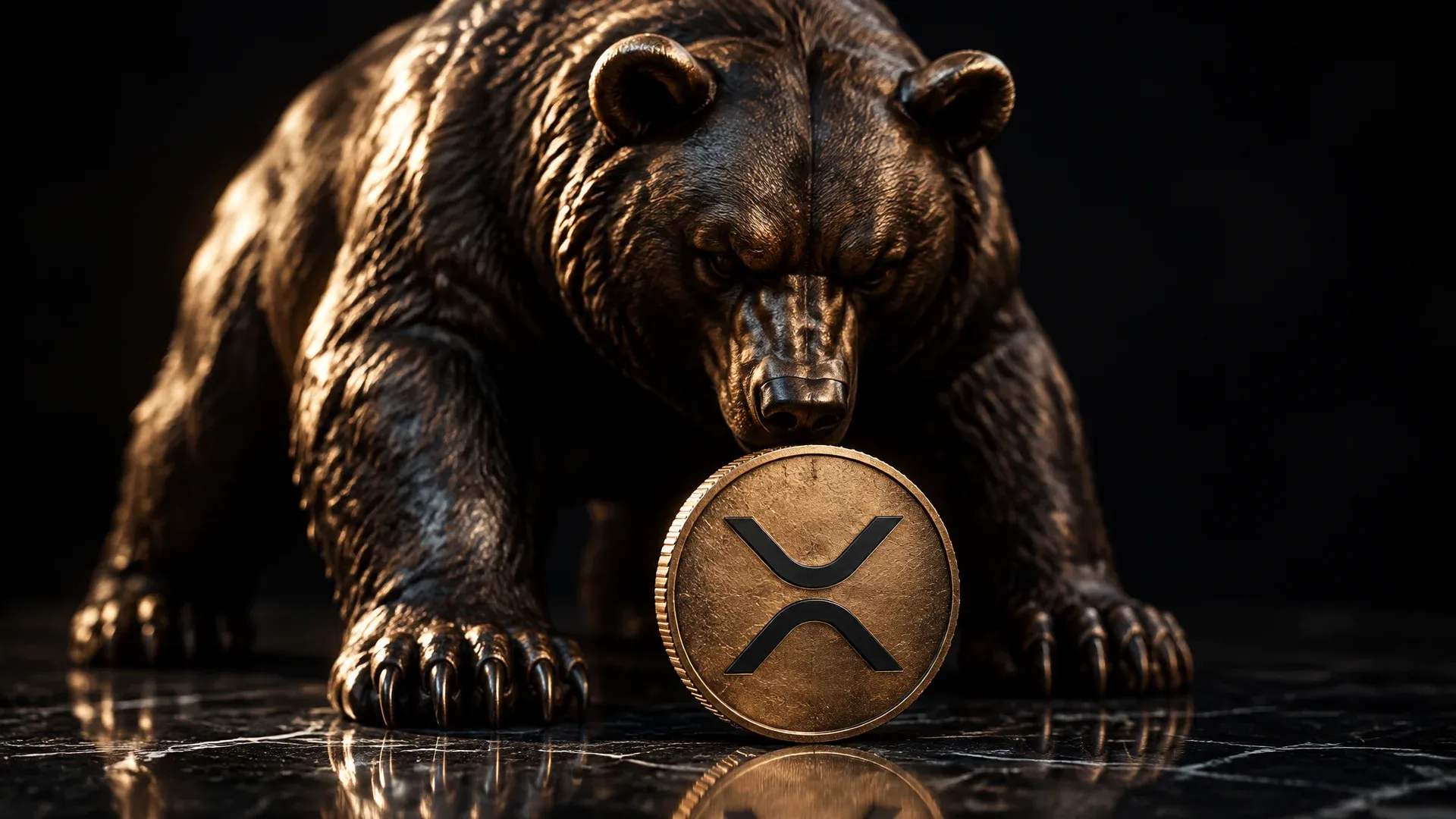
The evidence: the US spot funds on XRP took in a net $8.43 million on Thursday, the strongest single day of the whole of October. Our assessment of that follows further down: the sum is too small to turn the direction, because it amounts to 0.21 percent of what is traded in XRP on a single day.
The price reached $1.2407 on Friday afternoon, measured on the Kraken exchange at 15:54 German time. In euros that is 1.1126. The morning low was $1.1968, the lowest reading since August 20. Where the price can point on a horizon of months is set out in our XRP price prediction.
$8.43 million: the strongest fund day in October
The figures come from an analysis by The Crypto Basic published on Friday. It puts net intake by the US XRP funds on Thursday at $8.43 million. The largest share came from the Franklin XRP ETF at $5.57 million, the Bitwise XRP ETF accounted for $2.86 million, and the Canary XRP ETF recorded neither inflows nor outflows. That ended a run of four trading days of outflows; the last day with a plus was October 23.
The number only looks strong until someone puts the month beside it. Across the whole of October, the same analysis counts $19.33 million. In September it was $121.4 million. That is a drop of 84 percent from one month to the next. Since launch the three largest funds stand at $682.44 million (Bitwise), $524.16 million (Franklin) and $484.34 million (Canary), around $1.69 billion in all.
A spot ETF is an exchange-traded fund that holds the coin itself rather than a futures contract on it. When investors buy units, the fund has to acquire real XRP in the market. That is exactly why traders watch these daily figures, because the most visible part of institutional demand sits in them.
Why the inflow barely moves the price
Convert the amount into coins and the order of magnitude becomes clear. At a price of $1.2407, $8.43 million buys around 6.8 million XRP. There are 63.35 billion XRP in circulation. A full day's inflow therefore covers roughly one ten-thousandth of the circulating supply.
The comparison with trading is starker still. Trading volume across all exchanges stood at $3.94 billion over 24 hours on Friday afternoon, recorded by CoinGecko at 15:52. The $8.43 million from the funds is 0.21 percent of that. On a day like this, any larger sale by a single address weighs more than the entire fund inflow.
The pattern is not new, it was just rarely as clear in October as it is now. The funds give a signal about how professional investors read the market. As a source of demand they have so far been too small in XRP to work against a broad sell-off. Reading inflows as a reason to buy mistakes the thermometer for the heating.
XRP price on Friday: $1.24 after the low at $1.1968
Thursday decided the month. XRP opened at $1.3245 and closed at $1.2346, down 6.8 percent in a day. Overnight into Friday it fell further, to $1.1968. From there the price has recovered to $1.2407 by the afternoon, putting it 3.5 percent above the day's low and around 4.7 percent below the level of 24 hours earlier.
Trading was unusually lively in the process. On the Kraken exchange 34.6 million XRP changed hands on Thursday, against an average of 18.6 million over the seven days before. Turnover that almost doubles while the price falls points to selling out of holdings rather than a thin order book.
For the month the balance is clear. XRP started October 1 at $1.4891 and reached $1.5551 as its high during the month. From the current level that is minus 16.6 percent since the start of the month and minus 20.2 percent from the monthly high. The year's high of $2.4162 from January 6 is 48.6 percent away. Market capitalisation stands at $78.6 billion, fifth by market value.

The 200-day line at $1.2772 as resistance
The 200-day average is the mean of the past 200 daily closing prices. Many traders treat it as the dividing line between an uptrend and a downtrend, because it reacts slowly and smooths out short swings. For XRP it stands at $1.2772 today. The price sits 2.9 percent below it, for the second day running.
That yields three levels with a reason behind them for the coming days. To the downside, the day's low at $1.1968 holds first, with the round $1.20 just beneath it, where buyers stepped in on Friday morning. To the upside stands the 200-day line at $1.2772. Only a daily close above it turns the setback into a recovery. The 50-day average at $1.3943 is the next hurdle and sits a good 12 percent away.
A word of caution on moving averages: a line like that describes what was and says nothing about what comes. Holding a leveraged position therefore means measuring the distance to liquidation against the day's low and not against the moving average. Which platforms charge which fees and require which collateral is shown in our crypto exchange comparison.
How an inflow into a spot fund comes about
Behind the daily figures sits a mechanism most readers never get to see. A fund does not issue units to investors one at a time. Instead it works with authorised participants, usually large trading houses. When demand exceeds supply, such a house creates a basket of units, delivers cash or coins to the fund for it and receives the units in return. The fund then buys XRP in the market or takes it on directly.
Two consequences follow for how the numbers should be read. First, the purchase in the market is not necessarily executed on the same day, so the figure reflects demand whose effect is spread out. Second, inflows and outflows run through the same route. A minus does not mean investors sold their coins, but that units were redeemed and the fund handed over the equivalent value.
For holders the main point is this: a single daily figure carries little meaning. Only a run of five or ten days shows whether professional money is building a position. That is exactly why October at $19.33 million is the more telling picture than Thursday at $8.43 million.
What has changed since our XRP price prediction on Thursday
On Thursday morning we wrote here about Ripple's revenue target and noted that the XRP funds, at around $1.5 billion in net assets, were seeing barely any inflows. Thursday confirmed that reading and sharpened it at the same time. It can be read back in our XRP price prediction of October 29.
Three things are new since then. The price stood at around $1.32 when that article appeared and is now at $1.2407, a fall of a good 6 percent in a good 30 hours. The $1.29 level, which we described then as the day's range, has gone and has not appeared on the price board since. And the 200-day line, which on Thursday still sat above the price, has for two days been resistance from above rather than support.
Following the run since the start of the week shows a consistent pattern. The news around Ripple as a company was good in October, from the authorisation of Ripple National Trust Bank to the Swell conference in New York. The token's price has made nothing of it. A company's revenue and approvals and the price of a freely traded token follow different drivers.
ETP instead of ETF: the route for European investors via Xetra
The funds this article is about are not available to select in a German brokerage account. US spot ETFs may not be distributed to retail investors here, because they lack the documents required under European law. German investors buy an ETP instead, an exchange-traded note backed by the coin. What the term means in detail and which products exist is set out in our overview of crypto ETFs in Germany.
The best-known paper on XRP is the 21Shares XRP ETP with ISIN CH0454664043 and German security number A2UBKC. The issuer states that it is 100 percent physically backed with XRP and gives assets of $320.37 million at a net asset value of $35.16 per unit. It trades on Xetra among other venues; at 15:50 on Friday it stood at 29.88 euros in Stuttgart.

The product fee of 2.50 percent a year
An ETP costs money on an ongoing basis, and in XRP that item is high. For the 21Shares XRP ETP the issuer reports a product fee of 2.50 percent a year. On an investment of 1,000 euros that is 25 euros a year, or a good 2 euros a month, regardless of whether the price rises or falls.
In a month like October that item barely registers, because the 16.6 percent price loss covers everything else. In a sideways market the relationship inverts. If the price holds its level for a year, the paper has lost 2.50 percent on the fee alone, while directly held coins cost nothing beyond custody. Other providers charge less; on the German market the range runs, according to issuer disclosures, to below 1 percent. Compare the fee in each paper's key information document before you buy.
Holding period and exemption limit: the tax rules for XRP in Germany
With the tax office much depends on the form in which you hold XRP. Directly held coins fall under the private disposal rules of section 23 of the German Income Tax Act. Selling them after more than a year leaves the gain tax-free. Selling within the year makes the gain part of taxable income, and an exemption limit of 1,000 euros a year applies. Exceed it by even a single euro and the whole gain is taxable.
With an ETP the position is less clear-cut and depends on how the paper is structured. Whether the one-year period applies there too turns, among other things, on whether there is a claim to delivery of the coins. We track the current state of the debate and the reform plans on our page on the crypto holding period. For an individual case that is no substitute for tax advice.
This matters in practice right now. The turn of the year is approaching, and anyone who sold at a loss in October can only offset that loss against gains from other private disposals. The purchase date, sale date and price of every single transaction therefore belong in the records.
The dates up to the start of the week: month-end and escrow release
Two dates are immediately ahead. October ends on Saturday. Month-end closing prices are no market force in themselves, but many analyses and products key off them, and a close below $1.2772 leaves a month that ends below the 200-day line.
On Sunday, November 1, two Ripple escrow contracts of 500 million XRP each expire. Such releases recur monthly and are no sell signal in themselves. According to analyses by the data site XRP Insights, cited among others by Live Bitcoin News, the release of October 1 of more than 1 billion XRP still sits untouched in two Ripple accounts, and 700 million XRP went back into new escrow contracts on the same day. What matters, therefore, is what is moved after the release.
From the newsroom's perspective: a signal, not a driver
From the newsroom's perspective, Thursday's inflow is the weakest kind of good news. In its favour is that it ends a run of four days of outflows and that two large houses, Franklin and Bitwise, stand behind it. Against it is the order of magnitude: 0.21 percent of a day's turnover moves no price, and the monthly figure of $19.33 million sits 84 percent below the previous month's. The evidence for both sides is above, each with its source.
What follows can be pinned to one number. For the funds to carry the price, inflows of a different order would be needed, roughly ten to twenty times as much over several weeks. As long as that is absent, the broad market decides XRP, and that currently hangs on the situation after the attack on Binance and on rate expectations. This is explicitly not advice to buy or sell, and a total loss remains possible with any crypto asset.
XRP at $1.24: the 200-day line stays the ceiling
Three steps follow from this Friday's position.
- Check the form in which you hold XRP. Directly held coins and an ETP differ markedly in fees, custody and tax. If you want to switch to buying directly, the terms are in the crypto exchange comparison.
- Document purchase dates before the turn of the year. The one-year period decides the tax exemption, and without proof of the purchase date it becomes a dispute with the tax office. Which programs pull the transactions together automatically is shown by our comparison of tax tools.
- Set the two levels as alerts. $1.1968 below, $1.2772 above. Only a daily close above the upper level changes the picture. Anyone minded to follow that with leverage should know the distance to liquidation first; providers' terms are in the broker comparison.
(As of October 30, 2026. This article is not investment advice. Prices and fee structures change; check the terms with the provider before you buy.)
0
0

 Manage all your crypto, NFT and DeFi from one place
Securely connect the portfolio you’re using to start.


