
SpaceX and Tesla merger with 30,221 bitcoin: “at the end of the day, the shareholders have to be supportive of this”

0
0
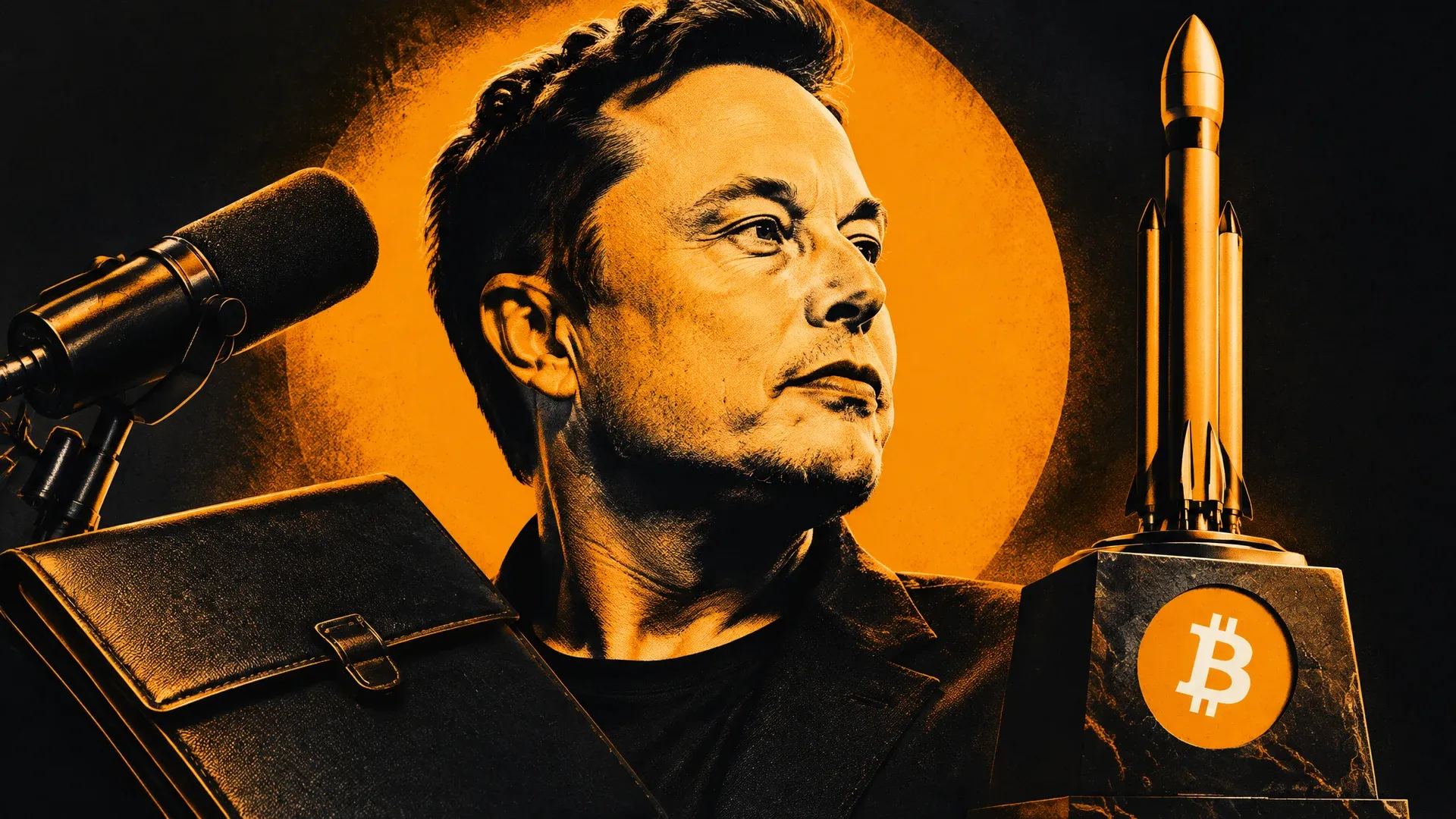
Here is what is documented: on Tuesday, October 20, 2026, Elon Musk confirmed on SpaceX's quarterly call that SpaceX and Tesla are exploring a merger. Both companies have set up special committees of independent directors for the purpose, and nothing has been agreed on the terms of a transaction. Our assessment follows further below: the combined holding of 30,221 bitcoin is a side effect of that review, not its trigger.
The case is still interesting for holders, because it makes visible a question that usually stays in the background: how much bitcoin actually sits inside a share, and how much of it reaches you? At the price of $83,820 that CoinGecko reports for Bitcoin, the two companies together stand behind around $2.53 billion in bitcoin. That sounds like a lot. Measured against the size of both groups it is a marginal position, and that is exactly what decides whether a share works as a detour to the coin.
What Musk confirmed on the SpaceX quarterly call
The talks are not market speculation but confirmed by the chief executive himself. Musk said on the call: “Do I think it would be a good idea, yes. But at the end of the day, the shareholders have to be supportive of this.” The order within that sentence is the important information. Musk considers the merger sensible; others will decide.
On the process itself he was unusually candid. He described his own role as “an odd kabuki dance where two groups of people are talking, and I can't be in the conversation”. On the state of the negotiations, the CoinDesk report records that the special committees have not agreed on the terms of a transaction.
The occasion for the call was the third quarter, and it came out better than expected. Revenue and earnings per share beat estimates, and the SpaceX share rose around nine percent to $161 in pre-market trading on Wednesday. Tesla's figures were still outstanding at the time this article was published; they are expected after the closing bell on Wednesday.
30,221 bitcoin: how the holding splits between the two companies
A treasury holding is the part of a company's cash that sits not in euros or dollars but in another asset, here in bitcoin. The two positions come from separate disclosures and differ in size.
- SpaceX: 18,712 BTC, or 61.9 percent of the combined holding, worth around $1.57 billion at the price quoted above.
- Tesla: 11,509 BTC, or 38.1 percent, around $0.96 billion.
- Together: 30,221 BTC, around $2.53 billion.
The figure of 30,221 is the addition of two disclosures, not a joint treasury. As long as no merger has closed, the holdings stay where they sit today, on two separate balance sheets with two separate shareholder bases. Only a completed transaction turns two positions into one.
To put the size in context: the Bitcoin protocol caps the total supply at 21 million units. At 30,221 BTC that is 0.144 percent of it. A combined holding of that size would be a visible corporate position, but not a figure that moves the market as long as it only changes which balance sheet it sits on.

Two special committees, no Musk: where the negotiations stand
A special committee is a body of independent directors that reviews a transaction in which the main actor has a conflict of interest. That is precisely the situation here: Musk holds a leading stake in both SpaceX and Tesla, so a merger of the two firms would be a deal with himself. That is why two committees are negotiating, and why Musk cannot sit at the table.
In practice that means three things. There is no exchange ratio, so no number saying how many shares of one company a share of the other would be worth. There is no timetable. And there is no assurance that anything will come of it at all; Musk himself warned against treating a merger as settled.
Reading the news as a price driver skips that part. Between confirmed talks and a completed merger lie valuation opinions, shareholder votes and, at companies of this size, antitrust proceedings as well. The current Bitcoin price with ETF inflows and the upcoming Fed meeting explains the move of the past 24 hours considerably better than a merger report without terms.
Bitcoin per share: why a merger does not enlarge the holding
Bitcoin per share describes a company's holding divided by the number of its shares. That ratio is the only honest measure of how much bitcoin a shareholder co-owns, and it explains why a merger does not automatically improve the holding for everyone involved.
In a merger, two holdings are added together and so are two shareholder bases. 18,712 plus 11,509 BTC become 30,221 BTC, but the shares of both companies are exchanged against each other. Whether a shareholder ends up holding more or less bitcoin per share depends solely on the exchange ratio, and that has not been negotiated yet. Not a single bitcoin is bought. For the market that means no fresh demand impulse, only a different allocation of the same quantity.
That sets the case apart from the reports that usually bring movement into the price. A company that buys takes supply off the market. A company that merges shifts ownership within the balance sheet. The two often sit side by side in headlines looking much the same, yet they act on the market in entirely different ways.
Treasury companies as a Bitcoin detour: the difference from holding the coin
Investors repeatedly buy shares in companies with a bitcoin holding, expecting bitcoin-like performance without having to handle custody themselves. At SpaceX and Tesla that calculation works particularly badly, and the reason sits in the figures above. Around $2.53 billion in bitcoin stands against two companies whose value derives from spaceflight, satellite communications, vehicle manufacturing and energy storage. The bitcoin share is a marginal position there.
What moves the share price is therefore quarterly figures, launch cadence, delivery numbers and interest rate decisions, not the Bitcoin price. Tuesday showed that directly: the share jumped on a set of figures and on the merger news, not on a move in Bitcoin. Anyone who wants bitcoin gets mostly corporate risk through these shares, with a small bitcoin component on top.
There is also a difference that weighs more in everyday use than any ratio. A share sits in the securities account of your bank or broker, and you cannot hold it in your own custody. Bitcoin you can buy from a provider licensed under MiCA and then take into your own custody. Which providers are licensed in the EU and how they differ is set out in our overview of regulated crypto exchanges.

Holding period versus flat-rate tax: the tax dividing line in Germany
For tax purposes, bitcoin and shares are two different worlds in Germany, and that is the most concrete difference between the coin and the detour through a share.
Bitcoin counts as another asset. Gains from a sale fall under private disposal transactions pursuant to Section 23 of the German Income Tax Act: after a holding period of one year the gain stays tax-free, within the year it is charged at your personal income tax rate, and an exemption limit of 1,000 euros a year applies to all private disposal transactions taken together. If the exemption limit is exceeded, the entire gain becomes taxable, not only the part above it.
Shares follow a different rule. Gains count as investment income and are charged the flat-rate withholding tax of 25 percent plus the solidarity surcharge and, where applicable, church tax, regardless of how long you have held them. In return there is the saver's allowance of 1,000 euros per person. A holding period after which a gain on shares becomes tax-free does not exist.
The consequence is awkward for the detour idea: anyone wanting to track bitcoin through a share gives up the holding period that makes buying directly attractive for long-term investors in tax terms. Which route is cheaper in your case depends on holding period, income tax rate and allowances already used. That is a calculation that only works with your own numbers, and one for a tax adviser rather than an article.
MiCA and custody: where the differences show up in everyday use
Since the EU's MiCA regulation applies in full, providers that hold or exchange crypto assets in the EU need an authorisation as a crypto-asset service provider. For a direct purchase that means you can see who is regulated, and you decide after buying whether the provider holds your coins or you transfer them to a wallet of your own.
With a share, that choice does not exist. Custody sits with the depository bank, and the bitcoin behind the company is held by the company, not by you. Whether it uses a dedicated custodian, to what extent the holdings are insured and when they are disclosed is set out in the company filings and changes with every quarterly report. Control over the keys is not something a share delivers.
The sensible approach is therefore not to play the two routes against each other but to treat them as different products: the share is a stake in a company that happens to hold bitcoin as well. The coin is the asset itself.
Our assessment: the holding is a side effect, not the occasion
From the newsroom's point of view, the bitcoin figure is the smallest of the quantities involved in this report. Three documented points speak for that: no bitcoin is being bought, only added up. The special committees have not agreed on a single term, so there is neither an exchange ratio nor a date. And the roughly nine percent jump in the SpaceX share coincided with a quarterly report above expectations, not with a move in Bitcoin.
One argument speaks against that view, and we will not talk it down: a combined holding of 30,221 BTC inside a company that is also publicly traded raises the visibility of bitcoin in conventional portfolios. Funds not permitted to buy a coin would come into indirect contact with it through such a share. That is an effect over years, not days, and it depends on the merger happening at all. We derive no price target from it, and no purchase or sale follows from it; with crypto assets a total loss is possible.
A merger with 30,221 bitcoin: shareholders first, then the balance sheet
The news changes nothing about your holding today. It is a good occasion, though, to hold your own setup against the differences described above.
- Separate share and coin in your overview. Anyone holding both easily counts the bitcoin behind a share twice. A portfolio tracker separates the positions and shows the tax treatment per position; the tools for that are in our comparison of crypto tax software and portfolio trackers.
- Check where your coins sit. The custody question is decided not by a merger report but at your key. Which device makes sense for which sum is covered in the hardware wallet comparison.
- Settle your buying route before you need it. A licensed provider, the fee model and the withdrawal route belong fixed in advance, not improvised. The routes and their costs are set out under buying Bitcoin.
The next hard data will come not from the merger talks but from Tesla's quarterly figures and from whatever the special committees finally put forward. Until then it remains a confirmed review with two separate balance sheets.
(As of October 21, 2026. This article is not investment advice. Prices and fee structures change; check the terms with the provider before you buy.)
0
0

 Manage all your crypto, NFT and DeFi from one place
Securely connect the portfolio you’re using to start.
 Where will Bitcoin trade next?
Live Polymarket and Kalshi odds on Bitcoin price targets, compared side by side.
See Bitcoin price odds


