
BitGo and Jupiter Launch Solana Staking Validator for Institutions

0
0
What Is the Latest BitGo and Jupiter Validator News?
Latest crypto news: BitGo and Jupiter just rolled out a Solana staking validator for eligible BitGo clients. It was announced on October 28, 2026, and it lets institutions stake without leaving their custodian.
Clients can now delegate SOL to the Jupiter x BitGo node straight from their existing custody accounts. BitGo Bank and Trust, N.A., an OCC-regulated national trust bank, provides the safekeeping side. Large firms often need that level of federal oversight before they act.
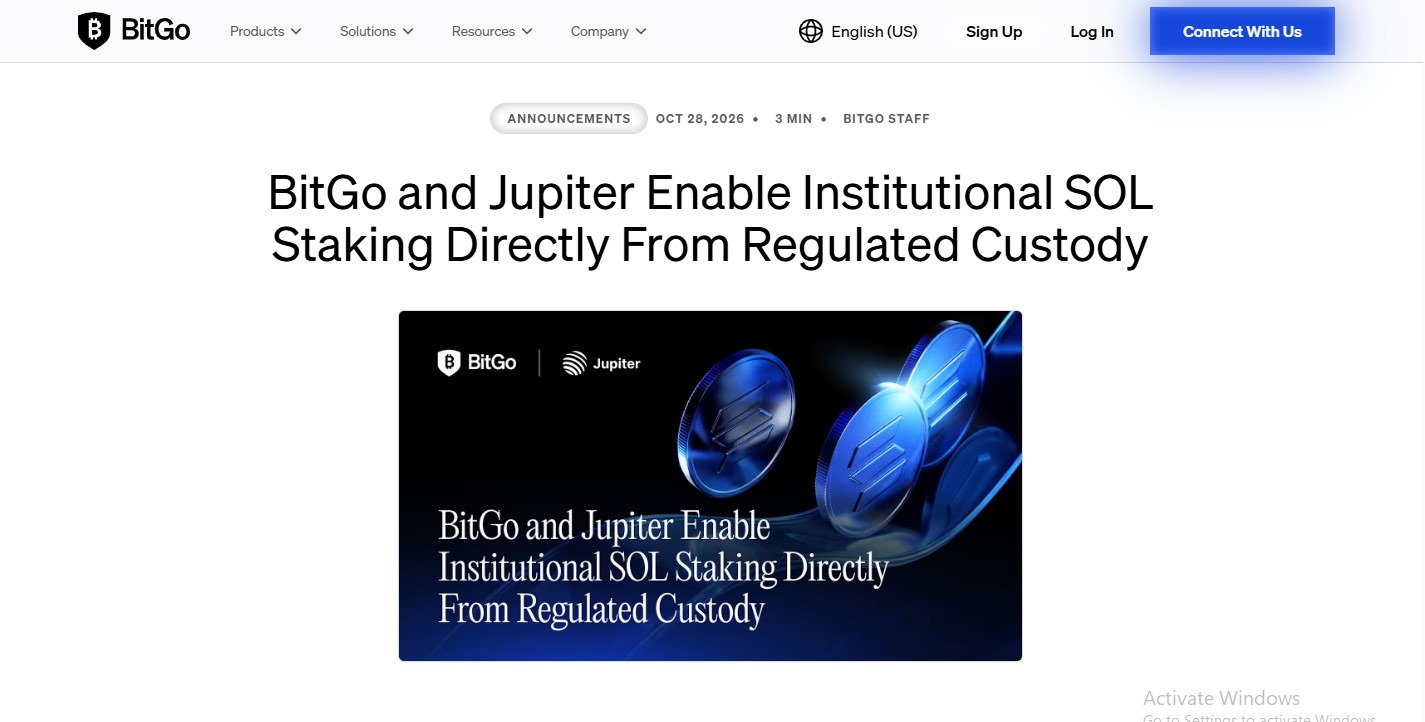
According to the official BitGo announcement, the product lets staking fit inside current approval workflows. No assets need to move to an outside provider.
How Does the New Solana Staking Validator Work?
In plain terms, a validator is a server that helps confirm transactions on the chain. Holders delegate SOL to it, and the network pays rewards for that work. The holder keeps ownership of the tokens. Requests follow the approval steps that clients already use for other custody actions.
Eligible clients follow a short path:
They contact their account representative.
They delegate tokens from custody to the node.
It joins network consensus, and rewards follow network conditions.
Here is what does not change for clients:
The SOL is delegated, not moved out, so it stays in custody.
Jupiter runs the node on its own as a third party.
The bank has no control over how the node runs or performs.
The DeFi platform called the product a node built for institutions in its post on X.

Rewards are native proof-of-stake rewards. They can vary and are not guaranteed.
The platform is better known for swaps, perpetuals, and lending. Running a network node is its way to support the network under those products.
Why Institutional SOL Staking Through Custody Matters
Many institutions must keep assets with a regulated custodian. Using an outside provider adds a new relationship and extra compliance work. Compliance teams often review every new counterparty, which can slow projects down.
The bank said on X that assets stay protected by cold storage security while clients earn native rewards. Its insurance program offers up to $250 million in coverage. That cover depends on policy terms, limits, and exclusions, and it does not guarantee rewards.

COO Kash Dhanda said running a node is how the platform invests in the base layer. He added that the tie-up lets institutions join on terms they already accept, as per Jupiter.
The partnership gives institutions a simpler path, and the Solana staking validator becomes part of normal custody work.
What Are the Main Risks and Limits for Clients?
Item | What the official FAQ says |
Rewards | Variable and not guaranteed |
Unstaking | Needs the protocol-level deactivation period |
Node risk | Downtime or underperformance is possible. |
Insurance | Does not cover all losses |
Access | Eligible institutional clients, by jurisdiction |
Fees | May apply; details come from the bank. |
This route is not risk-free. Software changes and possible penalties such as slashing, if the base protocol adopts them, can affect results. Token value can also fall.
Unstaking takes time. Once a client starts it, the SOL can’t be withdrawn or used until Solana’s deactivation period ends.
What This Crypto Update Means for Institutions
This update shows how Solana staking is moving closer to regulated finance. Institutions get a route that fits rules they already follow, and the DeFi platform gains a larger role in network security.
The announcement gives no reward rate, fee schedule, or client numbers. Eligibility also depends on the BitGo entity and the client’s jurisdiction. Interested institutions need to ask their representative for exact terms.
Readers following this crypto news should check the official blog for later changes, since details are client-specific and can change.
In short, BitGo clients can now use a Solana staking validator run by Jupiter without leaving custody.
Disclaimer: This article is for educational and informational purposes only and should not be considered financial or investment advice. Always conduct your own research before making investment decisions.
0
0


 Manage all your crypto, NFT and DeFi from one place
Securely connect the portfolio you’re using to start.


