
El Salvador bitcoin: from legal tender to a state reserve of 7,825 coins

0
0
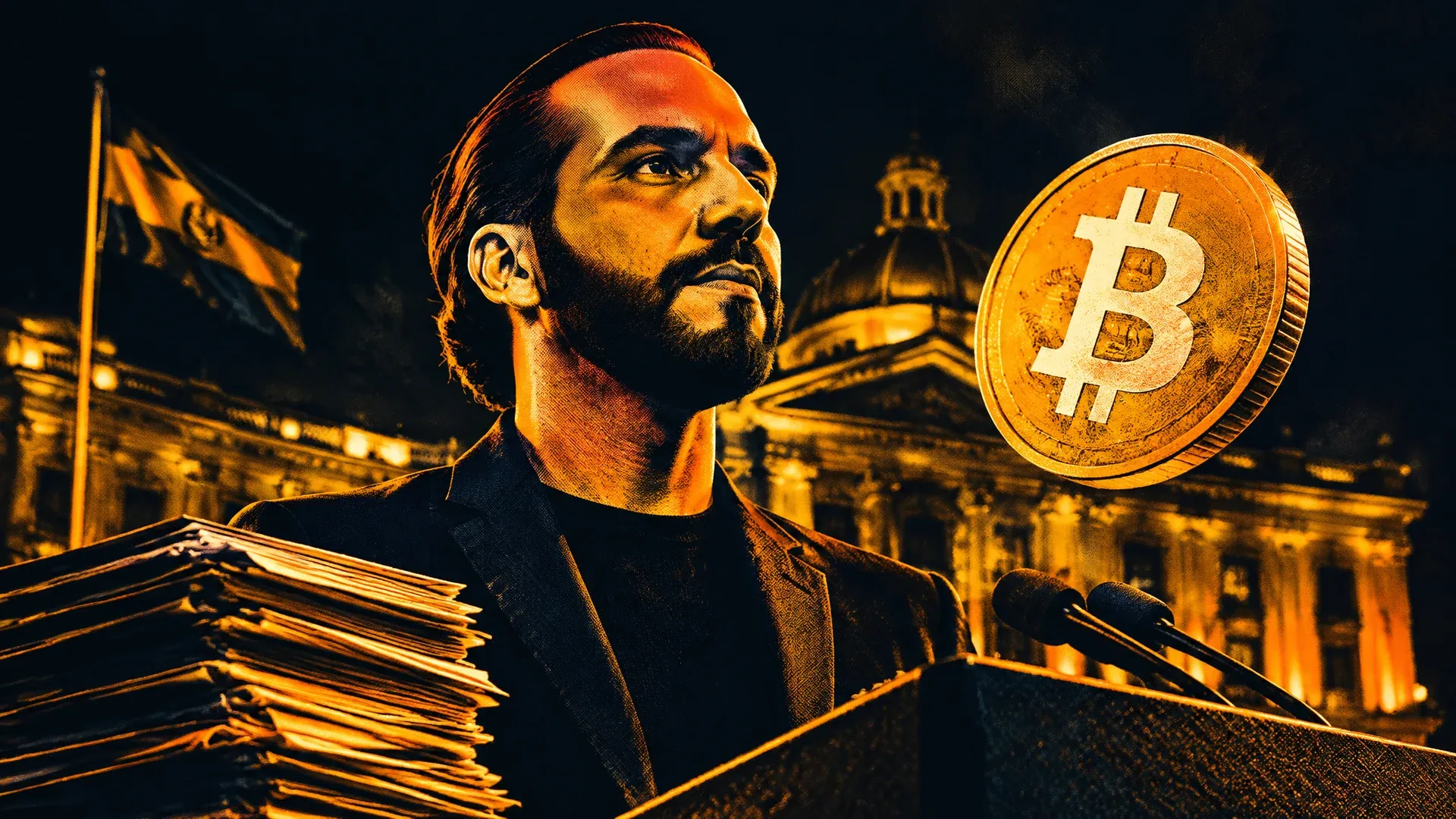
El Salvador and bitcoin have gone together since 2021, but only part of the original law remains. Since a reform in January 2025, nobody there has to accept bitcoin as payment, taxes can no longer be paid in BTC, and the state-run Chivo Wallet is now majority-owned by a private operator. What remains is the state's holding: the government's Bitcoin Office reported around 7,825 BTC in early November.
For investors, the country is a case study in what a state can achieve with bitcoin and where the limits lie. The bitcoin price hardly depends on El Salvador, but the story of bitcoin as a national currency does. If you want to get in yourself, regulated providers are listed in our comparison of providers to buy bitcoin; the legal position in Europe is covered further down.
El Salvador and bitcoin at a glance: law, reform and state holdings
The story can be told in four stages. In June 2021 parliament passed the bitcoin law, which took effect in September 2021. In December 2024 the government reached agreement with the International Monetary Fund (IMF) on a loan programme of around $1.4 billion that came with conditions on bitcoin. At the end of January 2025, parliament rewrote the law accordingly. During 2026 the state gave up its majority in the Chivo Wallet, while its bitcoin holdings kept growing.
- June 2021: Bitcoin law passed with 62 of 84 votes, published on June 9, 2021.
- September 7, 2021: Bitcoin becomes official legal tender alongside the US dollar, and the Chivo Wallet launches.
- December 2024 to February 2025: Agreement with the IMF; a 40-month programme is approved on February 26, 2025.
- January 29, 2025: Reform by Decree 199, passed 55 to 2; accepting bitcoin becomes voluntary.
- October 1, 2026: The IMF completes the second and third programme reviews and reports the transfer of Chivo to a private operator.
One term runs through every stage: legal tender. It means money that a creditor must accept to settle a debt. That obligation to accept was the core of the 2021 law, and that is exactly what was dropped in 2025.
The 2021 bitcoin law: mandatory acceptance and taxes payable in BTC
El Salvador no longer has a national currency of its own. The country has been dollarised since 2001; dollarisation means that a state uses a foreign currency, here the US dollar, as its own money and thus gives up an independent monetary policy. President Nayib Bukele wanted bitcoin as a second pillar alongside it. Parliament approved the law in June 2021 with 62 of 84 votes, and it took effect 90 days after publication.
Three rules made the law unique worldwide:
- Every merchant and every public authority had to accept bitcoin as payment if the customer wanted to pay with it.
- Taxes and levies could be paid in bitcoin.
- The state committed to providing automatic conversion into dollars so that nobody had to bear price risk.
The third rule gave rise to the Chivo Wallet, a state app for bitcoin and dollars, along with a network of ATMs and a state trust fund for conversions. The bitcoin price was not fixed in the process. It kept fluctuating in the market, and conversions were made at the prevailing market price.
Bitcoin itself dates back to 2008, when Satoshi Nakamoto described it as electronic cash; our explainer of the bitcoin whitepaper shows what was meant. El Salvador was the first state to write this idea into law. We took stock of the early experience in a 2022 article on bitcoin in El Salvador.
Chivo Wallet: a $30 sign-up bonus and little everyday use
Anyone who downloaded the Chivo Wallet received $30 worth of bitcoin as a starting gift. According to a study by the National Bureau of Economic Research (NBER), that equalled about 3.75 days' pay at the minimum wage. At first, the incentive worked: many households downloaded the app to collect the credit.
After that, use faded. The NBER researchers surveyed around 1,800 households in spring 2022. About 68 percent knew Chivo, but only around 20 percent of adults kept using the app after the bonus, and fewer than 10 percent used it for bitcoin. Among businesses, about 20 percent accepted bitcoin according to the same survey, but only around 4.9 percent of sales were paid with it. A later survey by the economic institute FUSADES found that almost 98 percent of businesses polled had never recorded a sale in bitcoin.
The numbers reveal a pattern that is instructive for investors too: an obligation to accept creates acceptance on paper, but no demand at the till. People who earn in dollars and spend in dollars have little reason to switch to a volatile means of payment when they shop.
IMF loan of $1.4 billion: the conditions on bitcoin
The IMF had been critical of the bitcoin law from the start, warning of risks to financial stability, consumer protection and the public finances. In December 2024 the two sides reached agreement: El Salvador gained access to an Extended Fund Facility (EFF). This is an IMF loan programme for countries with deeper fiscal and structural problems, paid out in tranches, with each tranche conditional on a successful review.
The programme was approved on February 26, 2025, runs for 40 months and totals around $1.4 billion. Alongside spending targets and higher liquidity reserves for banks, the conditions included three points on bitcoin: acceptance was to become voluntary, the state was to withdraw from the Chivo Wallet, and the public sector was to stop accumulating bitcoin with public money. These three points have been revisited at every programme review since.
Decree 199 of January 2025: bitcoin without mandatory acceptance
On January 29, 2025, parliament passed the reform, according to heise online by 55 votes to 2 after a debate of just over twelve minutes. In 2021, parliament had taken around five hours over the original law. The amendment was published as Decree 199 on January 30, 2025.
The reform changed three things:
- Voluntary acceptance: Individuals and businesses may accept bitcoin when it is offered, but no longer have to.
- No tax payments in BTC: The rule allowing taxes to be paid in bitcoin was deleted.
- No state conversion pledge: Two articles obliging the state to provide alternatives for bitcoin payments were removed. The Chivo Wallet rested on them.
The amendment took effect 90 days after publication. The state's right to hold bitcoin was left untouched. President Bukele announced at the time that purchases would continue, which later became a point of dispute with the IMF.
Legal tender or not? The dispute over the wording
Whether bitcoin is still legal tender in El Salvador today is read in different ways. Several media outlets reported that the reform deleted the word “currency” but left the term legal tender (“curso legal”) in place. Others, including heise online, wrote that its recognition as legal tender had been revoked.
In economic terms the dispute is easily resolved. Legal tender is defined by the obligation to accept it. Where nobody has to accept bitcoin any more and the state no longer takes it for taxes, the status is mostly a label. A more precise description is therefore: in El Salvador, bitcoin is an authorised means of payment that can be used voluntarily alongside the US dollar.
The distinction matters when comparing with Germany. There, bitcoin was never legal tender. The Federal Financial Supervisory Authority (BaFin) treats it as a crypto asset, a digital representation of value that is issued by no state and no central bank. Paying with bitcoin in Germany is allowed as long as both sides agree, but there is no obligation to accept it.
State bitcoin holdings: 7,825 BTC according to the Bitcoin Office, and the donations question
The part of the experiment that is growing is the state holding. The government's Bitcoin Office (Oficina Nacional del Bitcoin) publishes its addresses and reported holdings of 7,825.37 BTC on November 4, 2026; in mid-October the figure was 7,809.37 BTC. At a bitcoin price of around $69,000 on November 13, that is worth about $540 million, or around €488 million.
Where the growth comes from is at the heart of the dispute with the IMF. For years the Bitcoin Office has spoken of roughly one bitcoin being added every day. According to IMF documents, the state had bought around 2,400 BTC by October 2022. For the period since the first programme review, IMF staff said in September 2026 that the documentation showed the additions came from private donations and that no public funds had been used. The origin of individual inflows cannot be verified independently from the outside.
Since August 2025 the coins have been spread across several publicly disclosed addresses. The government cited security against future quantum computers: as long as an address has not made a spend, its public key is not visible on the blockchain. Older holdings from before March 2024, by contrast, sat on addresses that were never published. The list is therefore no substitute for a full balance sheet of all state crypto assets, a point the IMF also makes in calling for more transparency.
Chivo sale in 2026: majority transferred to a private operator
For years the Chivo Wallet was the most visible part of the project and also the most expensive. Under the IMF programme, the government committed to withdrawing. In its statement of October 1, 2026, the International Monetary Fund writes that the transfer of majority ownership and control of Chivo to a private operator has been completed. Remaining public-sector links are to be fully unwound.
The IMF does not say who took over the majority. The Salvadoran newspaper El Diario de Hoy reported in September that the state would keep a minority stake and remain responsible for safekeeping customer balances. President Bukele stressed there that only the shares in Chivo had been transferred, not the state bitcoin reserve. The Bitcoin Office said the government no longer plans a wallet of its own, either for bitcoin or for stablecoins.
For users, the case shows why custody is the decisive question with any wallet. Custody means: who holds the private keys that can move the coins? With an app like Chivo, the operator holds them. If the owner changes, customers' access depends on the new owner's rules.
IMF review in October 2026: waivers and $138 million
On October 1, 2026, the IMF Executive Board completed the programme's second and third reviews together. That released around 101.96 million Special Drawing Rights, about $138 million. Special Drawing Rights are the IMF's unit of account, a basket of five major currencies.
The review was not entirely smooth. El Salvador had missed certain performance criteria on bitcoin accumulation. The Board granted waivers for this, citing corrective measures and renewed commitments by the government. The key sentence of the statement: beyond the documented donations, no further bitcoin accumulation is envisaged.
The IMF is also calling for more transparency about the public sector's crypto holdings and for a revision of the digital assets issuance law, under which El Salvador has regulated tokenised bonds and other crypto issuances since 2023. The Fund expects the economy to grow by 4.5 percent in real terms in 2026.
Bitcoin as a state reserve: the consequences for investors
Measured against the market as a whole, El Salvador is a small holder. Exchange-traded funds and companies such as Strategy hold many times as much. The country's influence on the price is therefore small, but its influence on perception is large: El Salvador was the proof that a state can write bitcoin into law at all.
Three lessons can be drawn from the experience. First, a means of payment does not take hold by law when people earn their income in a stable currency. Second, a state that depends on international loans remains bound by its creditors' conditions when it comes to bitcoin. Third, the focus has shifted, away from everyday money and towards a reserve that the state holds and displays.
Whether such a reserve makes sense remains a matter of judgement. Supporters see bitcoin as a scarce asset that gains value over the long run. Critics point to the volatility: in the past 24 hours alone the price fell by around 6 percent, and swings like that are a risk for a national budget. No price target can be derived from El Salvador.
Bitcoin in the euro area: the euro remains the only legal tender
In Germany the position is clear. The euro alone is legal tender, and European Central Bank banknotes must be accepted without limit. Bitcoin is a crypto asset, and providers that hold or trade it in Germany have needed a licence under the European Markets in Crypto-Assets Regulation (MiCA) since the transition period ended. Licensed platforms are compared in our overview of regulated crypto exchanges.
El Salvador bitcoin: without mandatory acceptance, the reserve is what remains
The main lesson from the Salvadoran experiment for investors is this: bitcoin is a high-risk investment, not a substitute for the euro. Three steps help you put that into practice:
- Choose a provider: If you want to buy bitcoin, pick a provider based in the EU with clear fees. Our comparison for buying bitcoin gives an overview.
- Check the licence: Look for a MiCA licence, especially if the platform keeps your coins in its app. Licensed providers are listed in our comparison of regulated crypto exchanges.
- Keep records: Note the purchase date and purchase price of every position so that holding periods can be documented. The tools in our crypto tax software comparison help with this.
(As of November 13, 2026. This article is not investment advice. Prices and fee structures change; check the terms with the provider before you buy.)
0
0

 Manage all your crypto, NFT and DeFi from one place
Securely connect the portfolio you’re using to start.
 Where will Bitcoin trade next?
Live Polymarket and Kalshi odds on Bitcoin price targets, compared side by side.
See Bitcoin price odds


