
Solana’s Yakovenko Answers 2023 Critics After Tablet Node Demo

0
0
BitcoinWorld
Solana’s Yakovenko Answers 2023 Critics After Tablet Node Demo
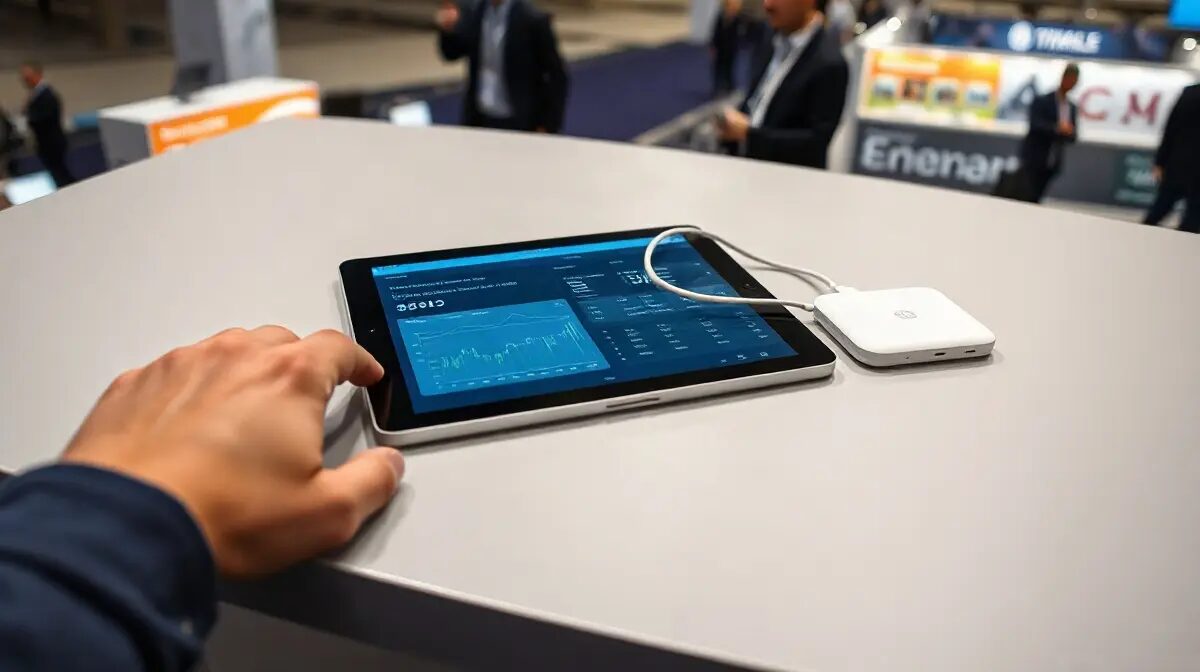
Solana co-founder Anatoly Yakovenko replied to Bankless co-founder David Hoffman on X on November 15 with three words — “We did it” — followed by “sol is money.” The post pointed to a demonstration in which a Firedancer-enabled Solana mainnet full node ran on a tablet using less than one CPU core, connected over a 5G network, and reached the latest block and began voting in roughly 10 seconds, according to Crypto.news. Yakovenko announced the demonstration and his response himself; Crypto.news reported the details.
Key facts
- Firedancer developer Ritchie Patel reported that the tablet setup went from startup to the latest block and voting within 10 seconds, including parallel compilation with “make -j” and initial snapshot synchronization.
- A separate post from the Block Zero event ahead of Solana Breakpoint 2026 described a live Firedancer validator on a single core with 20GB of RAM, crediting engineer Michael McGee for the presentation.
- The original exchange dates to January 2023, when Hoffman argued in response to Yakovenko that reducing blockchain hardware demands is a cultural requirement for the systems to work.
- Anza, the developer of the Agave client, recommends at least 12 CPU cores, 256GB of RAM, high-performance solid-state storage and at least 2 Gbit/s of symmetric bandwidth for staked production validators.
- As reported by PANews, Yakovenko also argued in 2023 that running Solana would cost less than all EVM chains combined while processing more transactions than them.
What the tablet demo actually measured
Two different measurements are bundled into the claim, and both outlets describe them the same way: the demonstration covered following the network as a full node and participating in consensus as a validator, with developers reporting that the tablet caught up and entered voting.
The processor figure is the narrowest part of the story. Less than one CPU core was used, but the configuration still included 20GB of memory, and the connection was 5G rather than a fixed line. Reaching the latest block depends on snapshot synchronization, which lets a validator restart from recent network state without replaying every historical transaction, as Crypto.news described it. The 10-second figure applies to that catch-up and voting sequence, not to continuous operation.
That distinction matters because production guidance has not moved. Anza’s recommendations for staked validators remain at 12 CPU cores, 256GB of RAM and high-performance storage. A tablet on a conference floor and a machine expected to produce blocks continuously are not the same test — uptime, sustained block production and behaviour under heavy transaction traffic are not measured in a short live demo.
Two reports, one emphasis
The two accounts of the demonstration are largely consistent, but they frame it differently. Crypto.news ties the news to a four-year-old argument and a second data point: ARK Invest’s September decentralization study, which estimated $21,478 for Solana RPC or validator-class hardware against $289 for a Bitcoin full node. It also notes the configurations serve different workloads.
PANews places more weight on Yakovenko’s earlier cost comparison between Solana and EVM chains, a line Crypto.news does not carry. Neither outlet reports a formal benchmark, and neither reports independent verification of the tablet run beyond the developers’ own posts.
Why it matters
Hardware cost is a decentralization argument before it is a performance argument. If a network’s participation layer is reachable only with expensive machines, the set of people who can meaningfully check it narrows. That was Hoffman’s point in 2023, and it explains why a tablet demo carries symbolic weight even though Anza’s production numbers are unchanged.
The backdrop is Solana’s recent engineering churn. Solana activated 200ms slots in October ahead of Alpenglow, and the Alpenglow migration itself required operators to run compatible Agave-based software because Firedancer and Frankendancer did not support the initial transition. Firedancer’s gradual rollout, which crypto.news reported had backed production after Patel said in May it processed tens of millions of transactions, is proceeding alongside those changes.
Market snapshot
Solana (SOL) traded at $72.26 (₹6,812) with a market cap of $42.75B and 24-hour volume of $3.70B as of 15 November 2026, 15:08 UTC, per CoinPaprika data. The token was down 2.5% over 24 hours and 19.3% over seven days. Ethereum (ETH) traded at $1,821 (₹171,612), down 1.7% on the day and 18.7% on the week.
What to watch
Firedancer’s continued rollout is the concrete thread: Solana’s October 29 engineering update described work on memory allocation, including where the software keeps its frequently accessed Sysvar cache, and preparation for VLAN network connections. Whether Firedancer support arrives for future consensus-level changes, and whether any team publishes independently measured hardware requirements rather than demonstration figures, are the next checkpoints.
Frequently Asked Questions
What exactly did the Firedancer tablet demo prove?
It showed a Solana mainnet full node starting up on less than one CPU core on a tablet over 5G, reaching the latest block and joining voting in about 10 seconds. The setup still used 20GB of RAM, so it was not a minimal-hardware record.
Does this mean anyone can run a Solana validator on a tablet full-time?
No. Anza recommends at least 12 CPU cores, 256GB of RAM, high-performance storage and at least 2 Gbit/s symmetric bandwidth for staked validators. A short conference demo does not measure uptime or sustained load.
What was the 2023 argument between Yakovenko and David Hoffman about?
Hoffman argued that lowering hardware requirements is essential for blockchains to remain accessible, calling minimized chains more resilient. Yakovenko acknowledged at the time that nobody had tried to minimize Solana’s requirements, and suggested a 16GB machine with a fast drive could work.
How did Alpenglow affect Solana node operators recently?
Solana activated Alpenglow consensus in October 2026, replacing on-chain voting with direct validator communication. Operators were told to use compatible Agave-based software during migration, and each validator pays a 0.8 SOL per-epoch admission charge from its vote account.
This post Solana’s Yakovenko Answers 2023 Critics After Tablet Node Demo first appeared on BitcoinWorld.
0
0

 Manage all your crypto, NFT and DeFi from one place
Securely connect the portfolio you’re using to start.


