
Bitrefill review: buying gift cards with crypto when the rate holds for 30 minutes

0
0
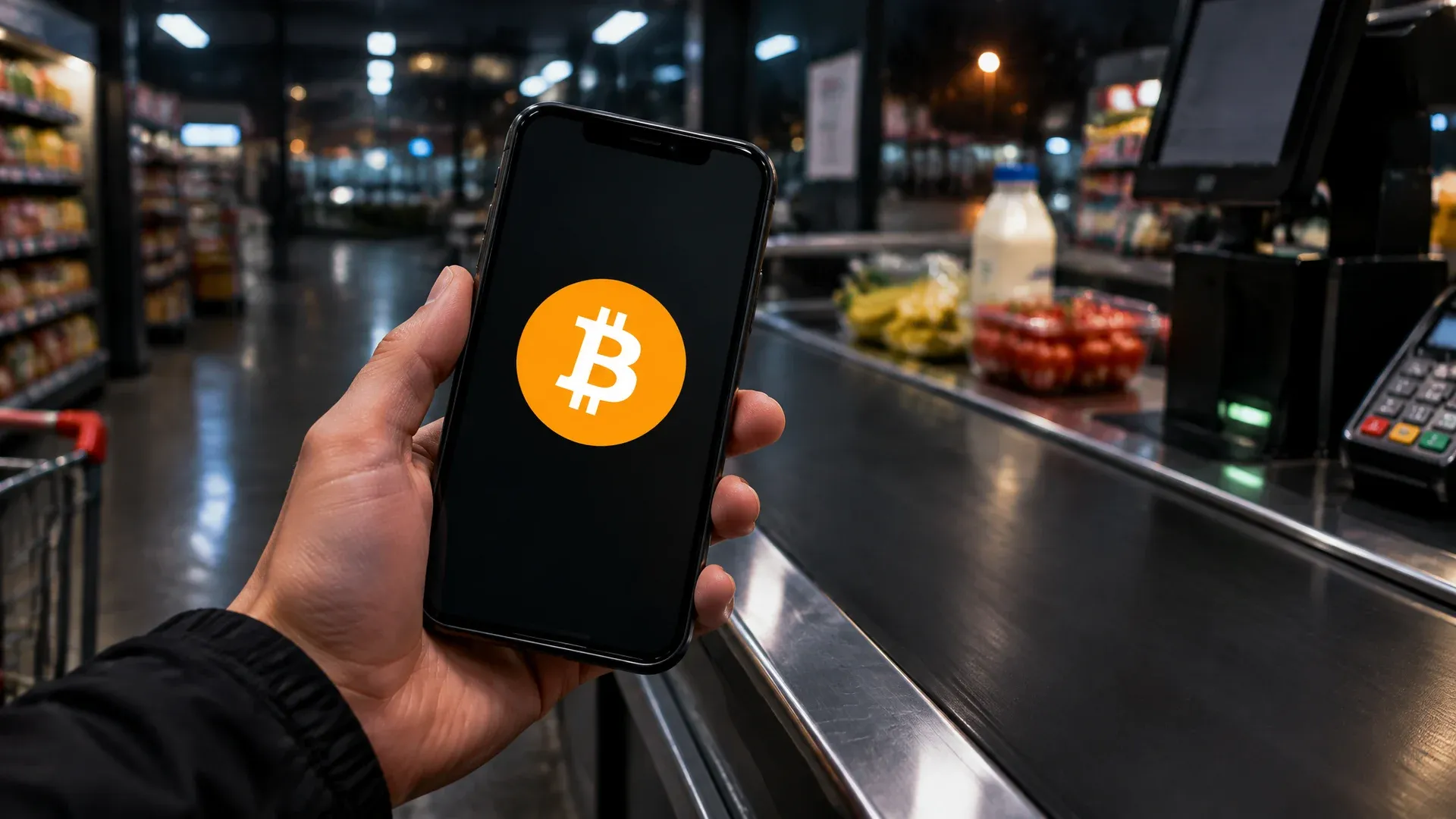
Bitrefill is an online shop where you pay for vouchers, gift cards, eSIMs and mobile top-ups with cryptocurrencies. You pick, say, an Amazon.de or Rewe gift card, pay with Bitcoin, Ether or a stablecoin, and receive the code by email once the payment is confirmed. You do not need an account. A purchase rarely gets expensive because of Bitrefill itself. The cost comes from three things around the payment: the blockchain's network fee, your exchange's withdrawal fee and the exchange rate, which is fixed on the invoice for only 30 minutes.
For investors in Germany, buying gift cards with crypto has a second side that many overlook: anyone who swaps coins for a gift card disposes of them for tax purposes. This guide explains the process, the costs, the limits and the tax consequences, each as of early November 2026.
What is Bitrefill? The Stockholm crypto shop for gift cards and top-ups
Bitrefill is a crypto e-commerce merchant, meaning a shop that sells digital goods exclusively or mainly for cryptocurrencies. The company was founded in Stockholm in 2014; its co-founder and CEO is Sergej Kotliar. Bitrefill started with mobile top-ups paid in Bitcoin; today its focus is on gift cards.
On its German homepage, Bitrefill lists more than 8,000 products in over 180 countries and, by its own counter, has sold a good 16.4 million gift cards for crypto. These figures come from the provider itself and cannot be verified from outside. What you see in the shop is more reliable: the brands, the value ranges and the payment methods.
One point matters for context: Bitrefill is not a crypto exchange. You do not buy coins there and you do not store them there either. The shop is a way to spend crypto assets you already own. You buy the coins beforehand on an exchange and ideally keep them in a wallet of your own.
Gift cards, eSIMs and mobile top-ups
The range falls into three groups. Gift cards are digital voucher codes for retailers and services, from supermarkets to streaming subscriptions. eSIMs are digital SIM cards with a data allowance for travel; Bitrefill offers them for more than 140 countries, including packages for Germany and the whole of Europe. Mobile top-ups load prepaid credit, in Germany for instance with Vodafone, Deutsche Telekom or Lyca Mobile. As a rule, this does not work for contract plans.
Which cryptocurrencies Bitrefill accepts: Bitcoin, Lightning and stablecoins
According to the payment overview in the help centre from late October, Bitrefill directly accepts the following cryptocurrencies:
- Bitcoin (BTC) on the Bitcoin network and on the Lightning Network
- Ether (ETH) on the Ethereum network and on Base
- Tether (USDT) on Ethereum, Tron, BNB Smart Chain, Polygon, Arbitrum, SUI and TON
- USD Coin (USDC) on Ethereum, Solana, Base, Polygon, Arbitrum and SUI
- Litecoin, Dogecoin, Solana, Dash, SUI and Toncoin
The Lightning Network is a second layer on top of the Bitcoin blockchain on which payments settle in seconds and usually for fractions of a cent. Bitrefill was among the first merchants to integrate it.
Other tokens can be used via Li.Fi Pay, a decentralised swap service that has nothing to do with Bitrefill and swaps your token before payment. Every such intermediate swap costs extra and is a separate transaction for tax purposes. On its homepage, Bitrefill also lists Binance Pay as a payment method.
Your own wallet or an exchange account as the source of payment
In principle, any wallet that can send to an address works. Bitrefill displays a QR code and the receiving address for this. The difference lies in the cost: a self-custody wallet, where you hold the private keys, pays only the network fee. If you pay directly from an exchange, the exchange usually deducts its withdrawal fee from the amount sent, and then too little arrives. Which wallets are suitable for everyday use is shown in our software wallet comparison.
Bitrefill gift cards in Germany: Amazon.de, Rewe and their value ranges
Bitrefill shows the most popular gift cards for Germany on its homepage with fixed value ranges. On November 7, these included:
- Amazon.de from €5 to €200
- Rewe and Lieferando, each from €5 to €150
- Apple from €5 to €250, Google Play from €1 to €500
- Kaufland from €5 to €50, Penny from €2 to €50
- MediaMarkt from €10 to €150, Zalando from €5 to €200
- PlayStation Store from €10 to €300, Steam from €20 to €30
On top of that come travel and mobility vouchers such as Airbnb, Uber or fuel cards. The range changes, and each retailer sets its own value ranges. Always check the product page before you pay.

Country and currency restrictions on gift card codes
A gift card code is tied to a retailer, a region and a currency. Bitrefill distinguishes between global, regional and country-specific products, as well as codes that can only be redeemed in a certain currency. A US gift card for Amazon does not work on Amazon.de. Anyone who buys the wrong country version by mistake does not get their money back, because Bitrefill as a rule does not refund codes that have been delivered.
How a Bitrefill purchase works: invoice, QR code and the 30-minute window
A purchase takes five steps, with or without an account:
- Choose the product and amount, for example a €50 Rewe gift card, and add it to the basket.
- Enter the email address the code will be sent to.
- Choose the payment method, meaning coin and network. Bitrefill creates an invoice with the crypto amount, address and QR code.
- Send exactly this amount from your wallet to exactly this address.
- Once the payment arrives, the gift card code comes by email and is also shown on the invoice page.
Step 3 is the crucial one. Because crypto prices fluctuate, Bitrefill guarantees the crypto price for only 30 minutes. If the window expires, you reload the page and get a new invoice with a new rate and a new address. You must not use the old address after that. With stablecoins such as USDT or USDC the price risk is small; with Bitcoin or Dogecoin the amount can change noticeably within half an hour.
Lightning instead of the Bitcoin blockchain
With Lightning the payment arrives in seconds, so the 30-minute window hardly matters. With a payment over the Bitcoin blockchain, by contrast, the waiting time depends on the fee you choose. The help centre gives an example: at 5 satoshis per virtual byte a confirmation can take days, at 60 satoshis per byte more like minutes to hours. Anyone who calculates too tightly when the network is busy risks an expired invoice.
What buying gift cards with crypto costs: network fee, exchange fee and exchange rate
For crypto payments, the help centre does not mention a separate service fee. For non-crypto payments, by card or other conventional methods, it does explicitly mention a service fee and exchange rates with processing costs priced in. The actual cost of a crypto purchase is made up of three components:
- Network fee: the blockchain fee you pay when sending. On Lightning, Tron, Solana or Polygon it is usually low; on the Bitcoin blockchain and on Ethereum it fluctuates with network load.
- Exchange withdrawal fee: if you send directly from an exchange, it deducts its fixed withdrawal fee. The invoice then counts as underpaid.
- Conversion rate: the crypto amount on the invoice is based on the rate Bitrefill applies. You can check yourself whether it contains a mark-up: invoice amount times the current rate at your exchange, compared with the face value of the gift card.
There is one more item many forget: the cost of getting the coins in the first place. Anyone who swaps euros for USDC on an exchange only to pay for a gift card pays a trading fee and the spread. For a one-off gift card, paying the retailer directly in euros is almost always cheaper. Bitrefill makes sense above all if you already own crypto and want to spend it.
Account balance as a way to save
With a free account you can top up a balance in euros, US dollars or Bitcoin and pay for later purchases from it. The network fee is then incurred only once when topping up, not for every single gift card, and you do not have to wait for confirmations. For recurring purchases this is the cheapest route.
Underpayment and expired invoices: how Bitrefill handles refunds
If less arrives than requested, the invoice shows the status "Underpaid Order". According to Bitrefill, the most common cause is fees charged by exchanges, custodial wallets or bridges, which are deducted from the amount sent. You then have two options: send the missing remainder or request a refund of the amount already paid.
If your payment only arrives after the window has expired, Bitrefill also lets you request a refund once the transaction has been confirmed on the blockchain. For payments in volatile coins such as Bitcoin, one clear rule applies: exactly the amount of crypto sent is refunded, regardless of the price. Alternatively, you can have the euro or dollar value credited as Bitrefill balance. Refunds must be requested within 30 days.
Money sent to a wrong address is lost for good. A confirmed blockchain transaction cannot be reversed. Before sending, compare the first and last characters of the address and use the QR code rather than typing addresses by hand.
Bitrefill without an account: purchase limits and identity checks
Being able to buy without an account is one of the main reasons Bitrefill is popular. It is not unlimited, though. According to the purchase limits in the help centre, which Bitrefill bases on its anti-money-laundering policy, the following caps apply, each in US dollars or the equivalent:
- Without an account: at most 15 gift cards a day, up to $500 a day and $1,000 a month.
- Basic account with email: up to $2,000 per card, $5,000 a day and $10,000 a month.
- Verified account: up to 25 cards, $10,000 a day and $50,000 a month.
For verification, Bitrefill requires an identity document, proof of address and a live selfie. Anyone who opens several accounts to get around the limits breaches the terms and risks a ban. Tighter limits may apply to individual products.

Bitrefill cashback and referral programme: what you actually get back
With an account, you collect cashback in Bitcoin on selected products. The homepage lists rates from one percent, for example at Zalando, up to five percent on Bitrefill eSIMs. The catch: the cashback cannot be withdrawn, transferred or refunded and can only be used for further purchases at Bitrefill. It is therefore a discount on your next purchase, not a Bitcoin yield.
The referral programme works in a similar way. After $200 in spending you receive your own referral link. If a referred person also spends $200, both receive $5 in Bitcoin as balance. Promo codes only apply to orders up to €2,000.
Bitrefill Card: a Visa card with a 1.99 percent top-up fee
Alongside the gift card shop, Bitrefill offers a Visa card, virtual or as a plastic card. You load it with crypto, which is converted into euros, and then pay anywhere Visa is accepted. Residence in Germany is permitted; an identity check is required. According to Bitrefill, custody and conversion are handled by the service provider Lightspark Payments Europe, which holds a licence from the Estonian financial supervisory authority.
The key terms from the help centre:
- A 1.99 percent fee on every top-up, on top of the variable cost of conversion.
- A 2.49 percent fee for cash machine withdrawals, no foreign currency fee when paying.
- The first plastic card is free; a replacement costs €10.
- At entry level, at most €15,000 in total top-ups and €10,000 in spending per month.
Once you factor in the top-up fee, the card is not a cheap option for larger amounts. How it compares with other offers is shown in our overview of crypto credit cards at the end of this article.
Paying for a gift card with Bitcoin: why the German holding period applies here too
For tax purposes, buying a gift card with crypto is not a neutral purchase. You swap a crypto asset for a service, and the German tax office treats that as a disposal under Section 23 of the Income Tax Act. If no more than twelve months lie between buying and spending the coins, the gain is a private disposal transaction. The gain is the value of the gift card minus what you originally paid for the coins you spent.
Such gains remain tax-free if all private disposal gains in a year together stay below the €1,000 exemption limit. This also applies to stablecoins: anyone who spends USDC that has gained against the euro also realises a small gain. Keep every Bitrefill invoice, with the date, the crypto amount and the gift card value. What swapping crypto for a gift card triggers in detail is broken down in our article on exchanging Bitcoin for a gift card, and the basics are covered in our guide to crypto tax in Germany.
The German government wants to abolish the one-year holding period, but nothing has been decided. Until any new rules take effect, the one-year period also applies to every gift card purchase.
Bitrefill: Lightning and a prepaid balance cut costs the most
Bitrefill is a practical way to spend existing crypto assets in everyday life without first selling them on an exchange and transferring the money to your bank account. It becomes cheap if you use Lightning or a low-cost network, send from your own wallet and, for frequent purchases, go through a prepaid balance. Three steps help with preparation:
- Get your coins cheaply: if you first need to buy crypto, compare trading and withdrawal fees in our crypto exchange comparison, because the withdrawal fee decides whether an invoice ends up underpaid.
- Record purchases for tax: every gift card is a disposal. A tool from our crypto tax software comparison automatically matches acquisition costs and holding periods.
- Consider an alternative card: if you want to pay with crypto regularly, compare the Bitrefill Card with other offers in our overview of crypto credit cards.
(As of November 7, 2026. This article is not investment advice. Prices and fee structures change; check the terms with the provider before you buy.)
0
0

 Manage all your crypto, NFT and DeFi from one place
Securely connect the portfolio you’re using to start.
 Where will Bitcoin trade next?
Live Polymarket and Kalshi odds on Bitcoin price targets, compared side by side.
See Bitcoin price odds


