
UK High Court Says Chinese Law Governs Claims to More Than 61,000 Seized Bitcoin

0
0
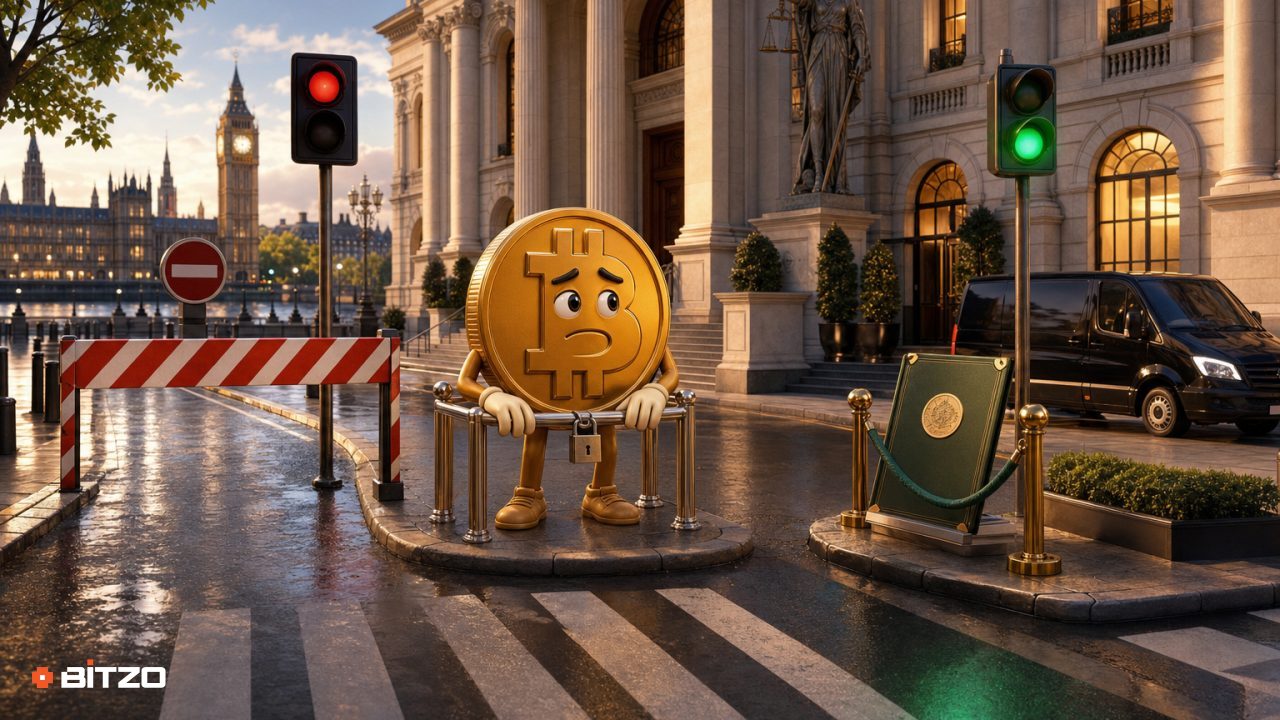
More than 61,000 Bitcoin are under the control of the English court, but their seizure in London does not answer the central ownership question. The High Court has held that Chinese law, rather than English law, governs the substantive proprietary claims advanced over the cryptocurrency.
The decision matters because the Bitcoin sits inside an English proceeds-of-crime process while the alleged investments, collection of funds and acquisition of the assets occurred in China. That distinction sharply limits what the choice-of-law ruling decides. It does not award the Bitcoin to investors, nor does it establish a final right for the UK state to retain it. Instead, it moves the decisive legal contest to the content and proof of rights under Chinese law.
That is a consequential divide for a pool whose value rose dramatically during the period covered by the criminal case. It also creates a demanding evidentiary and distribution exercise for a claimant base connected to at least 128,409 investment contracts.
A London seizure does not make English law the source of ownership
In its October 12, 2026 ruling, the High Court said Chinese law governs the substantive proprietary claims to the seized Bitcoin. English law governs the procedural operation of the Proceeds of Crime Act framework.
That outcome reflects where the alleged economic events occurred, rather than simply where the assets were eventually found. On the court’s assumed facts, the Bitcoin was acquired before Zhimin Qian left China, using a Huobi account, Chinese over-the-counter transactions and mining machines located in China. More than 100,000 Bitcoin were purchased through the Huobi account between June 2014 and June 2017.
The Metropolitan Police later seized devices and access keys in London during October and November 2018, and recovered further assets afterwards. The property now under the court’s control includes more than 61,000 Bitcoin. Physical control, however, is not the same as an answer to the prior question of who, if anyone, held a proprietary interest when the Bitcoin was acquired.
The ruling therefore separates two issues that can appear to merge in a high-profile crypto seizure. English law supplies the machinery through which restrained or recoverable property is handled in the UK. But the existence of the asserted underlying rights is a Chinese-law question because that is where the court located the relevant alleged investments and asset acquisition.
The 61,000 Bitcoin claim now turns on Chinese proprietary rights, not English tracing
English law supplies the framework for handling property restrained or recovered in the UK, and the judgment recognises Bitcoin as property under English law. But that does not itself give applicants a proprietary claim to the seized Bitcoin: English tracing cannot recreate rights that may not have survived the assets’ original acquisition in China.
What remains to be established is the existence and content of the rights asserted under Chinese law. The court did not decide ownership or distribution, and it left open the later assessment of Chinese law, the applicants’ evidence and the final relief.
That leaves a factual and legal route still to be shown—from payments into the alleged scheme to specific assets now controlled in England. The ruling does not declare such a route impossible; it says the governing analysis is under Chinese law and requires evidence on what that law provides and how it applies. The seizure itself therefore does not automatically make all recovered assets state property, nor does the presence of alleged victims automatically produce restitution from the identified coins.
128,409 contracts make recovery a proof and distribution problem
At least 128,409 investment contracts appear in the court’s assumed facts, alongside about RMB40.23 billion raised between 2014 and 2017. About RMB34.1 billion had been repaid to some investors before the scheme collapsed.
The numbers establish the size of the underlying exercise. They do not establish who is entitled to what. Any distribution would have to distinguish among claimants, account for the repayment history and examine the individual investments and rights asserted under them.
Nor does the aggregate fundraising figure supply a formula for dividing the seized Bitcoin. The choice-of-law ruling left ownership and distribution unresolved; applicants must prove the existence and content of relevant proprietary rights under Chinese law.
That leaves the central evidential questions intact: what Chinese law recognizes, how the relevant rights are characterized and what evidence establishes them. The size of the pool cannot substitute for entitlement to assets or their traceable proceeds, as opposed to an assessment that an applicant suffered a loss.
Asset appreciation raises the stakes without resolving entitlement
Roughly 70,000 Bitcoin moved from a sentencing-record valuation of about £305 million when Qian arrived in the UK to more than £384 million at seizure and over £1.5 billion when police recovered it between 2021 and 2025. The High Court case, however, concerns property under court control that includes more than 61,000 Bitcoin, not an identical pool.
That distinction matters because the High Court has not determined ownership or distribution. The remaining work is to establish the existence and content of relevant proprietary rights under Chinese law, including whether those rights survived the original acquisition; appreciation alone decides none of those questions and does not settle the form of final relief.
Procedurally, English law governs the operation of the Proceeds of Crime Act framework. Substantively, the claims are governed by Chinese law and remain factually extensive: at least 128,409 investment contracts, substantial prior repayments and a Bitcoin pool whose value changed sharply before recovery.
Disclaimer: This article is provided for informational purposes only. It is not offered or intended to be used as legal, tax, investment, financial, or other advice.
0
0

 Manage all your crypto, NFT and DeFi from one place
Securely connect the portfolio you’re using to start.
 Where will Bitcoin trade next?
Live Polymarket and Kalshi odds on Bitcoin price targets, compared side by side.
See Bitcoin price odds


