
XRP Exchange Inflows Exceed 6B Tokens in 30 Days as Whales Ease Off

0
0
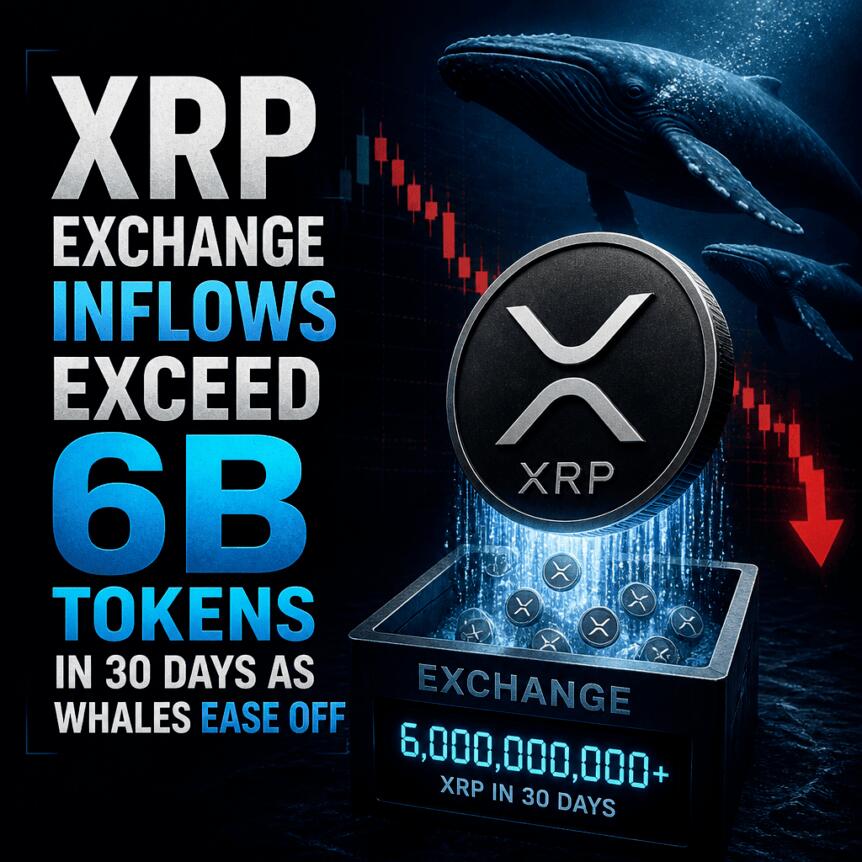
XRP’s short-term momentum appears to be shifting toward exchanges rather than large holders. According to onchain analytics provider CryptoQuant, XRP exchange inflows have climbed to their highest level in seven months, with more than 6 billion tokens deposited over the last 30 days.
At the same time, CryptoQuant’s whale-focused metrics point to a different story: large-volume investors are moving less aggressively. The decline in whale outflows suggests XRP buyers may be waiting for better pricing, while broader market activity is returning to a more rangebound, lower-volatility pattern—an environment that can reduce the impulse to chase new positions.
Key takeaways
- XRP exchange inflows reached 6.05 billion XRP over the 30 days to Oct. 19, the highest since March, according to CryptoQuant.
- The 90-day moving average of whale outflows fell to $49.7 million, its lowest level since October 2021, CryptoQuant data shows.
- CryptoQuant notes a pickup in XRP movement toward exchanges, which can indicate increased trading liquidity or wallet-to-exchange transfers.
- Glassnode reports that Bitcoin’s realized profit/loss ratio fell from 0.8 to 0.4 in the past week, supporting a broader shift toward less aggressive behavior in October.
XRP inflows surge as tokens funnel to exchanges
CryptoQuant’s analysis highlights a clear uptick in exchange-related flows. On a rolling 30-day basis, XRP inflows are at their highest level since March. In the period ending Oct. 19, deposits totaled 6.05 billion XRP, and CryptoQuant says the figure has doubled since mid-August.
During that same window, XRP/USD moved from roughly $1 up to a peak near $1.70 before settling back to around $1.30. That sequence matters because it suggests the inflows are not simply responding to a one-direction breakout. Instead, the move appears to align with a broader cycle of accumulation and distribution associated with trading activity—when participants may deposit to exchanges to position for short-term moves.
CryptoQuant characterizes the shift as a “clear shift in asset movement toward exchanges,” which it says could reflect either higher trading activity and liquidity on exchanges or increased transfer activity between wallets and trading venues.
Whale outflows fall to multi-year lows
While exchange inflows rise, CryptoQuant’s whale outflow data indicates reduced urgency among the largest market participants. The platform points to a prolonged decline in whale activity over the past year, including a dramatic fall from earlier peaks.
CryptoQuant notes that the 90-day moving average of whale outflows reached $49.7 million. This is its lowest level since October 2021 and far below the levels seen during earlier periods of heightened interest. CryptoQuant also references that whale outflows previously hit a high of $3.5 billion in February 2025, shortly after XRP’s all-time high of $3.40.
From that peak, whale outflows have dropped by 98.6%, suggesting that large holders are not currently supplying the market in the same way they did during periods of maximum momentum. CryptoQuant frames this as potentially important for market structure: if whale support is absent, XRP may struggle to generate consistent buying volume during pullbacks.
At the same time, CryptoQuant acknowledges XRP’s “notable resilience” during the 2026 crypto bear market—an important qualifier. Lower whale activity does not automatically mean prices will fall, but it does imply less depth behind sustained rallies.
Rangebound conditions return—and profit-taking cools
The exchange inflows and whale behavior are best understood alongside broader market trading conditions. The article’s supporting market data ties October’s calmer mood to Bitcoin’s price action: according to the coverage cited, BTC/USD has traded in a range between $80,000 and $87,000.
In its latest Market Pulse bulletin released Monday, Glassnode reported a measurable drop in Bitcoin profit-taking. Specifically, the realized profit/loss ratio declined from 0.8 to 0.4 over the past week—a 50% decrease. While this metric is Bitcoin-specific, the implication for market behavior is cross-asset: when profit realization cools relative to loss realization, it often signals less aggressive “sell into strength” behavior and a more restrained stance from investors.
Glassnode summarized the change by noting that realized profit activity cooled relative to loss realization onchain, pointing to “more subdued sentiment” and diminished aggressive spending by participants.
That matters for XRP traders because it suggests the market backdrop is not currently dominated by breakout chasing. In rangebound conditions, exchange inflows can still rise—especially as traders rotate positions more frequently—but the lack of strong whale participation can limit the magnitude and durability of directional moves.
What to watch next for XRP liquidity and conviction
For investors and traders, the key question is whether exchange inflows translate into sustained demand or simply increased liquidity for shorter-term positioning. If whale outflows remain compressed, XRP may continue to rely more on mid-sized players and active trading flows rather than large-holder conviction. Monitoring changes in whale transfer trends—especially the 90-day moving average—and whether exchange inflows persist after local price rebounds will help clarify whether the current pattern is temporary rotation or a more durable shift in participation.
This article was originally published as XRP Exchange Inflows Exceed 6B Tokens in 30 Days as Whales Ease Off on Crypto Breaking News – your trusted source for crypto news, Bitcoin news, and blockchain updates.
0
0


 Manage all your crypto, NFT and DeFi from one place
Securely connect the portfolio you’re using to start.


