
Dogecoin Logo Explained: How a Shiba Inu Became Iconic

0
0
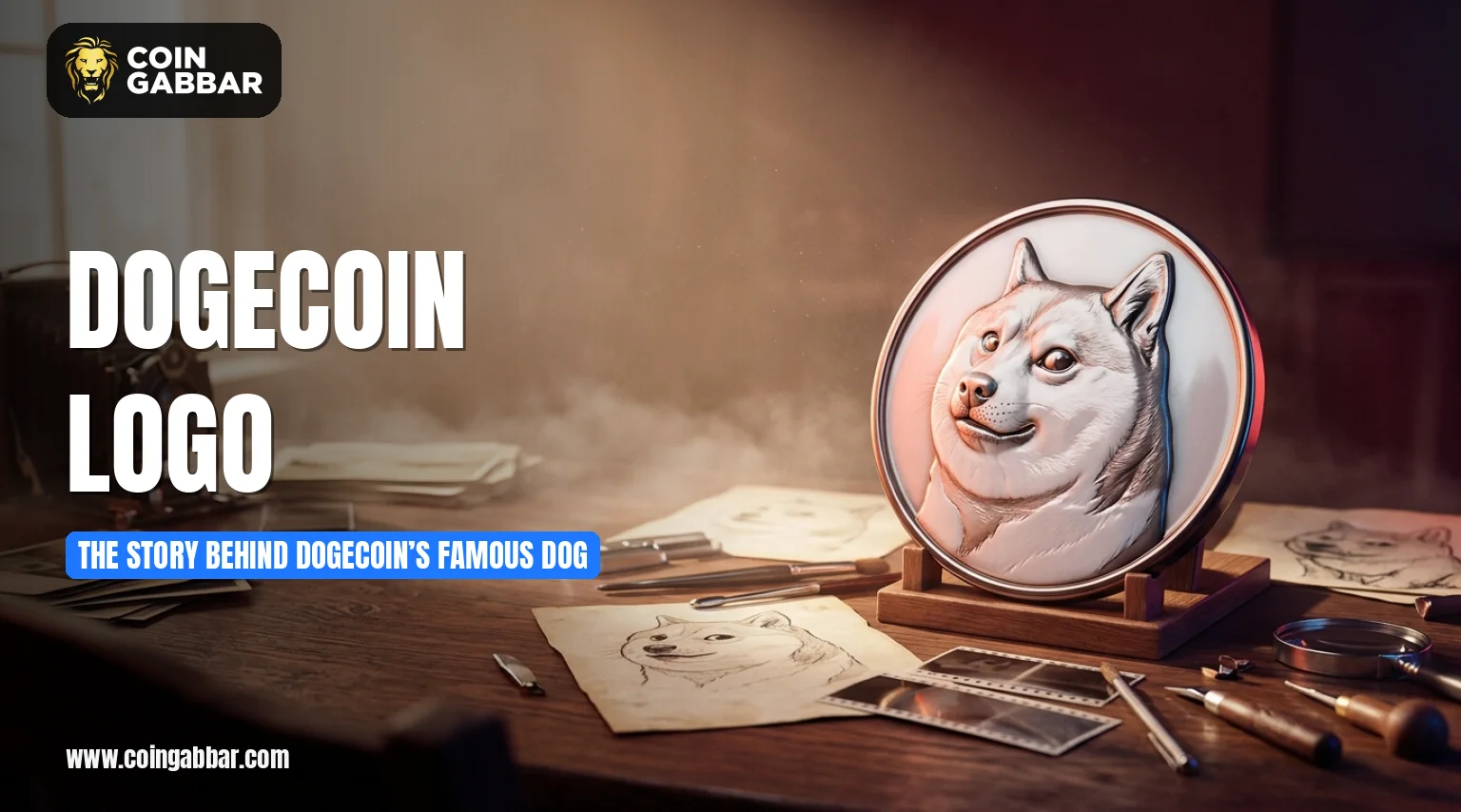
Dogecoin Logo and Shiba Inu Meme Story Explained
A few cryptocurrency symbols are as instantly recognizable as a Shiba Inu glancing sideways with a smirk.
It has none of the sharp lines of a corporate emblem, and that is exactly why it works. The story of how a dog photo became the face of a coin says as much about internet culture as it does about money.
The Dogecoin logo shows Kabosu, a Shiba Inu from Japan, photographed in 2010 by her owner, Atsuko Sato.
The photo became the "Doge" meme and was adopted as the face of Dogecoin when Billy Markus and Jackson Palmer launched the coin in December 2013. Kabosu died in May 2024.
What Is the Dogecoin Logo?
At its core, the Dogecoin Logo is a cropped image of the Doge meme: a Shiba Inu looking sideways, usually set against a gold coin.
It is deliberately informal. Dogecoin began as a joke, and the branding never tried to look serious.
That choice mattered. A playful mascot made the coin feel open to everyone, in contrast with the sober tone of earlier cryptocurrencies.
On Dogecoin, news coverage of Kabosu's death, and the official Dogecoin website.
Kabosu and the Photo Behind the Dogecoin Logo
According to Wikipedia, the original picture shows Kabosu, a Shiba Inu owned by Atsuko Sato, and was posted on a blog in 2010.
The dog's raised eyebrows and sidelong stare gave the photo an expression people read as a mix of suspicion and amusement.
The photo spread slowly. It became widely popular in late 2013, which is also when the idea for Dogecoin took shape. Timing, not design, is what linked the two.
How Doge Became a Meme Before the Dogecoin Logo
The word itself is older than the photo. "Doge" appeared as a misspelling of "dog" in a 2005 Homestar Runner episode and gained traction after an October 2010 caption involving a Welsh Corgi.
When the Shiba Inu photo arrived, versions with colorful Comic Sans text began circulating on a Tumblr blog called Shiba Confessions.
Searches for the meme rose in mid-2013, and by August it was being spammed across 4chan. That wave of attention is what the coin's creators tapped into.
How the Dogecoin Logo Became a Brand
Software engineers Billy Markus and Jackson Palmer created Dogecoin as a satirical response to the speculation around Bitcoin and other coins.
It launched on 6 December 2013. Palmer bought the domain, and Markus built the software on a Litecoin-based design.
The Dogecoin logo then helped the coin win a community instead of a market. Within months, supporters used it to raise money for the Jamaican bobsled team at the 2014 Sochi Olympics, to fund a water-well project with Charity: Water, and to sponsor a NASCAR driver.
Those stunts did more for the coin's image than any ad. The projects that grew up around the coin since then are mapped in the Dogecoin Ecosystem Guide.
Doge-Speak and the Dogecoin Logo's Humor
The humor around the Dogecoin logo has its own grammar. Doge-speak pairs one of five modifiers, "so," "such," "many," "much," and "very," with a word it cannot properly modify, often ending in "wow." "Such a coin. Very wow."
It is nonsense on purpose, and that is the point. The jokes lower the barrier to entry, which helps explain why a coin with a deliberately silly face attracted millions of newcomers.
Kabosu's Passing and the Dogecoin Logo Today
Kabosu died of leukemia at age 18 on 24 May 2024, as announced by her owner on social media and reported widely in the press.
Tributes came from the Dogecoin community and the wider internet.
The Dogecoin logo outlived its original subject, and the Dogecoin Foundation, re-established in August 2021, continues to look after the project's development.
In 2021, an NFT of the meme was bought by PleasrDAO for US$4 million, according to Wikipedia, which shows how far the picture travelled from a personal blog post.
The brand is still being built out, too. A recent product push is covered in Dogecoin Labs Launch, which describes how several Doge-branded apps are being brought together.
Fact Checks on Dogecoin Logo Stories
"The logo was designed by a studio." No. It is a meme image, not a commissioned design.
"Kabosu was a mascot chosen by Dogecoin's founders." The founders adopted a popular meme. Nothing in the sources reviewed suggests a formal arrangement.
"The 2023 Twitter logo swap proves a cause." In April 2023, Twitter's bird was briefly replaced by the Dogecoin image. Wikipedia reports a claim linking this to a legal filing but does not establish a cause, so it should be treated as unproven.
"Dogecoin has a capped supply." An early cap of 100 billion coins was reached in mid-2015, and the founders later said no cap would be coded, with billions of new coins entering circulation each year.
"Shiba Inu coin is the same thing as Dogecoin." No. SHIB is a separate token that borrows the breed's name and has its own ecosystem, including Shibarium and ShibaSwap, outlined in the Shiba Inu Ecosystem.
People often mix up the two because both use a similar dog. Market moves for the separate SHIB token are followed in Shiba Inu News, which is a different story from the one told here.
Final Thoughts on the Dogecoin Logo
The Dogecoin logo succeeded because it never pretended to be serious. A dog's sidelong glance, a few lines of Comic Sans, and a community with a sense of humor carried a joke coin further than many polished projects.
The meme's origin is charming, but it should not be mistaken for a reason to buy. Readers curious about the coin itself are better served by its official site and independent analysis than by nostalgia, and any price forecast should be treated as an opinion. The Dogecoin Price Prediction page covers the market side for DOGE.
The same caution applies to the look-alike token. A forecast for SHIB, such as the one in Shiba Inu Price Prediction, is a view, not a promise.
Disclaimer: This article is general educational information and is not financial, investment, legal, or tax advice. Meme coins are highly volatile and can lose all value. Historical details come from secondary sources that may be incomplete or disputed, and nothing here predicts prices or endorses any coin.
0
0


 Manage all your crypto, NFT and DeFi from one place
Securely connect the portfolio you’re using to start.


