
Vitalik Buterin: From a whitepaper at 19 to Ethereum's overhaul by 2030

0
0
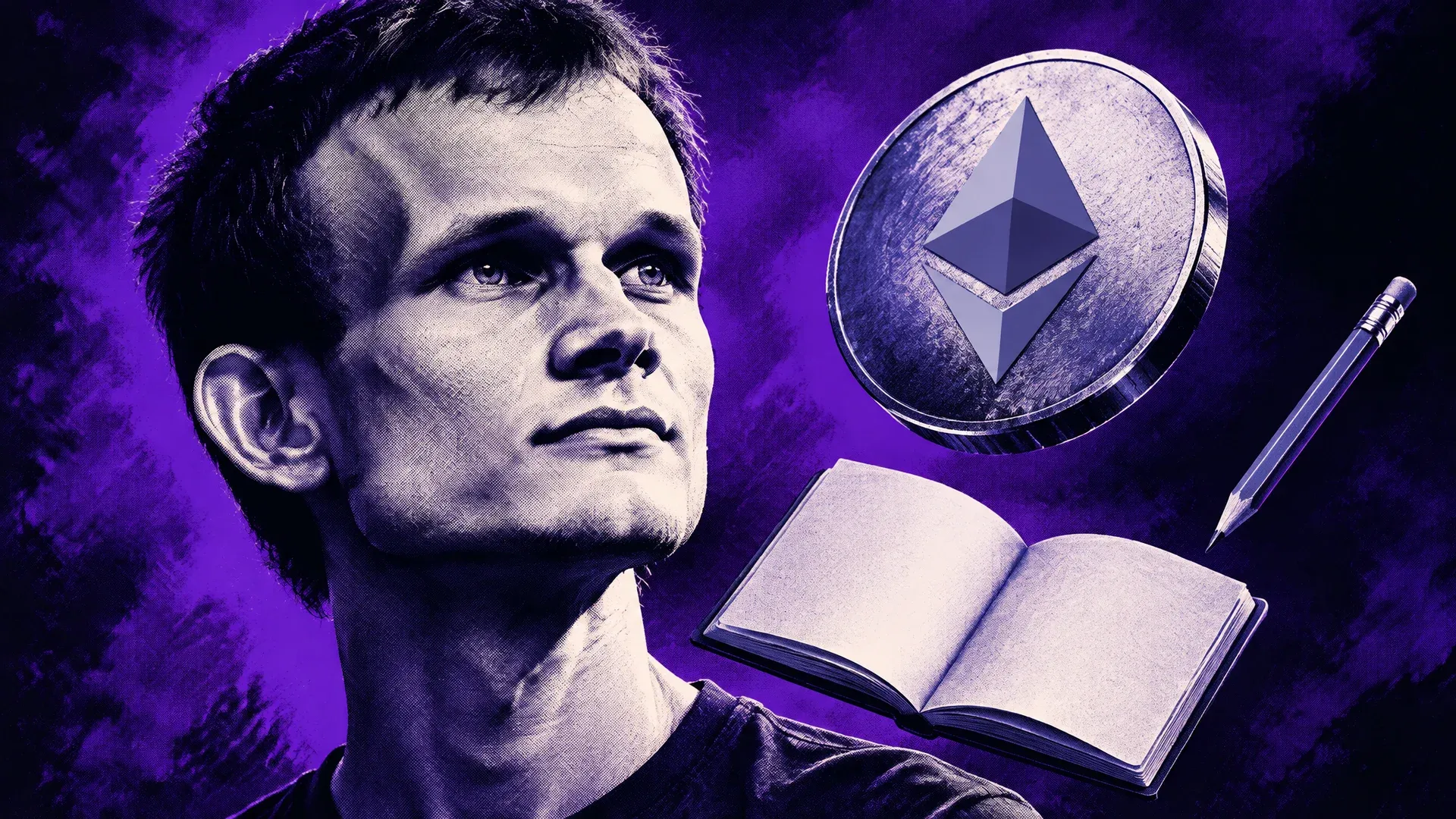
Vitalik Buterin is the programmer and writer who drafted the concept for Ethereum at the age of 19 and still shapes the network's direction today. He was born on January 31, 1994, in Kolomna, Russia, grew up in Toronto and is the best-known co-founder of the second-largest cryptocurrency. He has never taken a chief executive role: Buterin works as a researcher, blogger and board member of the Ethereum Foundation, and his essays set the course the protocol will take over the coming years.
For investors, this is more than a biography. Anyone holding Ethereum is betting on a roadmap that Buterin largely writes. On Saturday, Ether traded at just under €2,000 and the network's market value stood at around €244 billion. This profile covers where Buterin comes from, what he has built, what is known about his wealth and the overhaul he has sketched out for Ethereum through 2030.
Who is Vitalik Buterin? Programmer, writer and Ethereum co-founder
Buterin is a Russian-Canadian computer scientist. He made his name not through a company but through writing: first as a crypto journalist, then as author of the Ethereum whitepaper, and today as the leading voice in protocol research. A whitepaper is a technical founding document that describes a new system before it is built. On his website he has for years published long essays on cryptography, scaling, politics and artificial intelligence.
| Profile | Details |
|---|---|
| Name | Vitalik Buterin |
| Born | January 31, 1994, in Kolomna, Russia |
| Age | 32 (as of November 7, 2026) |
| Education | Abelard School in Toronto, studied at the University of Waterloo, dropped out in 2014 |
| Known for | Ethereum whitepaper and co-founding Ethereum, Bitcoin Magazine |
| Current role | Researcher and board member of the Ethereum Foundation |
| Awards | Thiel Fellowship and World Technology Award (2014), Fortune 40 Under 40 (2017), honorary doctorate from the University of Basel (2018), Time 100 (2021) |
Childhood in Russia, school in Toronto: Vitalik Buterin's road to Bitcoin
Buterin lived in Russia until he was about six. The family then emigrated to Canada, where his father was looking for work. Dmitry Buterin is himself a computer scientist; his mother, Natalia Ameline, worked as a business analyst. In primary school Vitalik was placed early in a class for gifted children, and he later spent four years at the private Abelard School in Toronto. In 2012 he won bronze at the International Olympiad in Informatics.
At 17, he learned from his father how Bitcoin works. The idea of money without a central bank, running on a network of equal computers, stayed with him. At first he was sceptical, because digital money with no intrinsic value struck him as odd. Scepticism gave way to curiosity, and within a few years that curiosity had become a blockchain of his own.
Bitcoin Magazine: Buterin as crypto writer and co-founder
Before he wrote code, Buterin wrote articles. Together with the Romanian Mihai Alisie he founded Bitcoin Magazine and was its main writer; from 2012 the magazine also appeared in print. The work gave him an overview of the young ecosystem: he travelled to developers in Europe, Israel and North America, reviewed new projects and learned where their limits lay.
Those limits became his subject. Many projects wanted to add further functions on top of Bitcoin, such as digital shares, name registries or betting. Each needed its own bespoke solution. Buterin concluded that a single blockchain with a complete programming language could carry all of these applications.

The 2013 Ethereum whitepaper and the idea of smart contracts
In late 2013 Buterin published the Ethereum whitepaper. Its core idea: rather than just recording balances, the blockchain should run arbitrary programs. Such programs are called smart contracts. A smart contract is a piece of code on the blockchain that automatically executes what was agreed in advance, for example releasing a payment as soon as a condition is met. He described the network as a kind of world computer on which anyone can publish applications without asking for permission.
Almost every application running on Ethereum today grew out of this idea: decentralised exchanges, lending protocols, stablecoins, NFTs and the so-called layer-2 networks. A layer-2 network is an additional blockchain that bundles transactions, processes them more cheaply and secures its results on Ethereum. Payments on the network are made in the Ether token (ETH), which users spend to cover computing power, known as gas.
Thiel Fellowship and the Ethereum mainnet launch on July 30, 2015
In January 2014 Buterin presented the project publicly. That same year he received the Thiel Fellowship from investor Peter Thiel, worth $100,000 and conditional on leaving university to pursue a project of one's own. Buterin dropped out of his computer science degree at the University of Waterloo and from then on worked on Ethereum full time. Also in 2014 he won the World Technology Award in the IT software category.
Development was financed through a public token sale in summer 2014, open to anyone paying in Bitcoin. On July 30, 2015, the network went live under the name Frontier, as a still rudimentary version for technically skilled users. For investors in Germany holding over such long periods, one rule matters most: under Section 23 of the German Income Tax Act, gains on privately held cryptocurrencies are tax-free after a one-year holding period. Anyone who buys, sells and stakes across many years and several wallets can keep track of purchase dates and deadlines with crypto tax software.
Ethereum Foundation: Buterin's role without a top job
Since 2014, development has been coordinated by the Ethereum Foundation, a non-profit foundation based in Switzerland. The foundation funds research, developer teams and conferences, but does not control the network. Protocol changes come out of an open process involving several independent software teams. Buterin has no formal decision-making power in that process, but carries great weight as a researcher.
In early 2025 the foundation reshaped its leadership. As The Block among others reported, long-serving executive director Aya Miyaguchi moved into the role of president, while researcher Hsiao-Wei Wang and Nethermind founder Tomasz Stańczak took over day-to-day business as co-executive directors from March 2025. Buterin stayed on the board and helped explain the reorganisation publicly as a focus on scaling and a better user experience.
The Merge in 2022: Ethereum's switch from proof of work to proof of stake
The biggest project of his career so far was the change of consensus mechanism. Under proof of work, miners secure the network with computing power and electricity; under proof of stake, so-called validators lock up their own Ether as collateral and lose part of it if they cheat. Buterin campaigned for this overhaul for years and in 2020 wrote an essay specifically titled "Why Proof of Stake".
On September 15, 2022, the moment came: The Merge joined the existing Ethereum blockchain with the Beacon Chain, the new proof-of-stake layer. According to ethereum.org, the network's energy consumption fell by around 99.95 percent as a result. Since then, Ether holders have been able to stake their coins themselves or through providers and earn ongoing rewards. The Pectra upgrade followed on May 7, 2025, and Fusaka on December 3, 2025, which expanded data availability for layer-2 networks through the PeerDAS method.
How much ETH does Vitalik Buterin own? Net worth and on-chain data
There is no reliable figure for Buterin's net worth. Estimates range from around $1 billion to tens of billions of dollars, depending on which addresses are attributed to him and at what price they are valued. In May 2022, Buterin himself said that after the price drop at the time he was no longer a billionaire.
Only what sits on known addresses can be publicly verified. The address behind the name vitalik.eth held around 5.8 ETH on November 7, 2026, or a little over €11,000. Most of his holdings sit on other addresses, which analytics firms attribute in different ways. Sales therefore regularly make headlines that later prove exaggerated: in February 2026, cryptoticker reported on a sale of 428.57 ETH on February 22, after a transaction worth $8.2 million had been doing the rounds; that figure came from Lookonchain's on-chain analysis at the time. Buterin usually explains such sales with donations and project funding.
Billion-dollar donations: Shiba Inu, Ukraine and research
Buterin is among the most generous donors in the crypto industry. In 2017 he gave around $764,000 in Ether to the Machine Intelligence Research Institute, and in 2018 a further $2.4 million to the SENS Research Foundation, which studies ageing. In May 2021 he donated meme coins worth a total of around $1.5 billion that projects had sent him unsolicited. They included Shiba Inu tokens worth about $1 billion for a Covid relief fund in India; $665 million went to the Future of Life Institute.
After Russia's attack on Ukraine, the Russian-born developer took a clear position. "Ethereum is neutral, but I am not," he wrote on the first day of the invasion. He donated around $2.5 million in Ether each to the Unchain Fund and the "Aid for Ukraine" fund, and spoke at the Kyiv Tech Summit in September 2022. The same year saw the publication of his book "Proof of Stake", a collection of his essays, and, with Glen Weyl and Puja Ohlhaver, the paper on soulbound tokens, non-transferable tokens that serve as digital credentials. In 2021 Time magazine named him one of the 100 most influential people.
Lean Ethereum and Hegotá: Buterin's Ethereum roadmap to 2030
What drives Buterin today is laid out on his blog. In July 2026, under the label Lean Ethereum, he sketched an overhaul over three to four years that, according to specialist media, touches almost every layer of the protocol: faster finality, quantum-resistant signatures, more privacy and verification of blocks via zero-knowledge proofs. A zero-knowledge proof is a cryptographic demonstration that a computation was correct, without anyone having to repeat it or see all the data.
On September 27, 2026, he followed up with the essay "The cryptographic world computer". In it he compares Ethereum in 2015, 2025 and 2030 with the original Bitcoin whitepaper. The key sentence for investors concerns the timetable: Hegotá, the fork planned for 2027, is "likely to be Ethereum's last 'normal' fork". Everything after that revolves around recursive STARKs, automated formal verification, optimised consensus and quantum security. Before then comes Glamsterdam, the upgrade currently being tested on testnets.
Quantum computing, AI and privacy: Vitalik Buterin's themes in 2026
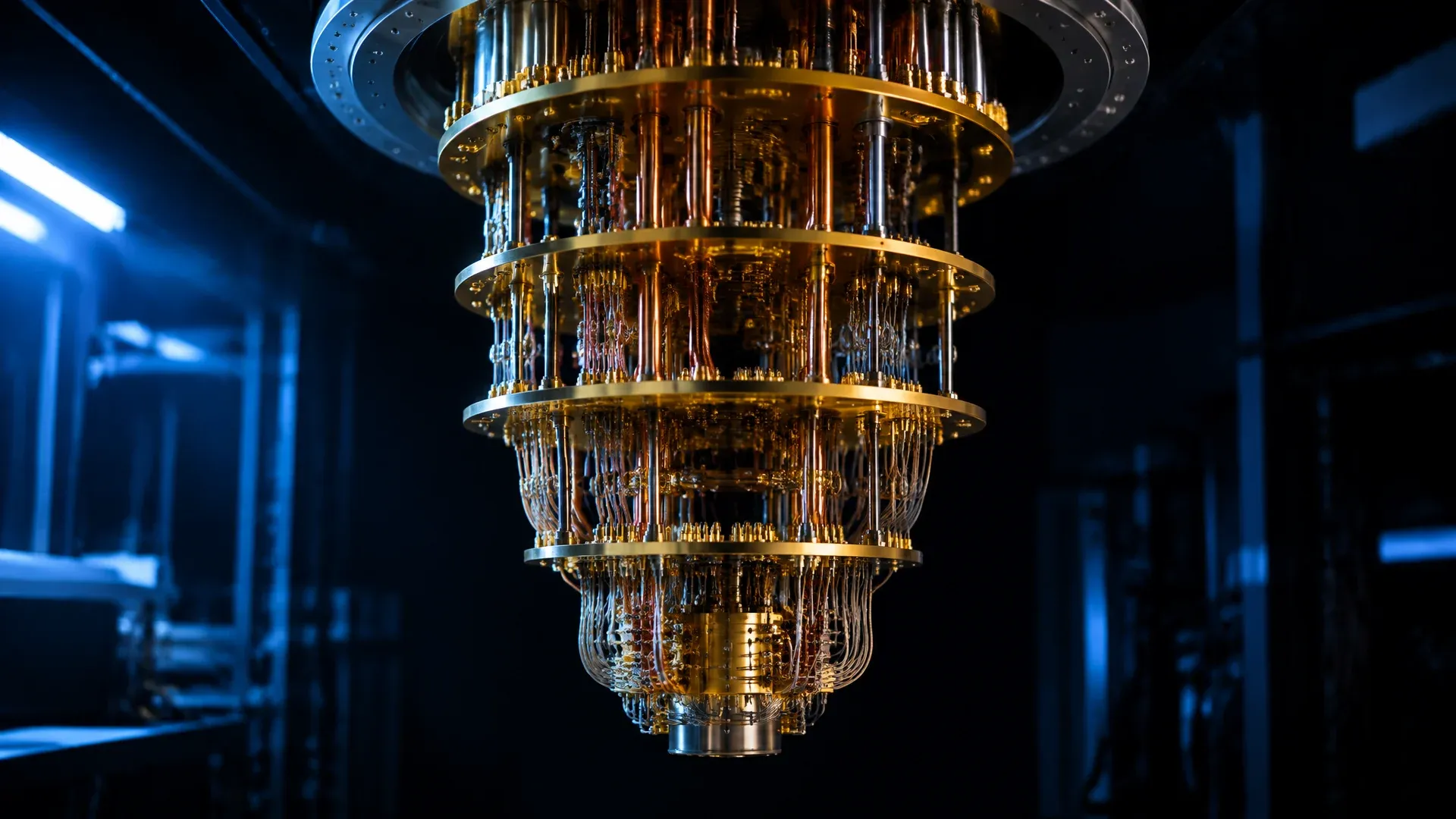
Three themes run through Buterin's writing of recent months. The first is the threat from quantum computers, which could one day break today's signature schemes. Quantum security has therefore moved well forward on the roadmap. In October, cryptoticker also reported on his warning that AI could attack crypto encryption sooner than expected; Cardano founder Charles Hoskinson pushed back firmly at the time.
The second theme is privacy. In 2025 Buterin wrote an essay titled "Why I support privacy", and in 2026 he devoted a three-part series to program obfuscation, a cryptographic technique he calls its "final boss". The third is his own relationship with technology: in April 2026 he described how he runs language models locally and privately, and at the end of October why he left the X interface and now reads and posts through a client for several decentralised networks. Behind this lies a stance he calls d/acc: technology should arrive faster, but in a decentralised, defensive and democratic way.
For Ether holders, that means in practice: the coming years will bring deep changes to the protocol whose benefits will only become measurable step by step. Anyone holding coins for the long term should take custody seriously. Private keys belong on a hardware wallet once larger sums are involved, because no upgrade changes the fact that a lost key locks the balance away for good.
Ethereum after Hegotá: The overhaul runs on to 2030
Buterin's biography explains why Ethereum keeps changing: the project's most important mind is a researcher, not a manager, and he thinks in five-year stages. Until Hegotá in 2027 the network keeps its familiar form; after that the real overhaul begins. Three steps help you keep track:
- Choose how to buy: The simplest way to buy Ether is through an exchange licensed in the EU under MiCA. You can compare fees, withdrawal options and deposit protection in our comparison of the best crypto exchanges.
- Store coins securely: If you hold ETH for years, keep the keys offline. The hardware wallet comparison shows which devices support Ethereum and layer-2 networks.
- Check yields from proof of stake: Since The Merge you can stake Ether. Terms, lock-up periods and provider fees are set out in the staking comparison.
(As of November 7, 2026. This article is not investment advice. Prices and fee structures change; check the terms with the provider before you buy.)
0
0

 Manage all your crypto, NFT and DeFi from one place
Securely connect the portfolio you’re using to start.
 Where will Ethereum trade next?
Live Polymarket and Kalshi odds on Ethereum price targets, compared side by side.
See Ethereum price odds


