
Base Prioritizes Quantum-Safe Security by 2027 Amid Regulator Warnings

0
0
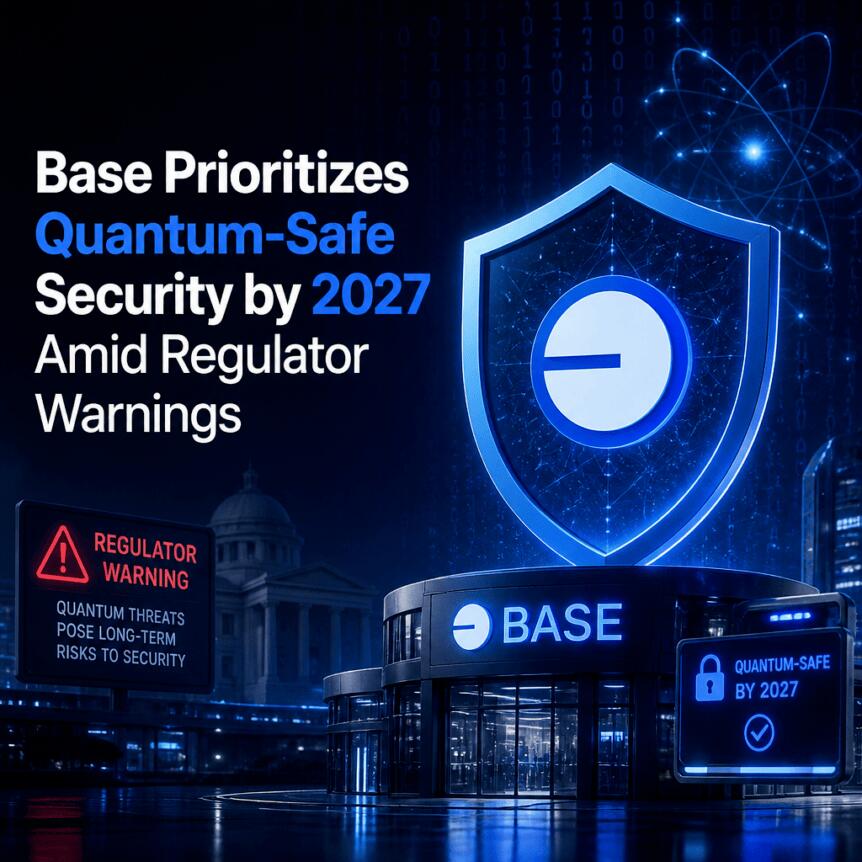
Base, the Ethereum layer-2 chain backed by Coinbase, is putting quantum security near the center of its 2027 roadmap, aiming to better prepare its wallet ecosystem for a future where quantum computers could undermine today’s cryptographic protections. In an interview with Cointelegraph, Base creator Jesse Pollak said the network’s upcoming Everest upgrade will introduce a new transaction format meant to provide the “framework” for later quantum-resistant changes.
While the effort is not expected to make wallets quantum-resistant immediately, it reflects a broader industry shift driven by regulator concern that quantum computing could eventually threaten the integrity of financial systems—including blockchain networks—if security upgrades aren’t coordinated across ecosystems.
Key takeaways
- Base is prioritizing quantum security for 2027, with work framed around the upcoming Everest upgrade.
- Everest will introduce a new transaction type (“Base Transactions”) intended to support future wallet security improvements without forcing users to change addresses.
- The transaction format described in EIP-8430 initially relies on existing cryptography, separating signing from signature verification to enable later upgrades.
- Regulators including IOSCO have warned that quantum-capable attacks could pose systemic risks and that blockchain security changes may be complex to coordinate.
- Pollak also outlined 2027 priorities beyond security, including expanding trading, payments, and lending, plus a stronger focus on AI-driven “agentic” finance.
Everest upgrade adds a path toward quantum-secure wallets
Everest is Base’s next major network upgrade—its fifth—designed to lay technical groundwork rather than deliver a complete solution in the near term. Pollak emphasized that Everest will not, by itself, make wallets quantum-resistant. Instead, it should create a flexible structure for upgrading security mechanisms over time.
According to Pollak, the upgrade will add a new transaction type called Base Transactions, which is expected to support future improvements to how wallets secure user funds. “That network upgrade doesn’t specifically solve quantum security for these wallets, but it does put in place the framework,” he said.
The technical specifications for Base Transactions are outlined in EIP-8430. Notably, the current proposal still uses existing cryptography rather than quantum-resistant signatures. However, its design choice matters: the transaction format separates how transactions are signed from how signatures are verified. Pollak said this structure is intended to allow the network to introduce new security methods later without requiring users to change their wallet addresses.
Base has not provided a specific timeline for when quantum-resistant protections would be introduced beyond treating 2027 as a priority year for the work. Pollak’s framing suggests the network expects incremental progress—building the foundation first, then extending protections as cryptographic standards mature and implementations become practical.
Regulators warn that quantum threats could spread across finance
Base’s push comes as international regulators have been warning about the long-term risk posed by quantum computing. In a report referenced by Cointelegraph, the International Organization of Securities Commissions (IOSCO) warned that sufficiently powerful quantum computers could threaten the security of financial systems.
IOSCO specifically highlighted a practical challenge for blockchains: making security changes may require coordination among many participants, making upgrades harder to execute than in more centralized systems. The regulator also noted that upgrades themselves could introduce new security problems, raise costs, or disrupt transactions.
The report also points to an additional pressure point beyond quantum computing—advances in artificial intelligence could make cyberattacks more difficult to detect and analyze, potentially complicating defensive measures even if cryptographic approaches evolve.
On the standards side, the US National Institute of Standards and Technology (NIST) has been actively preparing for the transition to quantum-resistant cryptography. Cointelegraph’s coverage notes that NIST introduced its first three relevant security standards in 2024 and later released further guidance in October 2026. NIST has also set 2035 as the primary target for completing the transition across US federal systems.
Base’s 2027 priorities extend beyond security upgrades
Pollak’s comments were not limited to quantum security. He also mapped out broader objectives for Base in 2027, including expanding trading, payments, and lending. He tied part of the network’s momentum to demand for tokenized equities, saying weekly trading volume on Base has reached $1 billion. Pollak attributed much of that activity to investors outside the US seeking easier access to American stocks.
Another theme in Pollak’s outlook is the growing role of AI agents in financial activity. He described “agentic payments” as a trend that gained traction in 2026 and argued that “agentic finance” could be one of the biggest developments of 2027.
Base’s plans also take into account operational lessons from its most recent upgrade cycle. The latest network upgrade, Denim, went live on Nov. 5 and reduced block times from two seconds to 200 milliseconds—enabling blocks to be produced roughly 10 times faster. Cointelegraph reports that the change was followed by transaction delays. Pollak said Base reviewed the incidents, made fixes, and added additional testing to reduce the likelihood of similar problems.
For the next phase of development, Pollak said the goal is to make future upgrades feel seamless for users. “Our goal in 2027 is to make it so that upgrades are non-event. So no one’s even talking about them,” he said, underscoring an emphasis on stability alongside innovation.
What to watch as Base moves from groundwork to adoption
Base’s Everest framework suggests quantum security will progress in stages—first by adjusting transaction and verification mechanics, then by introducing quantum-resistant protections when they are ready to be deployed broadly. Investors and builders should watch for Base’s implementation details after Everest, especially any announcements tied to when quantum-resistant cryptography becomes a practical option for wallet security rather than a forward-looking design goal.
This article was originally published as Base Prioritizes Quantum-Safe Security by 2027 Amid Regulator Warnings on Crypto Breaking News – your trusted source for crypto news, Bitcoin news, and blockchain updates.
0
0

 Manage all your crypto, NFT and DeFi from one place
Securely connect the portfolio you’re using to start.
 Where will Ethereum trade next?
Live Polymarket and Kalshi odds on Ethereum price targets, compared side by side.
See Ethereum price odds


