
Judge acquits MIT brothers in $25M Ethereum MEV fraud case

0
0
BitcoinWorld
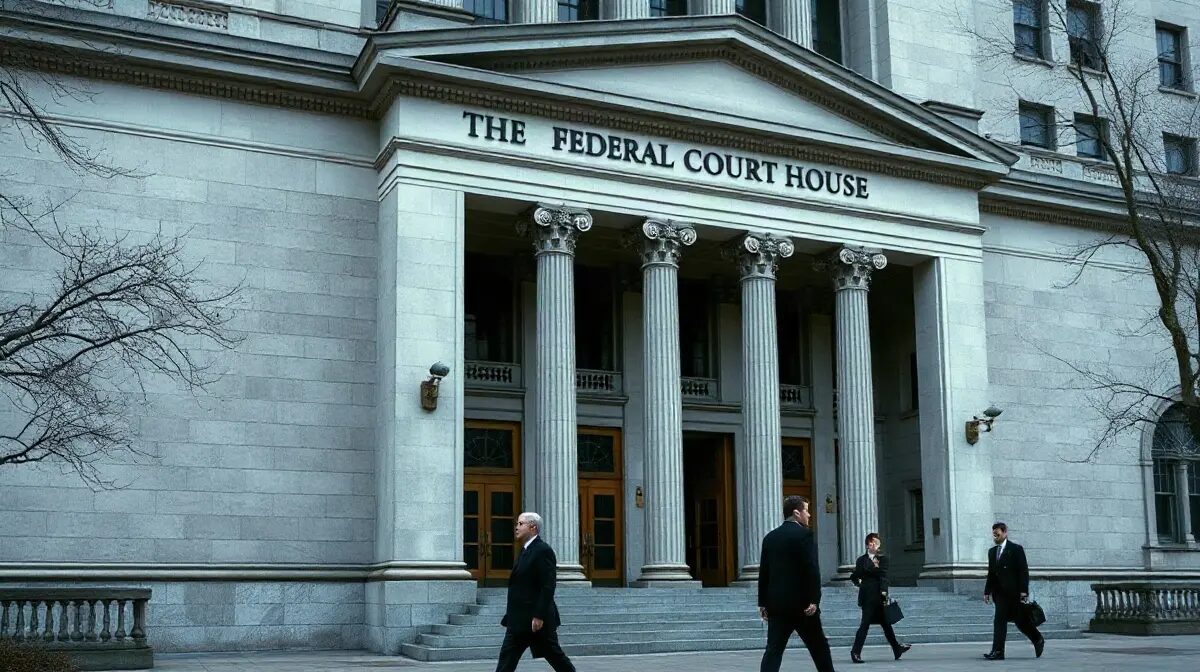
Judge acquits MIT brothers in $25M Ethereum MEV fraud case
A U.S. federal judge on Monday acquitted Anton and James Peraire-Bueno of all charges in a $25 million Ethereum trading case, ruling that prosecutors failed to prove the brothers made a material misrepresentation. The decision, filed by U.S. District Judge Jessica G. L. Clarke, ends a prosecution that began with the brothers’ arrests in May 2024 and included a mistrial in November 2025, as reported by Crypto.news.
Key facts
- Judge Clarke issued a 46-page opinion and order on Nov. 16 acquitting the brothers of wire fraud, conspiracy to commit wire fraud and conspiracy to commit money laundering.
- The case stemmed from an April 2023 MEV operation called Omakase that generated about $25 million in profits in roughly 12 seconds.
- Prosecutors alleged the brothers exploited a vulnerability in MEV-Boost relay software; Flashbots patched the relay within 24 hours of the incident.
- The first trial ended in a mistrial in November 2025 after jurors deadlocked.
- In a footnote, Clarke said the prosecution ‘raises serious due process concerns,’ though she declined to rule on that question, Decrypt reported.
Why the court found no fraud
Clarke’s ruling focused on the nature of Ethereum itself. She described the network as a ‘trustless, highly adversarial environment with no terms of use,’ finding that submitting a transaction to the public pool of pending transactions did not amount to a promise about how it would be executed.
The government had argued that the brothers’ bait transactions, designed to attract automated sandwich-trading bots before disrupting their trades, constituted deception. Clarke rejected that comparison to spoofing in traditional markets, noting that the brothers’ transactions were never withdrawn and appeared on the blockchain within about one minute of the operation.
On the relay software issue, Clarke acknowledged that information in a digitally signed block header submitted to the Ultrasound Relay was incorrect. But trial evidence showed the relay did not examine the disputed fields before releasing transaction data, so the false information ‘had no impact on the behavior of its recipient,’ she wrote. Because the money laundering conspiracy charge depended on proceeds of the alleged fraud, it fell along with the fraud counts.
Market snapshot
Ethereum (ETH) traded at $1,812 / ₹169,196 at the time of writing, down 1.1% in the past 24 hours and 12.1% over seven days, according to CoinPaprika data fetched at 06:38 UTC on Nov. 18, 2026. The asset’s market capitalization stood at $221.44 billion, with 24-hour volume of $7.89 billion.
Why it matters
The acquittal sets a legal benchmark for how courts treat automated trading activity on public blockchains. It suggests that prosecutors must identify a specific false promise, rather than relying on general expectations about how a protocol should function, when bringing fraud charges over MEV-related conduct. The ruling came a year after the mistrial and closes the case without a retrial, sparing the brothers a second trial that could have carried decades in prison.
For traders and developers, the decision reinforces that Ethereum’s adversarial environment is legally distinct from traditional financial markets, where similar bait-and-switch tactics can constitute spoofing.
What to watch
With the criminal case closed, the remaining $3 million in frozen proceeds and the disposition of the brothers’ converted profits may draw further legal attention. The ruling’s footnote on due process could also influence future prosecutions of on-chain trading strategies.
Frequently Asked Questions
What were the charges against the Peraire-Bueno brothers?
They faced wire fraud, conspiracy to commit wire fraud, and conspiracy to commit money laundering. Each original charge carried a maximum potential sentence of 20 years.
Why did the judge acquit them?
Judge Clarke found prosecutors failed to establish a material misrepresentation, an essential element of wire fraud. She described Ethereum as a ‘trustless, highly adversarial environment with no terms of use.’
How much money was involved?
The brothers generated approximately $25 million in profits within a roughly 12-second operation in April 2023, according to court records.
What happened to the earlier trial?
The first trial ended in a mistrial in November 2025 after jurors failed to reach a unanimous verdict. The acquittal means there will be no retrial.
This post Judge acquits MIT brothers in $25M Ethereum MEV fraud case first appeared on BitcoinWorld.
0
0

 Manage all your crypto, NFT and DeFi from one place
Securely connect the portfolio you’re using to start.
 Where will Ethereum trade next?
Live Polymarket and Kalshi odds on Ethereum price targets, compared side by side.
See Ethereum price odds


