
Illinois Crypto Tax: Uniswap, a16z Push to Keep DEXs Out of Rules

0
0
Why the Illinois Crypto Tax Debate Matters for DeFi Users
New tax rules can change how people use wallets, apps, and exchanges. This report explains the debate in plain words so any user can follow it.
Uniswap Labs, a16z and the DeFi Education Fund have asked the state to keep decentralized exchanges and their web apps out of the broker label. They made the request in a letter to the Illinois Department of Revenue dated October 30, 2026.
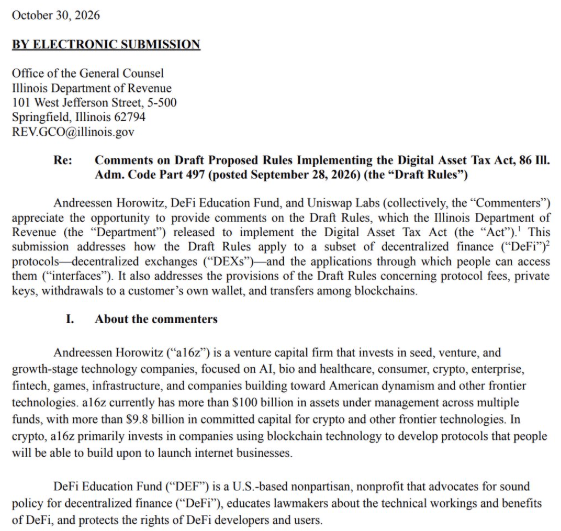
The letter replies to draft regulations for the Illinois crypto tax that the agency posted on September 28, 2026.
Illinois Crypto Tax Draft Rules and the Broker Label
The Illinois Digital Asset Tax Act puts a 0.2% tax on digital asset transactions. The draft regulations explain how the law would work. They also say who counts as a broker under it.
The groups say this label should not cover decentralized exchanges or the apps people use to reach them. They also asked the state to protect self-custody. This means that you hold your own coins and keys.
What the DeFi Education Fund Letter Asks For
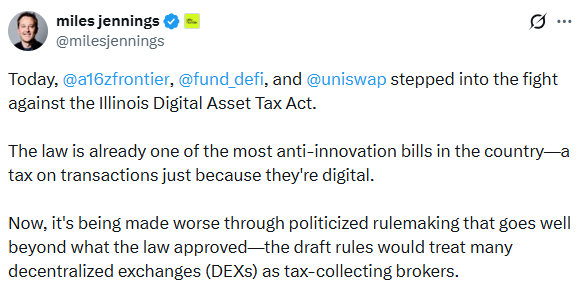
A comment letter lets the public give feedback to a state agency before rules are final. This one was sent by Andreessen Horowitz, the DeFi Education Fund and Uniswap Labs, which was confirmed by the policy lead & general counsel of Andreessen Horowitz (a16z Frontier) in X Account.
The letter says the draft rules reach the protocols that run these exchanges and the apps that connect people to them. It also looks at how the draft treats protocol fees, private keys, withdrawals to a customer’s own wallet, and transfers between blockchains.
The DeFi Education Fund describes itself as a nonprofit group that speaks up for the rights of users and builders in this space. In simple terms, the groups say the regulations should treat open software tools in a different way from firms that hold customer funds.
Do DEXs and Self-Custody Wallets Fall Under the Illinois Crypto Tax
On a decentralized exchange, people trade straight from their own wallets, and no company holds their coins. With self-custody, you alone hold the private keys, so moving coins to your own wallet is not the same as paying a broker.
That is why the letter asks the state to keep these tools outside the broker label. It is not yet known if the final rules will agree. Users should not assume either result until the state posts them.
Illinois Crypto Tax Timeline and the Reported Delay to July 2027
Industry groups have raised legal challenges to the law. The state has also reportedly agreed to delay the start until July 2027. Dates in tax law can change, so check the state tax site for the latest notice. Until the rules are final, the way the tax applies to these tools may keep changing.
What Crypto Traders and Builders Can Do Now
If you trade on DEXs or use wallets in the state, it helps to keep clear records of your trades, transfers, and fees. A simple sheet with dates, amounts, and wallet names is enough to start.
Builders can read the draft rules and the letter to see how the plan may touch their apps. They can also follow the debate to learn which terms may shape the final text. A clear view of the regulations helps teams plan their next steps.
Tax news often draws scammers, so be careful with fake tax emails and fake support messages. You should never share a seed phrase with anyone who contacts you.
What to Watch Next in the Illinois Crypto Tax Story
The next step is a reply from the state, which may change the draft rules after it reads the comments. Readers can watch for a final set of rules, a firm start date, and any change to the broker label.
This Illinois crypto tax story is still developing, and this report will be updated as new details come out. For more crypto news on this topic, follow the official channels and compare any claim you see against them.
Disclaimer: This article is for information only and is not financial, legal, or tax advice. Rules, dates, and plans can change, so please check official sources before you act.
0
0

 Manage all your crypto, NFT and DeFi from one place
Securely connect the portfolio you’re using to start.


